The Family of Darius Before Alexander
Paolo Veronese · 1565
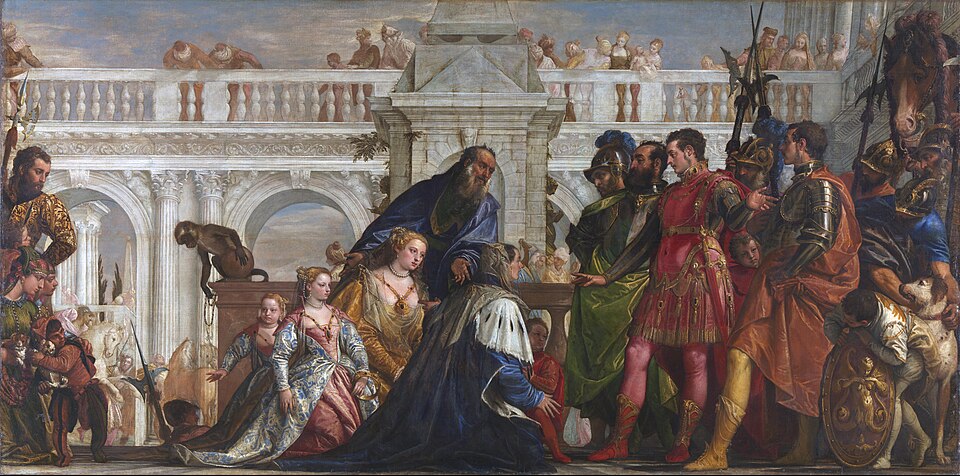
A queen mother kneels to beg mercy from a conqueror, but she kneels to the wrong man. Veronese turned an ancient moment of embarrassment and grace into a glowing Venetian pageant nearly five metres wide.
The story behind the painting
In 333 BC Alexander the Great defeated Darius III, the last king of the Achaemenid Empire, at the Battle of Issus. Darius escaped, but his wife Stateira, his mother Sisygambis and his daughters Stateira and Drypetis were captured. Plutarch praised how Alexander treated them with respect. Later writers, including Arrian, Valerius Maximus and Quintus Curtius Rufus, told of a misunderstanding: Alexander visited the women with his closest friend Hephaestion, and Sisygambis knelt before the taller Hephaestion, thinking he was the king. Alexander eased her shame by saying that Hephaestion, too, was Alexander. Veronese painted the scene around 1565 to 1570; he had painted an earlier version, since destroyed.
What to look for
The main figures stand on a shallow stage at the front. Behind them is a lively crowd of pages, halberdiers, dwarfs, dogs and monkeys, and further back an arched promenade full of spectators. The curves of the arches echo the bowing women, and the verticals of a central fountain reinforce Sisygambis's gesture. Most scholars see Alexander as the young man in red, gesturing towards Hephaestion, though some reverse the two, and that uncertainty is taken as proof of Veronese's pictorial intelligence. The scene is set in a palace hall rather than a tent, and everyone wears the costume of Veronese's own Venice. Technical study shows he painted out a balcony with figures and added horses on the left.
Meaning and intent
The subject is magnanimity: a victor who honours the defeated and turns their error into a compliment. Veronese kept the ambiguity of the story, so we share the queen mother's confusion as we search for the true king. As was customary in Venetian history painting, he has long been thought to include portraits of contemporaries. Suggestions differ: members of the Pisani family who owned the picture, Veronese's own daughters as the kneeling girls, the artist himself as the courtier or as the man behind Alexander, or the patron Francesco Pisani. The art historian Nicholas Penny argued the faces were imagined, based on no particular models.
Legacy
The painting was first owned by Francesco Pisani, at the Villa Pisani in Montagnana designed by Palladio, and probably moved to the family palace on the Grand Canal after 1629. In 1786 Goethe admired it there, repeating a legend that Veronese painted it in secret as thanks for hospitality and left it rolled under a bed, a story now seen as fanciful. Agents of Queen Christina of Sweden tried to buy it in 1664. The National Gallery in London acquired it in 1857 after long negotiations, and Parliament debated the purchase. John Ruskin called it the most precious Paul Veronese in the world, and Henry James wrote that it sent a glow into the cold London twilight.
Did you know?
- Painted around 1565 to 1570 for the Pisani family.
- Sisygambis mistakes Hephaestion for Alexander.
- Goethe admired it in Venice in 1786.
- In the National Gallery, London, since 1857.
About the artist
Paolo Veronese (1528-1588)
National Gallery · history painting · Mannerism · family
More by Paolo Veronese
 The Wedding at Cana - Paolo Veronese (1560s)
.jpg) The Feast in the House of Levi - Paolo Veronese (1573)
The Feast in the House of Levi - Paolo Veronese (1573).jpg) Venus and Adonis - Paolo Veronese (1580)
Venus and Adonis - Paolo Veronese (1580) Allegory of Virtue and Vice - Paolo Veronese (1565)
 Venus and Mars - Paolo Veronese (1570s)
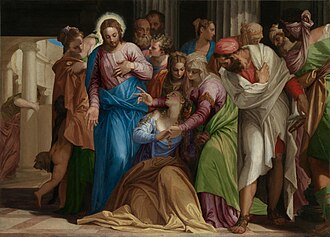 The Conversion of Mary Magdalene - Paolo Veronese (1548)
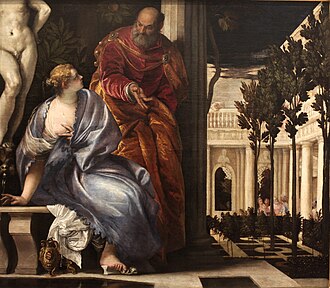 Bathsheba at Her Bath - Paolo Veronese (1575)
%20grande.jpg) Christ Among the Doctors - Paolo Veronese (1560)
Christ Among the Doctors - Paolo Veronese (1560)
Paintings by related artists
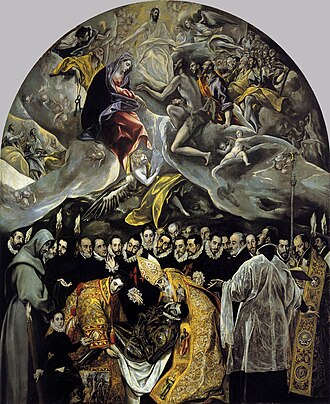 The Burial of the Count of Orgaz - El Greco (1586)
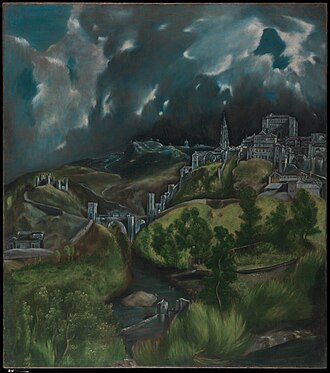 View of Toledo - El Greco (1596)
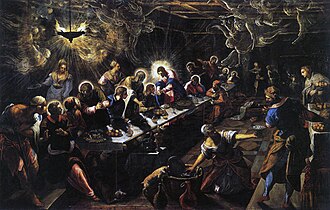 Last Supper - Jacopo Tintoretto (1563)
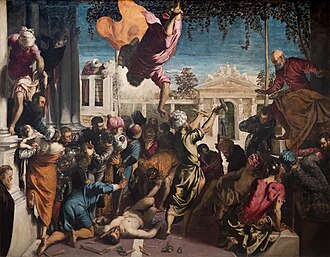 Miracle of the Slave - Jacopo Tintoretto (1540s)
.jpg) Venus of Urbino - Titian (1538)
Venus of Urbino - Titian (1538)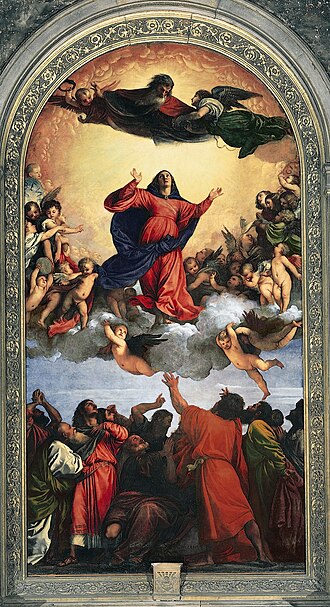 Assumption of the Virgin - Titian (1510s)
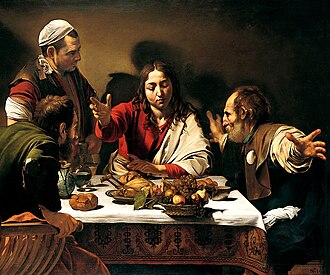 Supper at Emmaus - Caravaggio (1601)
 The Calling of Saint Matthew - Caravaggio (1609)
 The Ambassadors - Hans Holbein the Younger (1533)
 The Body of the Dead Christ in the Tomb - Hans Holbein the Younger (1520s)