Coronation of the Virgin
El Greco · 1590s
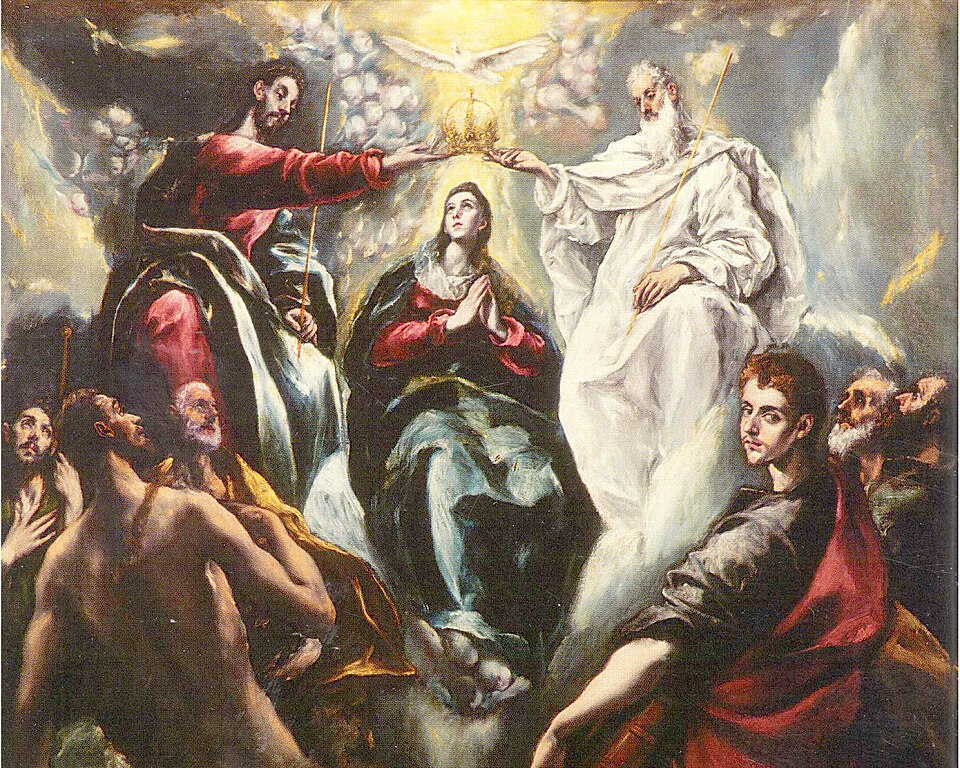
Mary is crowned in heaven while six saints below seem to lift her toward us. El Greco painted it to be seen from below, at the very top of the main altarpiece of the Chapel of San José in Toledo.
The story behind the painting
This Coronation of the Virgin crowns the attic of the main altarpiece in the Chapel of San José in Toledo, part of a set of altarpieces El Greco made there. It is oil on canvas, about 120 by 147 cm, unsigned, and documented in 1597 to 1599; Harold Wethey lists it as number 16 in his catalogue of the painter. The coronation of Mary is not told in the canonical gospels, but it became a popular subject in Christian art as the episode after her death and Assumption, and from the twelfth century it was shown in prominent places in churches, especially apses.
What to look for
The saints below are, from left to right, James the Greater, John the Baptist, John the Evangelist, Simon Peter, and two less certain figures, perhaps Paul and Andrew. Look at the space between the two Johns: they leave an open triangle pointing upward, and the figure of the Virgin is set inside it. The canvas is horizontal, the figures elongated and almost weightless. El Greco may have had in mind Jacopo Torriti's mosaic in the apse of Santa Maria Maggiore in Rome, which he could have seen.
Meaning and intent
El Greco repeated the scheme of his Coronation for the Talavera altarpiece, but changed it because this picture sits at the top of an altarpiece and must be seen from below. In Talavera the figures stood in a circle round Mary, with the coronation in a clearly separate upper zone. Here earth and heaven are tightly linked, and Mary gains fuller, more flexible body. The view from below and the lighting deepen the feeling of distance between the figures, and the saints become intermediaries between the viewer and the three holy persons of the event.
Legacy
According to the sources, this placement gives the scene a liveliness the Talavera canvas lacked, even though the main group is almost identical. The painting is still described in its place in the attic of the main altarpiece, part of the chapel ensemble in Toledo. Scholars such as Wethey, Gudiol, Álvarez Lopera and Palma Martínez-Burgos, who wrote a book on El Greco in the Chapel of San José, have studied it. Wikidata dates it to the 1590s, consistent with the documents of 1597 to 1599.
Did you know?
- Crowns the main altarpiece of the Chapel of San José, Toledo.
- Oil on canvas, about 120 x 147 cm, documented 1597-1599.
- Reworks El Greco's earlier Talavera Coronation for a view from below.
- Number 16 in Harold Wethey's catalogue.
About the artist
El Greco (1541-1614)
religious art · Mary · Mannerism
More by El Greco
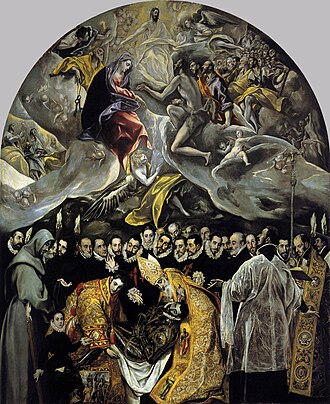 The Burial of the Count of Orgaz - El Greco (1586)
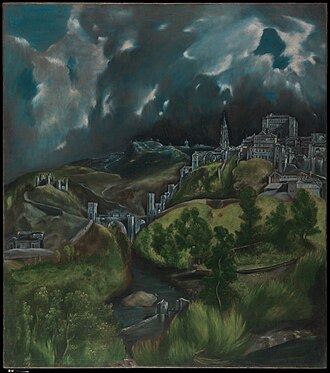 View of Toledo - El Greco (1596)
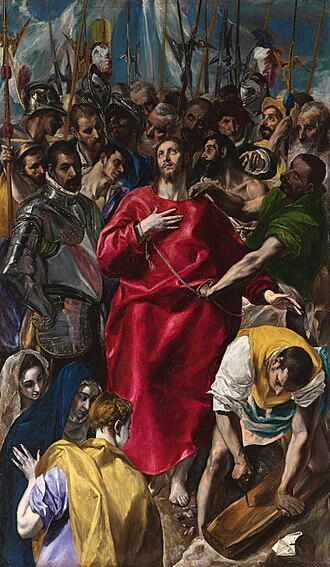 The Disrobing of Christ - El Greco (1570s)
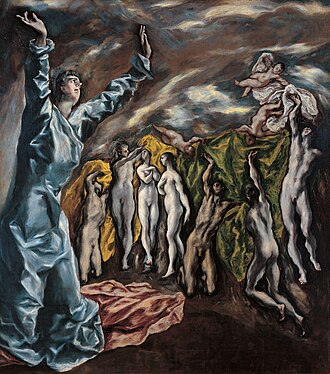 Opening of the Fifth Seal - El Greco (1610)
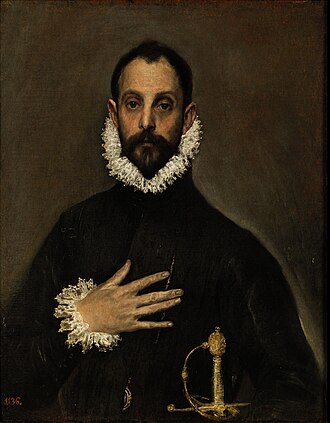 The Nobleman with his Hand on his Chest - El Greco (1580)
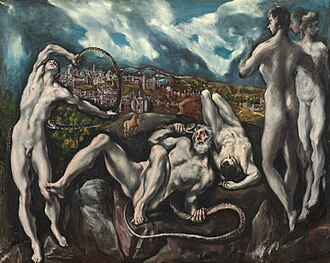 Laocoön - El Greco (1610s)
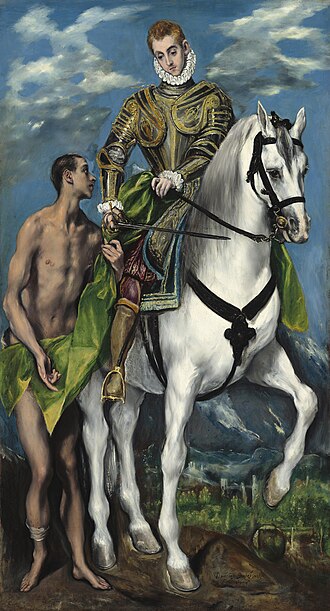 Saint Martin and the Beggar - El Greco (1597)
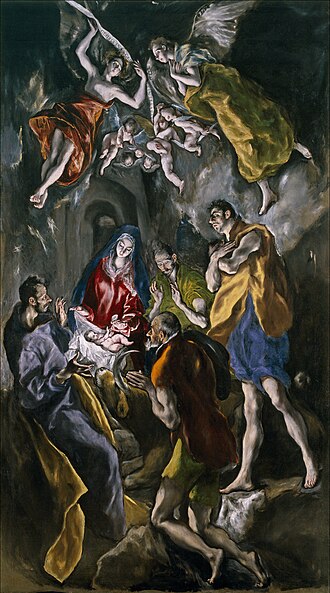 Adoration of the Shepherds - El Greco (1612)
Paintings by related artists
 The Wedding at Cana - Paolo Veronese (1560s)
 The Feast in the House of Levi - Paolo Veronese (1573)
 Last Supper - Jacopo Tintoretto (1563)
 Miracle of the Slave - Jacopo Tintoretto (1540s)
 Venus of Urbino - Titian (1538)
 Assumption of the Virgin - Titian (1510s)
 Supper at Emmaus - Caravaggio (1601)
 The Calling of Saint Matthew - Caravaggio (1609)
 The Ambassadors - Hans Holbein the Younger (1533)
 The Body of the Dead Christ in the Tomb - Hans Holbein the Younger (1520s)