Agony in the Garden
El Greco · 1604
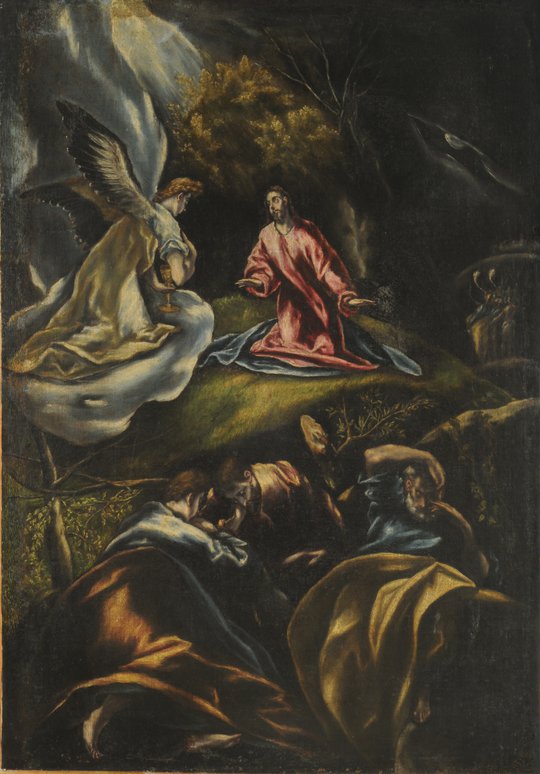
Christ kneels in prayer on the night before his arrest, and an angel appears to him. This upright version in Buenos Aires shows El Greco and his workshop returning to a subject he painted again and again.
The story behind the painting
The Agony in the Garden is the prayer of Jesus at Gethsemane, mentioned in all four canonical gospels. El Greco based his scene mainly on the accounts of Matthew and Mark, which are almost the same, but added details from Luke: the appearance of the angel, and Jesus kneeling rather than lying face down. In his catalogue of El Greco's works, Harold Wethey separated two quite different models of this subject. Type I includes three horizontal paintings; the vertical canvases form Type II, and this picture belongs to that second group.
What to look for
The painting is oil on canvas, 108 by 76 cm according to the museum, while Wethey gives 110 by 76 cm. Remains of the painter's signature are barely visible. Wethey judged it a good version of the Agony in the Garden in Andújar, the prototype of Type II, but with a reduced sense of space and drapery folds worked out in excessive detail compared with the bold simplicity of Andújar. The landscape, as in other Type II variations, is a set of formal signs rather than real nature, and the light creates an almost schematic atmosphere that plays with bright colours.
Meaning and intent
In the Type II design the angel's appearance and the kneeling Christ, both drawn from Luke, put the emphasis on the moment of prayer and the answer from heaven. Wethey assumed some participation by El Greco's workshop in this canvas, which helps explain why it differs from the more daring prototype. A drawing of the Agony in the Garden attributed to El Greco might be a study for this painting, or for another version of the same subject. The repeated versions show how a strong composition was reused for different clients.
Legacy
The dating is not settled: the museum places the work between 1600 and 1607, while Wethey suggests around 1605 to 1610, and Wikidata gives 1604. Wethey listed it as number 35 in his catalogue, and Tiziana Frati as 153-b. Its recorded history runs from A. Pidal in Madrid in 1908 to Enrique Uriburu in Buenos Aires and then Kompaniet, Nordiska in Buenos Aires. Today it hangs in the National Museum of Fine Arts in Buenos Aires, under inventory number 2569, one of the El Greco works that crossed the Atlantic.
Did you know?
- A vertical Type II version of the subject, after the Andújar prototype.
- 108 x 76 cm (museum) or 110 x 76 cm (Wethey).
- Dated 1600-1607 by the museum, about 1605-1610 by Wethey.
- In the National Museum of Fine Arts, Buenos Aires.
About the artist
El Greco (1541-1614)
religious art · Mannerism · National Museum of Fine Arts, Argentina · Agony in the Garden
More by El Greco
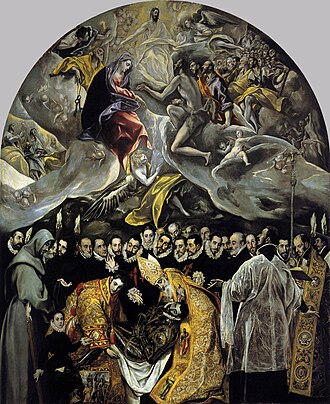 The Burial of the Count of Orgaz - El Greco (1586)
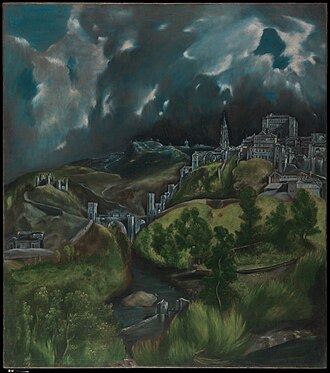 View of Toledo - El Greco (1596)
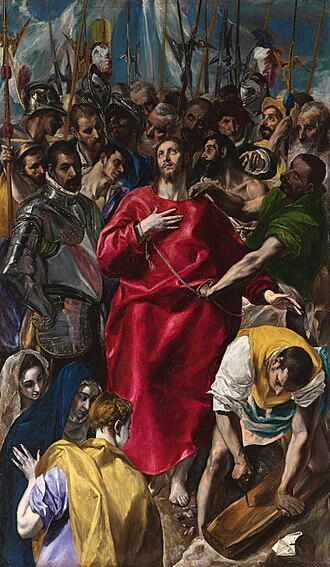 The Disrobing of Christ - El Greco (1570s)
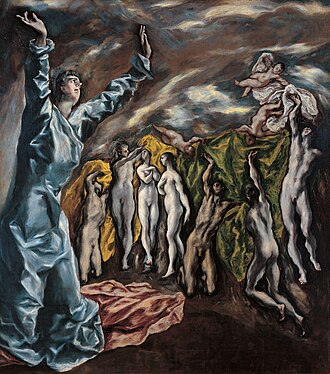 Opening of the Fifth Seal - El Greco (1610)
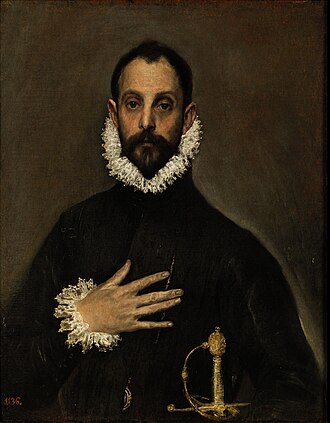 The Nobleman with his Hand on his Chest - El Greco (1580)
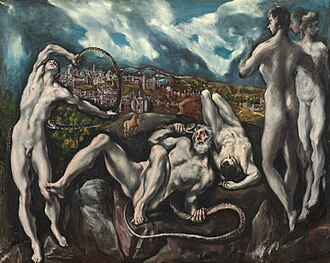 Laocoön - El Greco (1610s)
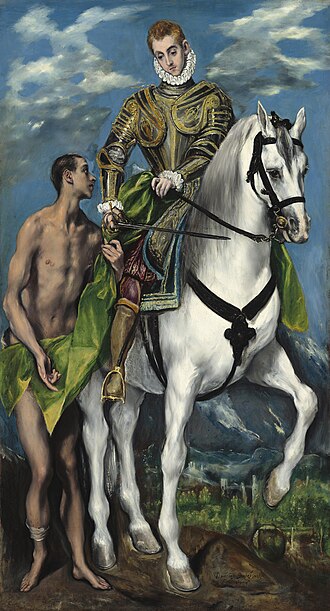 Saint Martin and the Beggar - El Greco (1597)
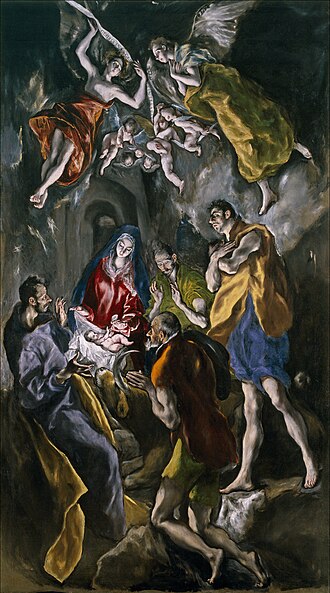 Adoration of the Shepherds - El Greco (1612)
Paintings by related artists
 The Wedding at Cana - Paolo Veronese (1560s)
 The Feast in the House of Levi - Paolo Veronese (1573)
 Last Supper - Jacopo Tintoretto (1563)
 Miracle of the Slave - Jacopo Tintoretto (1540s)
 Venus of Urbino - Titian (1538)
 Assumption of the Virgin - Titian (1510s)
 Supper at Emmaus - Caravaggio (1601)
 The Calling of Saint Matthew - Caravaggio (1609)
 The Ambassadors - Hans Holbein the Younger (1533)
 The Body of the Dead Christ in the Tomb - Hans Holbein the Younger (1520s)