The Rose
Jean-Léon Gérôme · 1887
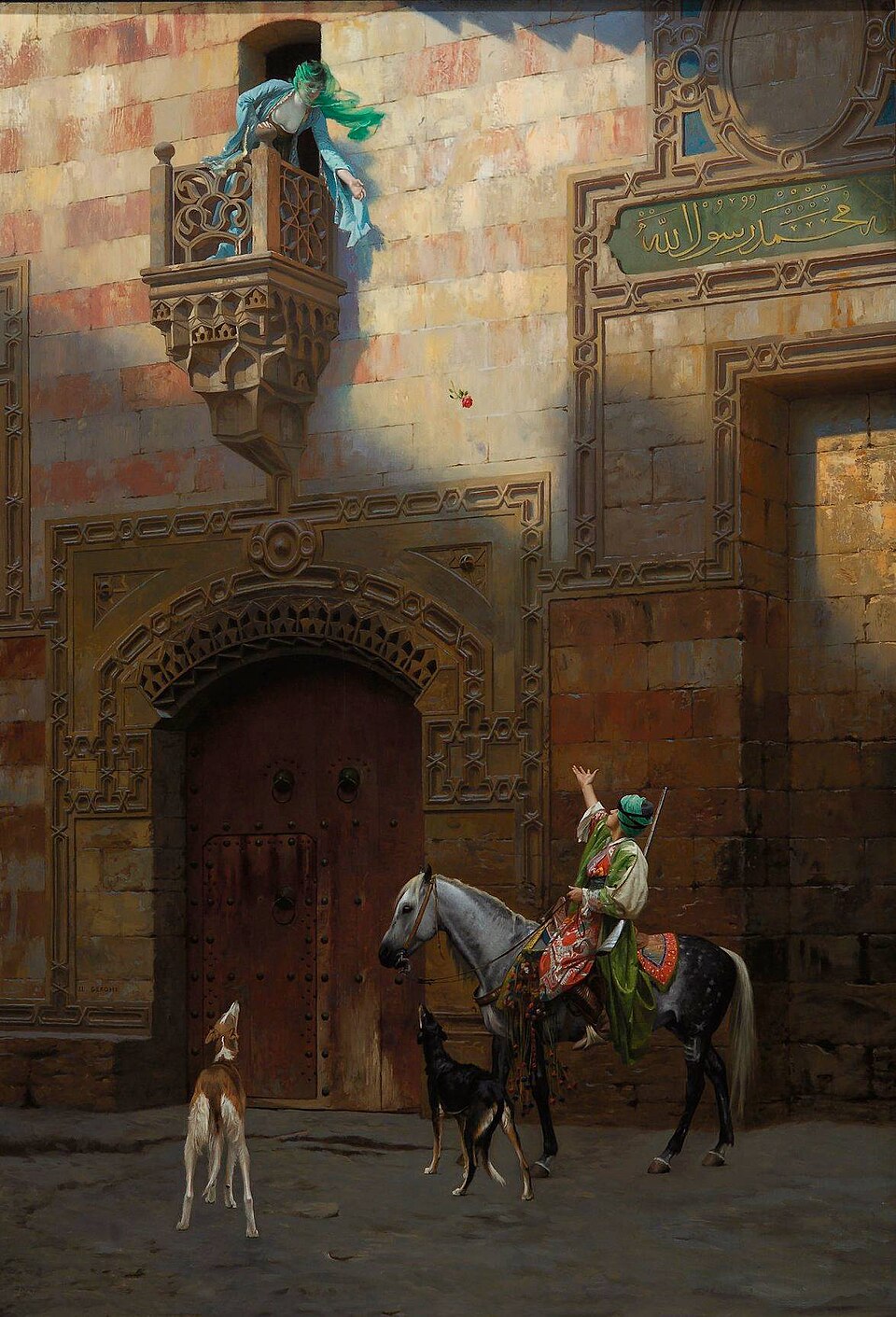
A veiled woman in turquoise leans from a carved stone balcony and smiles as she drops a red rose. Below, a rider on a black and white horse stretches up to catch it. Gérôme built a whole drama of longing out of one small flower.
The story behind the painting
Jean-Léon Gérôme painted The Rose, also called The Love Pledge, in 1887. It is an Orientalist scene, one of many in which the French painter imagined life in the Arab world. Before the final version he made a preparatory painting, now in a private collection. In that first version some things are different, most notably the two dogs, which do not yet appear. The change shows the painter still adjusting his scene, paying close attention to the balance of story and image. Gérôme signed the finished canvas JL. GEROME at the lower left, working the signature into the frame of the doorway.
What to look for
The scene unfolds in front of a building richly decorated with Arab-inspired architecture. A woman in a turquoise dress, partly hidden by a veil, leans from a finely carved stone balcony. Smiling, she holds out her hand: she has just thrown a red rose to the man below. He sits on a black and white horse, looking up, his right arm reaching for the flower. His white, red and green clothes and green turban suggest a man of high rank, and a rifle hangs from his left shoulder. In the street two dogs, one brown and white, one black, add a touch of everyday life. Above the door an Arabic inscription reads that Muhammad is the Messenger of God.
Meaning and intent
The tall, vertical composition keeps the two figures physically apart, one high on the balcony, one down in the street. Through that gap Gérôme suggests distance, desire and waiting, a theme that recurs in 19th-century Orientalist painting. The warm colours of the building, moving between light and shadow, give depth and a sense of timelessness, and the architecture plays a central role. The dogs, looking on from the ground, quietly draw our eye back up to the exchange above them. The rose is the only thing that crosses the space between the two people, and the whole picture waits on whether he will catch it.
Legacy
The painting was acquired by Matthias Hallenback Arnot, an American collector and philanthropist. At his death he left his collection to the community of Elmira, New York, and it became the founding collection of the Arnot Art Museum, where The Rose still hangs today. Arnot also left another work by Gérôme, The Marabout. Sources give the size in different orders: the French Wikipedia article gives 64 by 93 cm, while Wikidata lists 92.7 by 64.1 cm. The vertical design described in the article fits a canvas taller than it is wide.
Schon gewusst?
- Painted by Gérôme in 1887; also called The Love Pledge.
- An earlier study without the two dogs is in a private collection.
- Signed JL. GEROME in the doorframe at lower left.
- In the Arnot Art Museum, Elmira, New York.
Über den Künstler
Jean-Léon Gérôme (1824-1904)
Mehr von Jean-Léon Gérôme
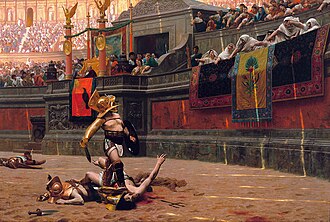 Pollice verso - Jean-Léon Gérôme (1872)
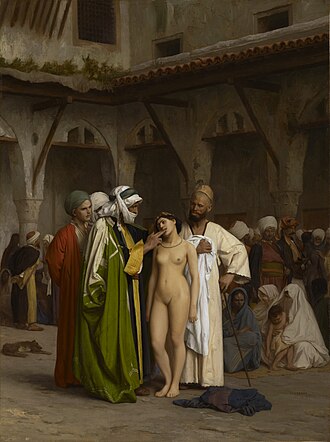 Der Sklavenmarkt - Jean-Léon Gérôme (1866)
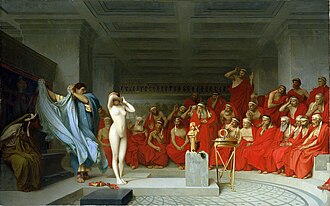 Phryne vor dem Areopag - Jean-Léon Gérôme (1861)
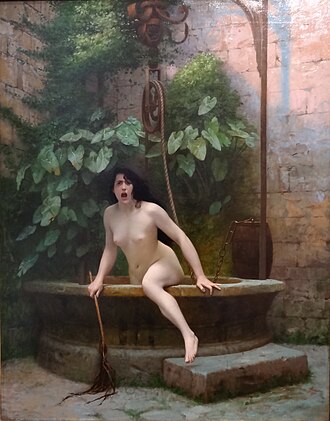 Die Wahrheit steigt aus dem Brunnen - Jean-Léon Gérôme (1896)
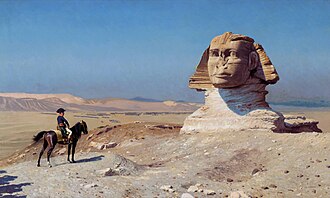 Bonaparte Before the Sphinx - Jean-Léon Gérôme (1867)
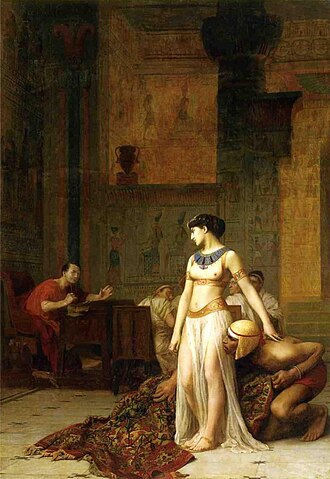 Cleopatra and Caesar - Jean-Léon Gérôme (1866)
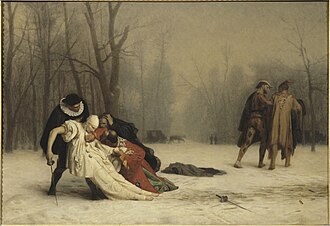 The Duel After the Masquerade - Jean-Léon Gérôme (1857)
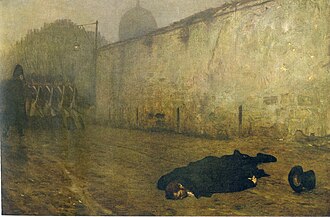 The Execution of Marshal Ney - Jean-Léon Gérôme (1868)
Werke verwandter Künstler
 Das Frühstück im Grünen - Édouard Manet (1863)
 Olympia - Édouard Manet (1863)
 Der Ursprung der Welt - Gustave Courbet (1866)
 Ein Begräbnis in Ornans - Gustave Courbet (2020)
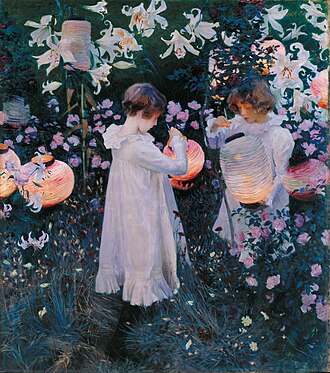 Nelke, Lilie, Lilie, Rose - John Singer Sargent (1885-1886)
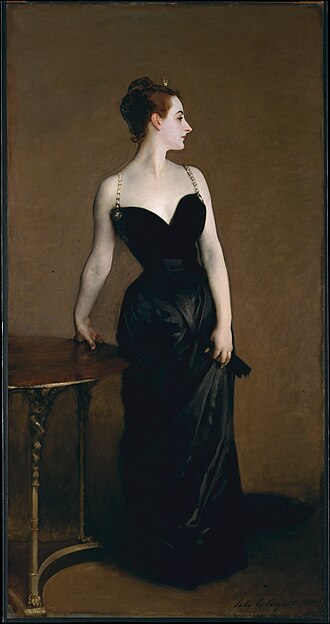 Madame X - John Singer Sargent (1884)
 Die Freiheit führt das Volk - Eugène Delacroix (1830)
 Der Tod des Sardanapal - Eugène Delacroix (1827)
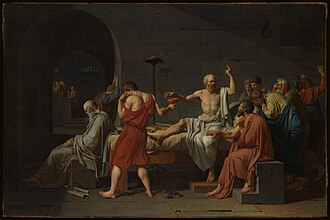 Der Tod des Sokrates - Jacques-Louis David (1787)
 Der Schwur der Horatier - Jacques-Louis David (1784)
 Die Schwestern Waldegrave - Joshua Reynolds (1780)
 Porträt des Colonel George K. H. Coussmaker vom Regiment der Garde-Grenadiere - Joshua Reynolds (1782)