Cleopatra and Caesar
Jean-Léon Gérôme · 1866
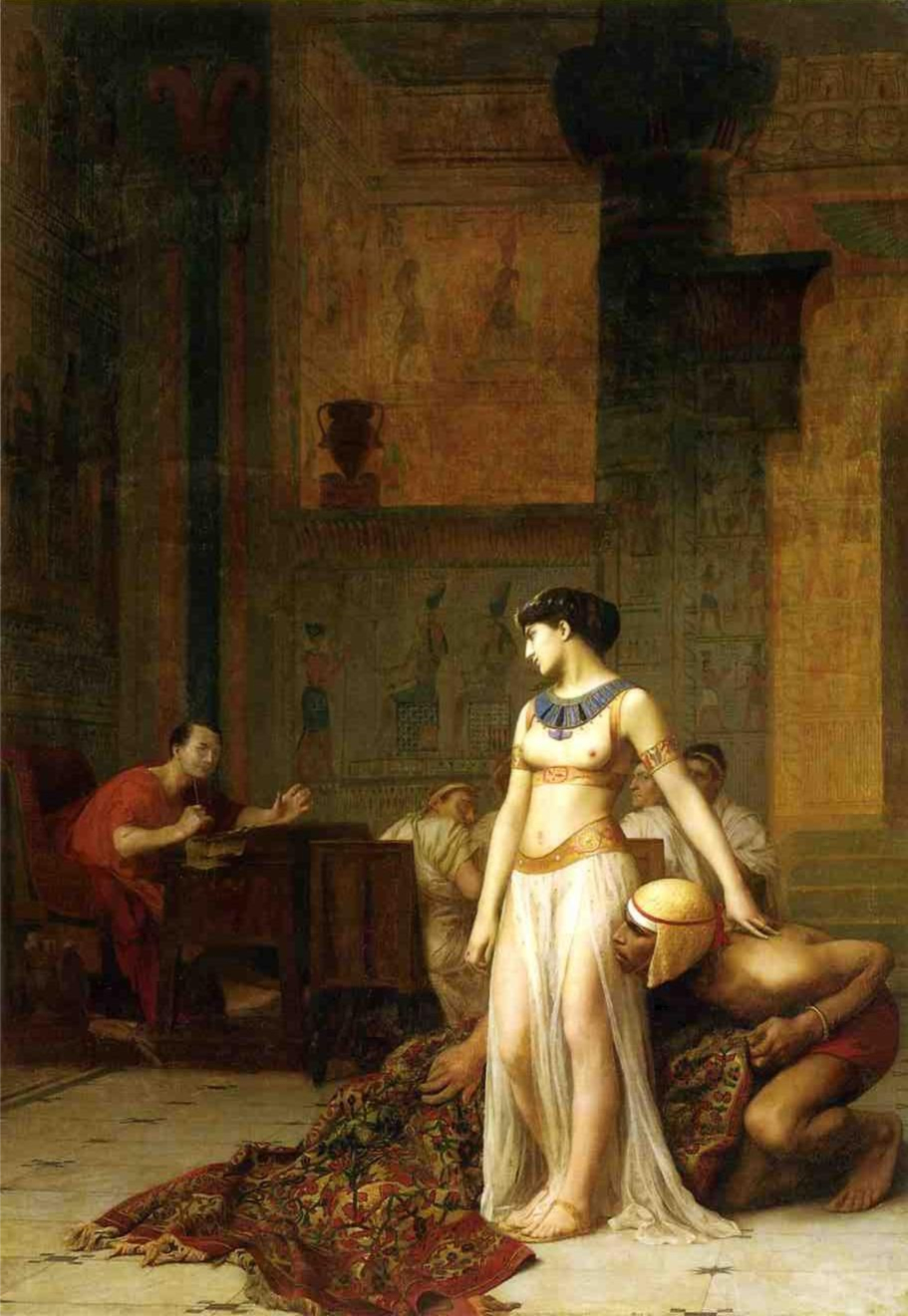
A young queen steps out of a rolled rug before the most powerful man in the world. Gérôme's Cleopatra became one of the most famous images of Egyptomania, even though the carpet itself was a mistake of translation.
The story behind the painting
The French writer Prosper Mérimée first proposed the subject to Gérôme in a letter of December 1860. Later the wealthy courtesan La Païva commissioned the painting for her mansion on the Champs-Élysées. According to the American critic Earl Shinn, it was first painted on silk as a transparency that could be lowered or raised to divide a long salon in two. Gérôme made at least two earlier oil versions and many sketches. In one, Cleopatra lies on the ground reaching towards Caesar; in another, Caesar sits alone with his hands on the desk, without his four secretaries.
What to look for
The scene is set in 47 BC. Apollodorus, Cleopatra's servant, has just smuggled her into the palace inside a rug, and in the finished version she stands before Caesar while Apollodorus bends down beside her. The figures are about half life-size, on a canvas of about 183 by 129.5 cm. Look at the Egyptian setting behind them: although Gérôme had visited Egypt in 1857 and gathered local colour there, the background comes from a plate in the Description de l'Égypte showing a temple at Deir el-Medina.
Meaning and intent
Gérôme followed Plutarch's Life of Caesar, written more than a century after the meeting. But Plutarch described something closer to a duffel bag. A 1770 translation by John and William Langhorne used the word carpet, which then meant a thick fabric, and by the nineteenth century the word had come to mean a rug. Gérôme was one of the first to make the rug image popular in modern art. The historian Charles Sowerwine notes that Gérôme painted erotic subjects but avoided indecency by placing them in historical or Oriental settings, and the George Mason Egyptomania project calls this picture a classic example of the style.
Legacy
La Païva disliked the result and returned it. Gérôme strengthened the canvas, and it was bought by his father-in-law, the dealer Adolphe Goupil. It was shown at the Salon of 1866 as César et Cléopâtre and at the Royal Academy in 1871. Goupil reproduced it in engravings and photographs, so it reached a wide audience in Britain and the United States, and later stage and film versions of Cleopatra looked to it. Whiting suggests it may have influenced the carpet scene in George Bernard Shaw's Caesar and Cleopatra. The banker Darius Ogden Mills bought it in the 1870s and his family kept it until 1990; Wikidata places it today at the Raclin Murphy Museum of Art.
Schon gewusst?
- Commissioned by La Païva, who returned it to the artist.
- Shown at the Salon of 1866 and the Royal Academy in 1871.
- The rug comes from a 1770 translation of Plutarch.
- Spread widely through Goupil's engravings and photographs.
Über den Künstler
Jean-Léon Gérôme (1824-1904)
Mehr von Jean-Léon Gérôme
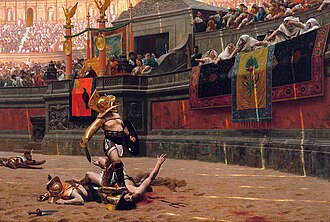 Pollice verso - Jean-Léon Gérôme (1872)
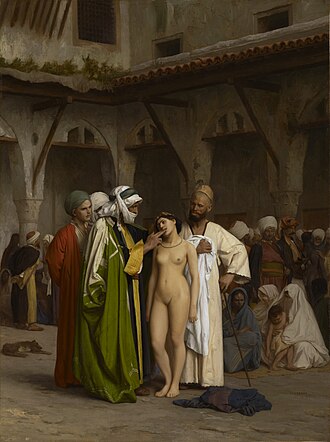 Der Sklavenmarkt - Jean-Léon Gérôme (1866)
%20-%2001.jpg) Phryne vor dem Areopag - Jean-Léon Gérôme (1861)
Phryne vor dem Areopag - Jean-Léon Gérôme (1861)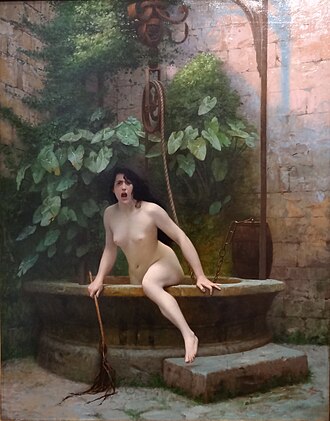 Die Wahrheit steigt aus dem Brunnen - Jean-Léon Gérôme (1896)
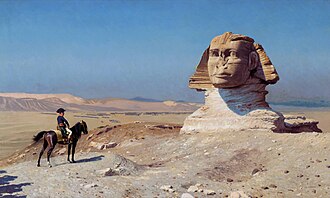 Bonaparte Before the Sphinx - Jean-Léon Gérôme (1867)
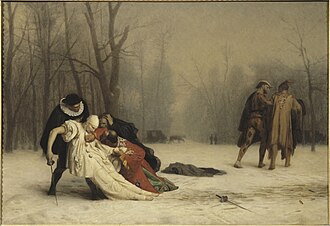 The Duel After the Masquerade - Jean-Léon Gérôme (1857)
.jpg) The Execution of Marshal Ney - Jean-Léon Gérôme (1868)
The Execution of Marshal Ney - Jean-Léon Gérôme (1868)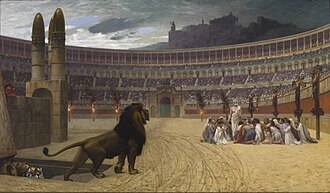 Das letzte Gebet der Christen im Circus Maximus - Jean-Léon Gérôme (1883)
Werke verwandter Künstler
 Das Frühstück im Grünen - Édouard Manet (1863)
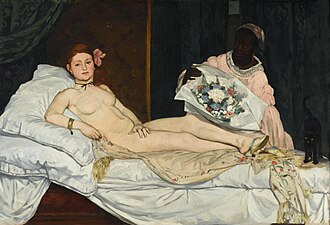 Olympia - Édouard Manet (1863)
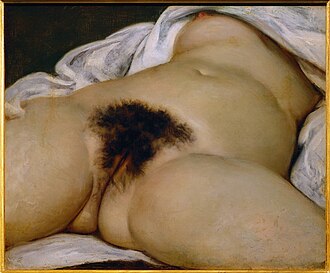 Der Ursprung der Welt - Gustave Courbet (1866)
 Ein Begräbnis in Ornans - Gustave Courbet (2020)
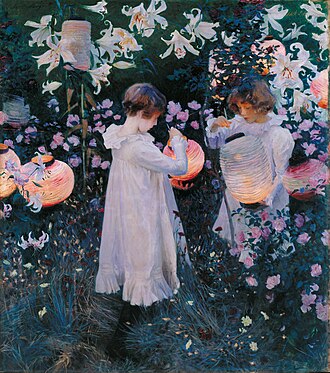 Nelke, Lilie, Lilie, Rose - John Singer Sargent (1885-1886)
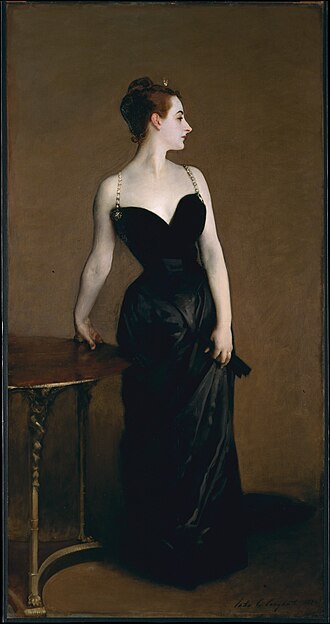 Madame X - John Singer Sargent (1884)
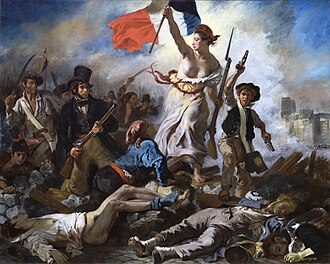 Die Freiheit führt das Volk - Eugène Delacroix (1830)
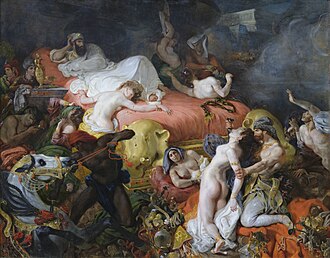 Der Tod des Sardanapal - Eugène Delacroix (1827)
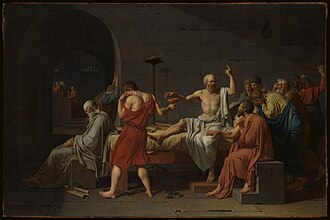 Der Tod des Sokrates - Jacques-Louis David (1787)
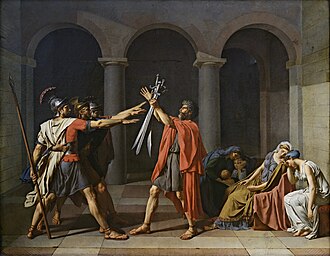 Der Schwur der Horatier - Jacques-Louis David (1784)
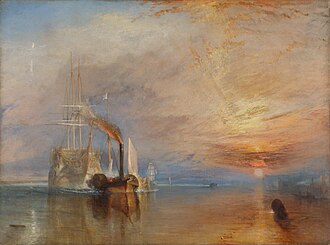 Die letzte Fahrt der Temeraire - J. M. W. Turner (1839)
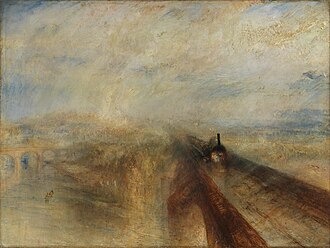 Rain, Steam and Speed - The Great Western Railway - J. M. W. Turner (1844)