Ein ungleiches Paar
Lucas Cranach der Ältere · 1548
.jpg)
A young man hands over a bag of money, a young woman waits, and between them stands the procuress, wicked and watchful. Cranach painted this panel in 1548. Its journey since then has taken it through exile, war, a night-time armed robbery and a decade in hiding.
The story behind the painting
The Procuress is an oil on panel by the German Renaissance painter Lucas Cranach the Elder, dated 1548. Its first known owner was Grand Duke George Alexandrovich of Russia, who brought it to Georgia in the 19th century. At the start of the 20th century it passed to the private collector Alexandre Korganoff, who sold it to the Georgian painter and collector Dimitri Shevardnadze, and he placed it in the Art Gallery in Tbilisi. In March 1921, after the Red Army ended Georgia's independence, the historian and archaeologist Ekvtime Takaishvili left for Paris with the government in exile, taking treasures from the national collection, this painting among them, to keep them safe.
What to look for
Three people fill the panel. The young man gives a bag of money to the procuress, who is the real protagonist of the composition. Beside them is the young woman whom the man is to marry. The procuress catches the eye at once: her wicked appearance gives the scene a harmful, ensnaring aura, as if she were the one holding every thread. The panel measures about 86 by 59 cm, according to Wikidata, and it is painted in the style of the Northern Renaissance. Spanish and German titles call it an unequal couple, which points to the bargain at its heart.
Meaning and intent
The picture turns a marriage into a transaction, with money changing hands under the gaze of a go-between. In Paris, the panel had to be protected not only from the Soviets but also from the Nazis. Adolf Hitler considered Cranach the most German of painters, chased after his works and owned several of them. The fact that this small panel escaped both threats is part of why it matters so much in Georgia today: it stands for a national collection that was carried abroad to survive and came home again.
Legacy
In 1946 the painting returned to Georgia with the other treasures. From 1969 it spent a decade in Moscow for restoration, came back, and then vanished. In July 1994, during the routine blackouts of the time, five armed men broke into the Museum of Arts at night with the alarm out, tied up the guards and took it with other paintings. In 2004 a powerful crime figure, Gogi Chikovani, offered the prosecutor a trade for family heirlooms seized from his home by police. Police then found the painting near the Wedding Palace on the left bank of the Mtkvari, exactly ten years after it disappeared. It is now in the Georgian National Museum.
Schon gewusst?
- Oil on panel by Lucas Cranach the Elder, dated 1548.
- Taken to Paris in 1921 by Ekvtime Takaishvili and returned in 1946.
- Stolen at night in July 1994 by five armed men.
- Recovered in 2004, now in the Georgian National Museum in Tbilisi.
Über den Künstler
Lucas Cranach der Ältere (1472-1553)
Mehr von Lucas Cranach der Ältere
.jpg) Der Jungbrunnen - Lucas Cranach the Elder (1546)
Der Jungbrunnen - Lucas Cranach the Elder (1546)%20-%20Venus%20and%20Cupid%20(National%20Gallery%2C%20London).jpg) Venus mit Amor als Honigdieb - Lucas Cranach the Elder (1520s)
Venus mit Amor als Honigdieb - Lucas Cranach the Elder (1520s).jpg) Caritas - Lucas Cranach the Elder (1540)
Caritas - Lucas Cranach the Elder (1540)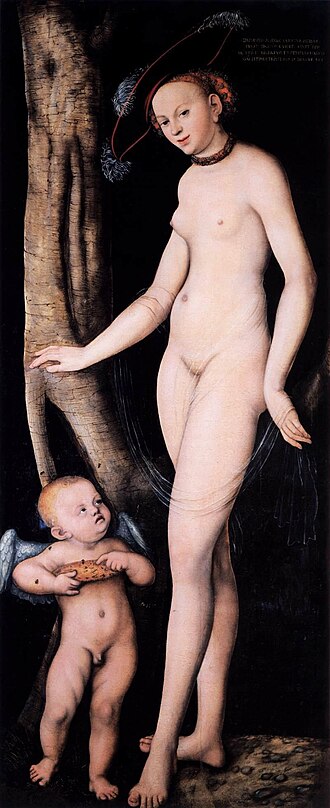 Venus und Amor mit einer Wabe - Lucas Cranach the Elder (1531)
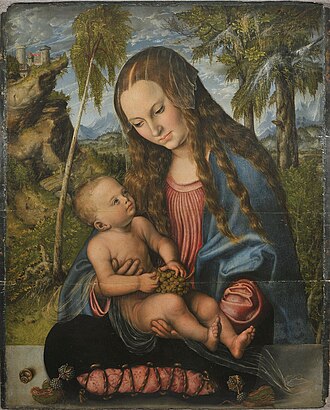 Madonna unter den Tannen - Lucas Cranach the Elder
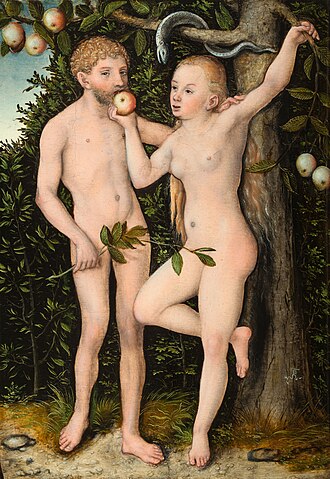 Adam und Eva - Lucas Cranach the Elder (1538)
.jpg) Gesetz und Gnade - Lucas Cranach the Elder (1529)
Gesetz und Gnade - Lucas Cranach the Elder (1529).jpg) Fürst Johann von Anhalt - Lucas Cranach the Elder (1520)
Fürst Johann von Anhalt - Lucas Cranach the Elder (1520)
Werke verwandter Künstler
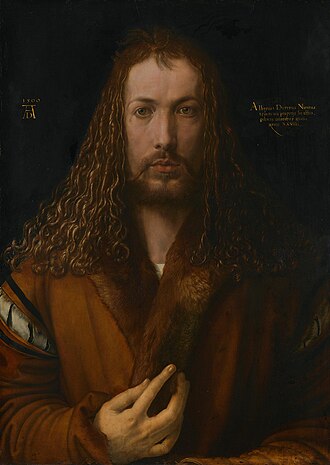 Selbstbildnis im Pelzrock - Albrecht Dürer (1500)
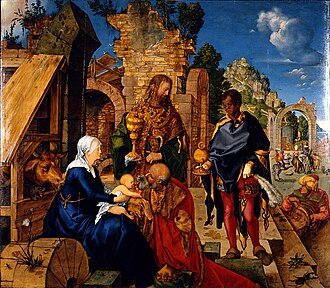 Anbetung der Könige - Albrecht Dürer (1504)