Das Atelier des Künstlers
Gustave Courbet · 1855
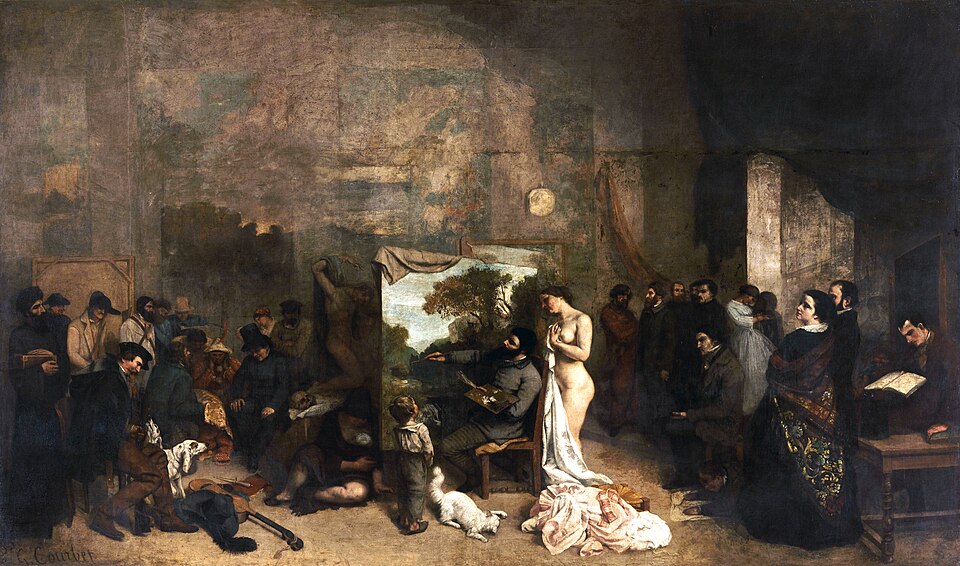
Nearly six metres wide, crowded with beggars, poets, collectors and a nude model, Courbet's studio holds the whole of society. At its centre, the painter calmly works on a landscape of home.
The story behind the painting
Courbet called it a real allegory summing up seven years of his artistic and moral life. He painted it in Ornans in 1855, in a short time, so many plans had to be dropped: on the back wall he meant to show copies of his own paintings but ran out of time and covered them with a reddish brown ground, leaving them half visible. The jury of the 1855 World Fair accepted eleven of his works but not this one. With Alfred Bruyas's help, Courbet opened his own Pavilion of Realism nearby, an act of self-promotion and defiance.
What to look for
The vast canvas, 361 by 598 cm, falls into three parts. On the left are people from every level of everyday French life, among them a Jewish man and an Irishwoman Courbet had seen in London, a hunter, and a contorted lay figure beside the easel. In the centre Courbet paints the Loue valley near Ornans, watched by a nude model, a young boy and a white cat. On the right stand friends and supporters: Bruyas, Champfleury, Proudhon, Baudelaire and a pair of wealthy collectors, many copied from photographs or earlier portraits because the work was made far from Paris.
Meaning and intent
Courbet said the world comes to be painted at his studio, and that the picture shows society at its best, its worst and its average. The phrase real allegory remains debated. Several details have been read as farewells: the lay figure and a skull resting on a copy of the Journal des débats as the death of academic art, and the guitar, dagger, plumed hat and buckled shoe at the hunter's feet as the death of Romanticism. Painting his home valley at the centre was an act of defiant provincialism. Linda Nochlin links the picture to Fourierism, a communitarian vision of society.
Legacy
Praise was scarce when it was first shown, but Eugène Delacroix was one of the few painters who supported it. Courbet's private Pavilion of Realism was a forerunner of the later exhibitions of refused works. Much of what we understand about the painting comes from Courbet's letters to Champfleury, in which he described its plan and asked for a photograph of Proudhon. Today it hangs in the Musée d'Orsay in Paris, a manifesto of Realism in which the artist puts himself, quite literally, at the heart of his world.
Schon gewusst?
- Painted in Ornans in 1855; 361 x 598 cm.
- Rejected by the 1855 World Fair jury; shown in Courbet's Pavilion of Realism.
- Includes Baudelaire, Champfleury, Proudhon and Alfred Bruyas.
- Musée d'Orsay, Paris.
Über den Künstler
Gustave Courbet (1819-1877)
Genreszene · Mann · Musée d’Orsay · Selbstbildnis
Mehr von Gustave Courbet
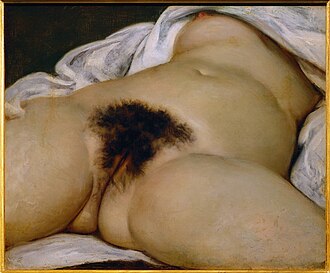 Der Ursprung der Welt - Gustave Courbet (1866)
 Ein Begräbnis in Ornans - Gustave Courbet (2020)
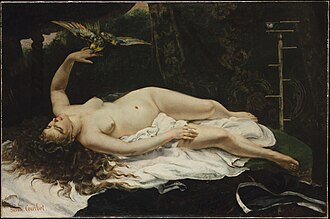 Frau mit Papagei - Gustave Courbet (1866)
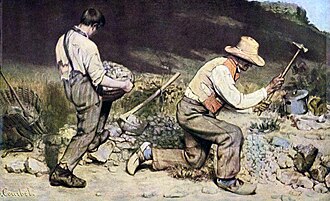 Die Steinklopfer - Gustave Courbet (1850)
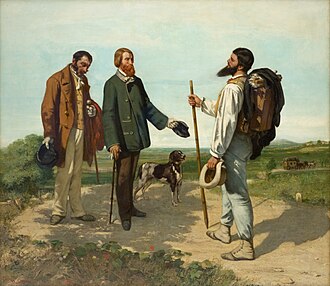 Die Begegnung, oder Bonjour, Monsieur Courbet! - Gustave Courbet (1854)
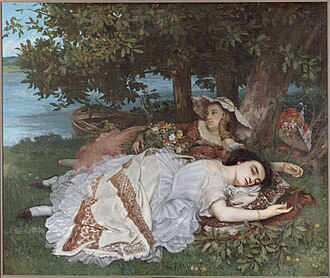 Mädchen an der Seine - Gustave Courbet (1857)
.jpg) Die Quelle - Gustave Courbet (1862)
Die Quelle - Gustave Courbet (1862)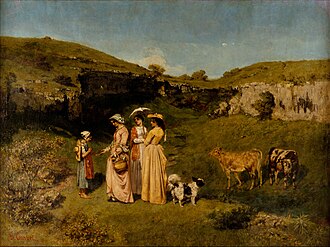 Junge Damen des Dorfes - Gustave Courbet (1850s)
Werke verwandter Künstler
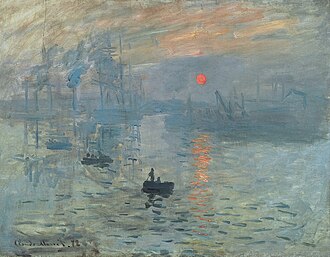 Impression, Sonnenaufgang - Claude Monet (1872)
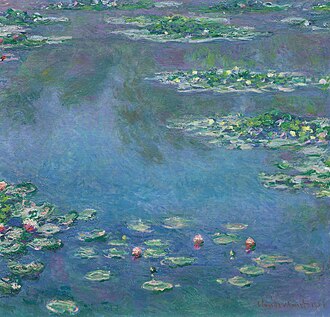 Seerosen - Claude Monet (1906)
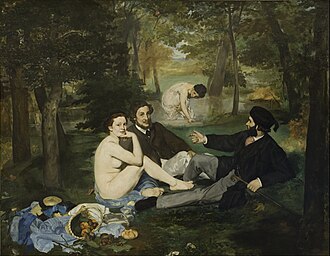 Das Frühstück im Grünen - Édouard Manet (1863)
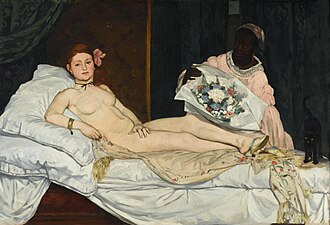 Olympia - Édouard Manet (1863)
 Die Sternennacht - Vincent van Gogh (1889)
.jpg) Caféterrasse am Abend - Vincent van Gogh (1888)
Caféterrasse am Abend - Vincent van Gogh (1888)