Die Begegnung, oder Bonjour, Monsieur Courbet!
Gustave Courbet · 1854
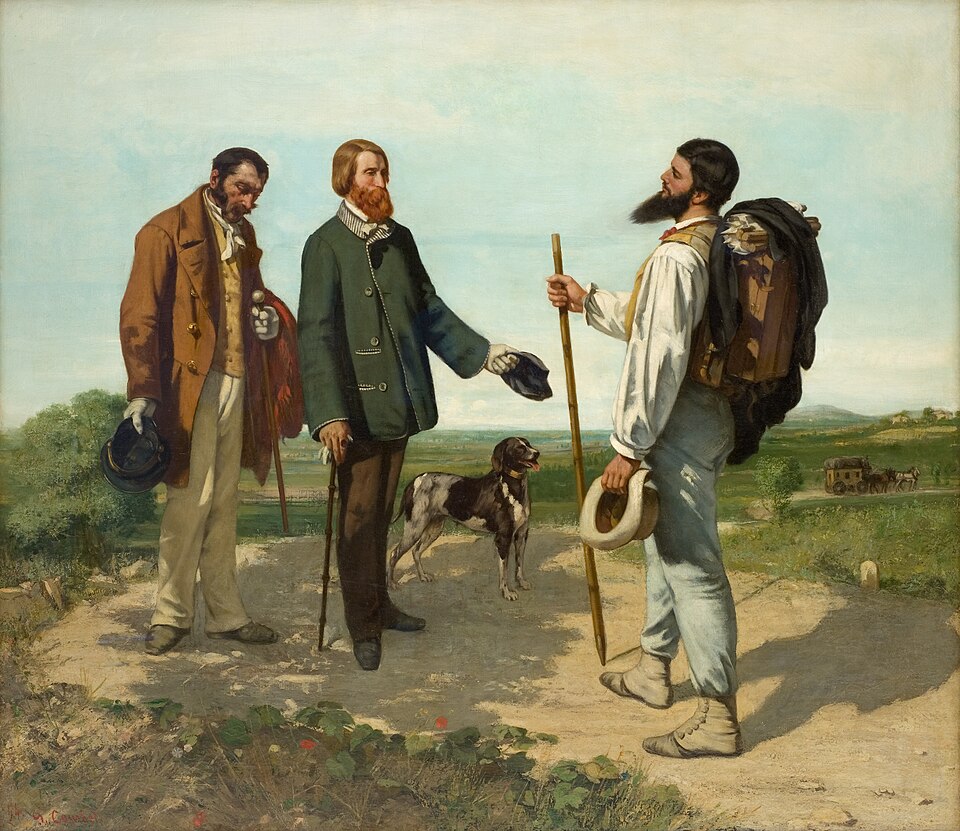
On a sunlit road near Montpellier, a patron doffs his hat to a bearded painter with a paintbox on his back. Courbet called it a greeting; his critics called it vanity.
The story behind the painting
Alfred Bruyas, the son of a Montpellier banker, chose to spend his wealth on art. He bought two Courbet paintings at the Salon of 1853 and invited the artist to Montpellier, and Courbet painted The Meeting there in the summer of 1854. Bruyas had sent him a photograph of a painting by Octave Tassaert that showed a patron in a central, commanding role. Courbet answered that he wished never to make a painting even as big as a hand to please anyone. Still, he valued their bond, writing that it was not they who had met, but their solutions.
What to look for
Three men and a dog meet where two roads cross near Lattes. On the left the servant Calas bows his head slightly; beside him Bruyas, stiff in a green jacket, raises his hat; the dog Breton stands by. On the right Courbet, with his box of paints and a parasol strapped to his back, stands tall and close to us, taking up as much space as the others combined. The palette is brighter than his earlier work, catching the warm light of the Mediterranean south. Fine brushstrokes give each figure crisp edges, so the three appear as silhouettes against a pale blue sky.
Meaning and intent
The scene probably did not happen as shown: Courbet first arrived in Montpellier by train, not coach, and he may instead be returning from a day of sketching outdoors. In 1967 Linda Nochlin identified the source of the composition in a popular print of the Wandering Jew meeting two burghers on a country road. Courbet identified with that figure, both marginal and free to roam, and once wrote that he had begun the great wandering, independent life of the gypsy. Here the artist presents himself as an equal, even more, of the man who pays him.
Legacy
Shown at the Paris Exhibition of 1855, the painting was largely ridiculed. Edmond About called it Fortune bowing before genius, and joked that only Courbet cast a shadow. A caricaturist made the others kneel before him. Bruyas felt his reputation slighted and did not show the work again until 1868, when he gave his collection to the Musée Fabre in Montpellier and hung it amid works he had commissioned. Visitors there included Vincent van Gogh and Paul Signac, who praised it as an exquisite landscape, sharp and lively.
Schon gewusst?
- Painted in 1854 near Montpellier.
- Shows Courbet, his patron Alfred Bruyas, the servant Calas and the dog Breton.
- Composition based on a print of the Wandering Jew (Linda Nochlin, 1967).
- Musée Fabre, Montpellier, since Bruyas's gift of 1868.
Über den Künstler
Gustave Courbet (1819-1877)
Genreszene · Selbstbildnis · langes Haar · Stehen · Hut · rothaarig · Bart
Mehr von Gustave Courbet
 Der Ursprung der Welt - Gustave Courbet (1866)
 Ein Begräbnis in Ornans - Gustave Courbet (2020)
 Das Atelier des Künstlers - Gustave Courbet (1855)
 Frau mit Papagei - Gustave Courbet (1866)
 Die Steinklopfer - Gustave Courbet (1850)
 Mädchen an der Seine - Gustave Courbet (1857)
.jpg) Die Quelle - Gustave Courbet (1862)
Die Quelle - Gustave Courbet (1862) Junge Damen des Dorfes - Gustave Courbet (1850s)
Werke verwandter Künstler
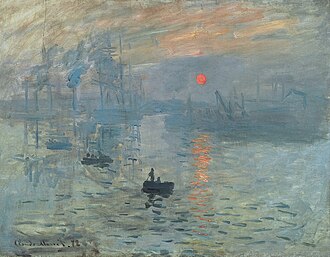 Impression, Sonnenaufgang - Claude Monet (1872)
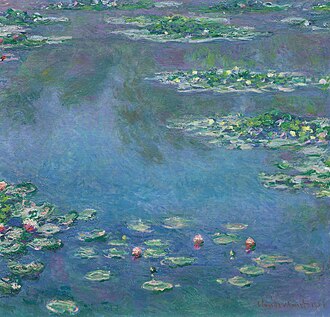 Seerosen - Claude Monet (1906)
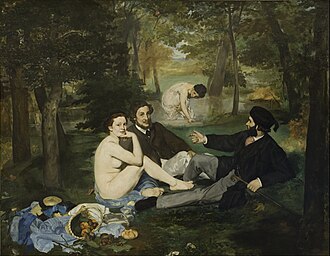 Das Frühstück im Grünen - Édouard Manet (1863)
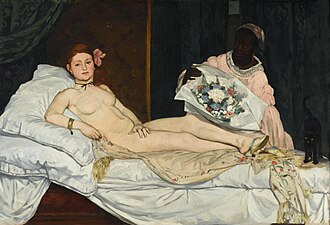 Olympia - Édouard Manet (1863)
 Die Sternennacht - Vincent van Gogh (1889)
.jpg) Caféterrasse am Abend - Vincent van Gogh (1888)
Caféterrasse am Abend - Vincent van Gogh (1888)