Die Kreuzigung Christi
Giotto di Bondone · 1310s
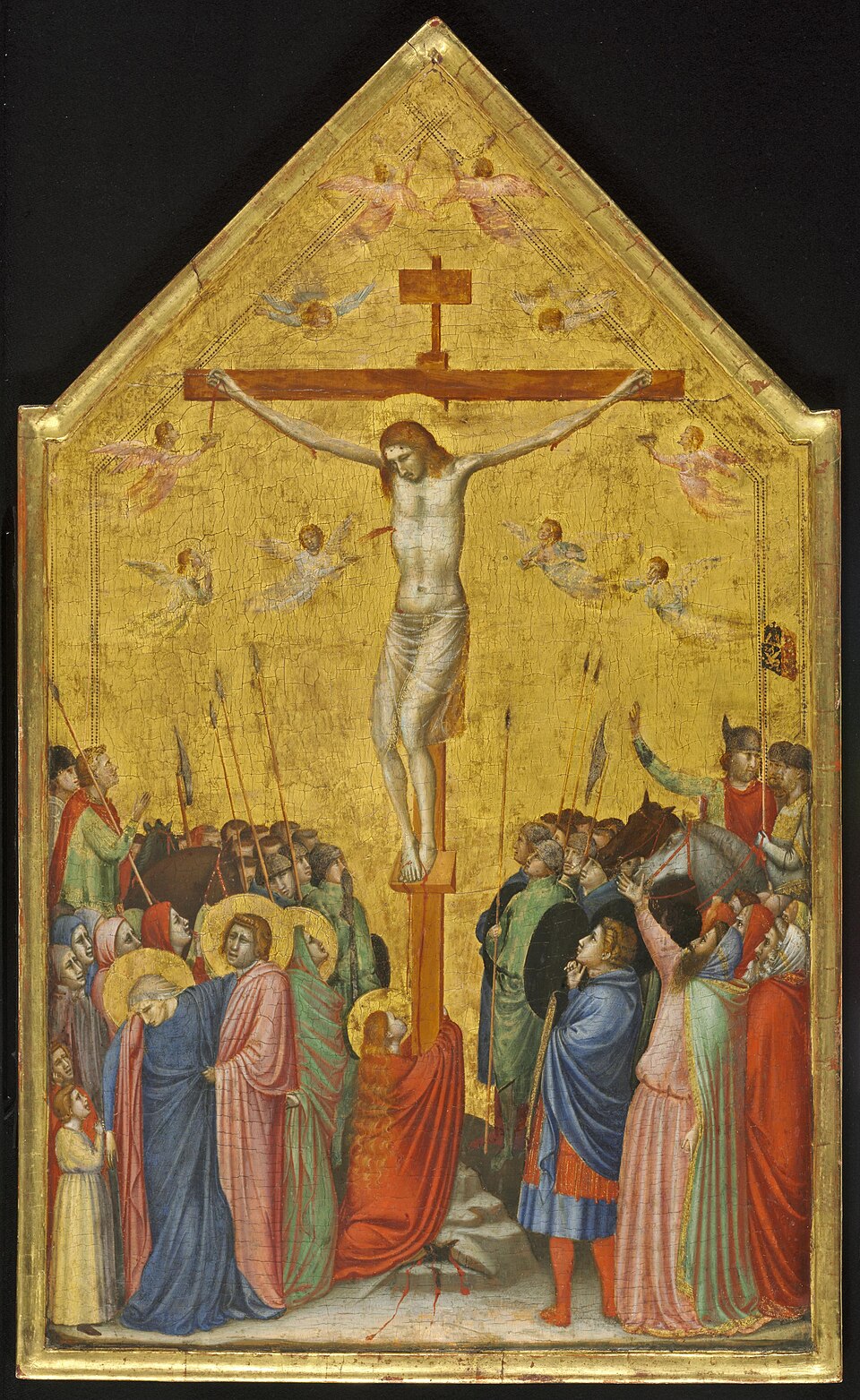
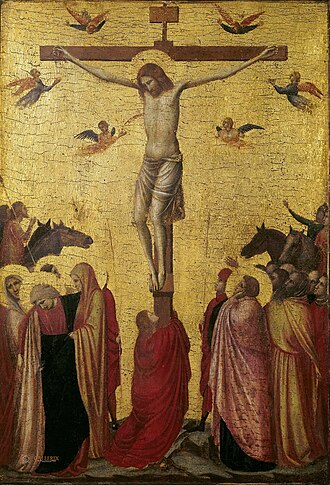
On a small gold panel in Berlin, a thin, almost thread-like Christ hangs alone at the centre while angels grieve around him and the crowd seems to spill beyond the frame.
The story behind the painting
The Berlin Crucifixion is a small panel in tempera and gold, about 60 by 36 cm, now in the Gemäldegalerie in Berlin. The Wikipedia article dates it to about 1320, while Wikidata gives the 1310s. Its authorship has long been debated. Wilhelm von Bode, in the first studies, attributed it to Giotto. Later critics, such as Roberto Longhi in 1948, doubted this. William Suida, Pietro Toesca and Richard Offner proposed a Master of the Strasbourg Crucifixion, grouping it with similar small works, while Roberto Salvini saw it as by a follower of Giotto. In each case it is considered a work from late in Giotto's life, because of its voluminous drapery, like that in the Bardi and Peruzzi chapels.
What to look for
The cross rises from the centre of the painting in hieratic splendour against a uniform gold ground. Sorrowful angels surround Christ, and Mary Magdalene, in a red dress, embraces the foot of the cross. Two groups gather at the sides, leaving Christ isolated in the middle. At the left, women surround the fainting Mary, and a young girl looks at her with worry. At the right, the article describes Saint John the Baptist standing with a man on horseback who raises his arm, a traditional gesture of those recognising Jesus as the Son of God. Notice how the side figures are cut off by the frame, making the crowd seem larger than the figures actually shown.
Meaning and intent
According to the article, the scene marks a turning point in traditional iconography, coming after the experimental innovations of the Crucifixion in Giotto's Scrovegni Chapel frescoes. Here Christ is thin, almost filament-like, far from the sense of weight given to the large painted crucifix of Santa Maria Novella. The effect is less physical and more devotional: the body seems to float against the gold, set apart from the human grief below. The small size suggests a picture for close, private looking. The contrast between the still, central Christ and the emotional groups at the sides, the fainting mother, the embracing Magdalene, invites the viewer to share in that mourning.
Legacy
Whether by Giotto himself, a Master of the Strasbourg Crucifixion, or a follower, the Berlin panel shows how the innovations associated with Giotto spread into small devotional paintings. The scholarly debate, carried on by Bode, Longhi, Suida, Toesca, Offner and Salvini, is itself part of its story, and it explains why the painting is described as attributed to Giotto. For visitors to the Gemäldegalerie, it offers a close encounter with the Proto-Renaissance: gold ground and hieratic order still present, yet filled with human feeling in the faces and gestures of the mourners. Its voluminous drapery links it to the late frescoes in Florence's Santa Croce.
Schon gewusst?
- Tempera and gold on panel, about 59.7 by 36.2 cm, in the Gemäldegalerie, Berlin.
- Dated about 1320 in the Wikipedia article; Wikidata gives the 1310s.
- Wilhelm von Bode attributed it to Giotto; Longhi and others doubted the attribution.
- Mary Magdalene, in red, embraces the foot of the cross.
Über den Künstler
Giotto di Bondone (1267-1337)
Frau · religiöse Kunst · Mann · Maria · Jesus Christus · Gemäldegalerie Berlin
Mehr von Giotto di Bondone
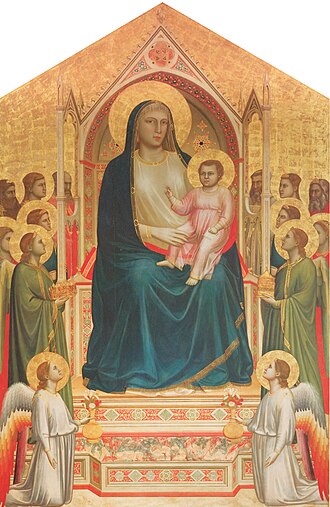 Ognissanti-Madonna - Giotto (1300s)
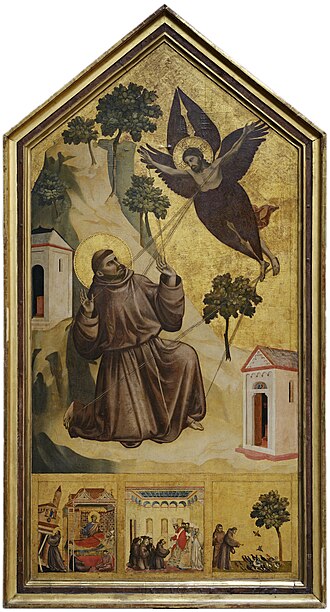 Die Stigmatisation des hl. Franziskus - Giotto (1290s)
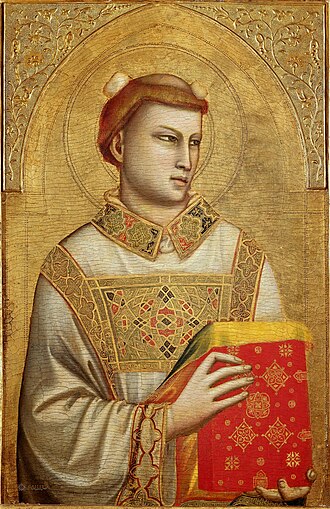 Heiliger Stephan - Giotto (1320)
 Crucifixion of Strasbourg - Giotto (1315)
 Badia Polyptychon - Giotto (1300s)
 Marienkrönung mit Engeln und Heiligen - Giotto (1328)
 Scenes from the New Testament: Lamentation - Giotto (1291)
 Madonna mit Kind - Giotto (1295)