Madonna mit Kind
Giotto di Bondone · 1295
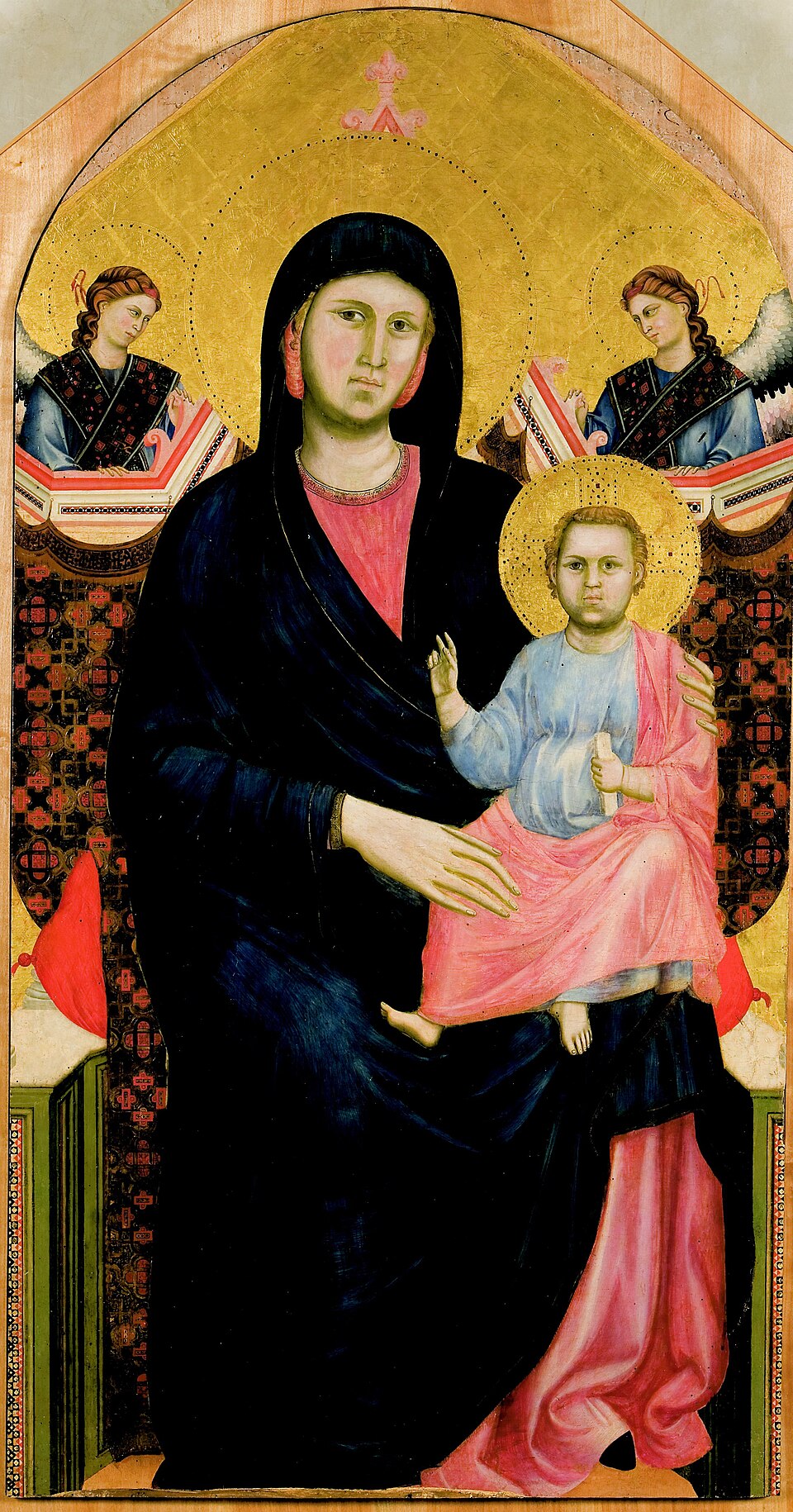
Cut down to fit a Baroque frame, struck by a bomb in 1993, this young Giotto Madonna still turns toward her child with the hint of a smile.
The story behind the painting
This Madonna and Child with two angels is a tempera painting on a gold ground on wood, attributed to Giotto and now in the diocesan museum of Santo Stefano al Ponte in Florence. Lorenzo Ghiberti and later Giorgio Vasari mentioned a panel by Giotto for the church and nuns of San Giorgio alla Costa, though neither named its subject. In 1705, when the church was renovated, the panel was sawn on every side to fit a Baroque frame: an arched top was cut, and the arms of the throne, the step and one of the Virgin's feet were lost.
What to look for
Mary sits on a marble throne decorated with Cosmatesque patterns, shown from the front with its sides opening like the pages of a book. A brocade cloth hangs from it on hooks. She holds the Child on her left knee in the Hodegetria pose; he faces us like a small adult, holding a scroll and blessing, though his restless right foot betrays him. Mary wears a blue mantle and a red head covering, with two strands of hair escaping. Her head turns gently toward him while she still looks at us. Two angels in ash-blue grip the throne with curled fingers.
Meaning and intent
The source sees here Giotto's early break with Byzantine tradition. The figures have solid volume and natural attitudes, recalling sculptures by Arnolfo di Cambio. Light seems to fall from a single source, and Mary's great blue robe looks as if it had been thrown over her from a real chair. Her relaxed face hides a smile that may be read as melancholy or serene. Dating is debated: Marco Ciatti and Andrea De Marchi place it just before 1290, while most historians, including Previtali, Bonsanti and Boskovits, date it around 1295. Wikidata gives 1295.
Legacy
The attribution itself was long disputed. Richard Offner and Pietro Toesca linked it to the anonymous Master of Saint Cecilia, while Robert Oertel first associated it with Giotto; today it is practically accepted by all historians as his. On 27 May 1993 the panel, stored near Santo Stefano al Ponte, was damaged in the Via dei Georgofili bombing. Paola Bracco of the Opificio delle pietre dure restored it, leaving one wound from a fragment in the left angel's robe visible through chromatic selection, a quiet record of its survival.
Schon gewusst?
- Cut on all sides in 1705 to fit a Baroque frame.
- Damaged in the Via dei Georgofili bombing of 27 May 1993, then restored.
- Dated before 1290 by some scholars, around 1295 by most.
- Size: 180 x 90 cm (Wikidata).
Über den Künstler
Giotto di Bondone (1267-1337)
Frau · religiöse Kunst · Maria · Junge · Jesuskind · Mutter
Mehr von Giotto di Bondone
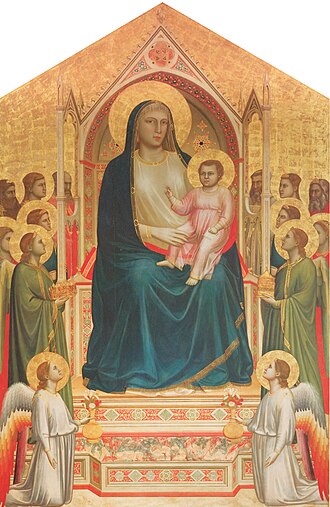 Ognissanti-Madonna - Giotto (1300s)
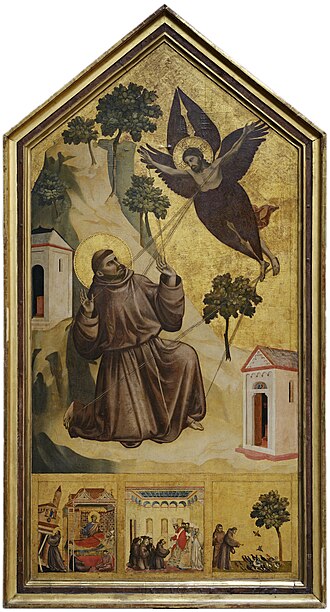 Die Stigmatisation des hl. Franziskus - Giotto (1290s)
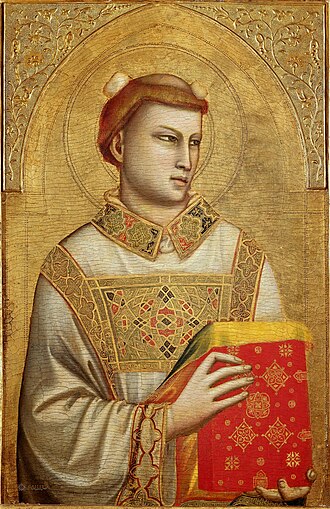 Heiliger Stephan - Giotto (1320)
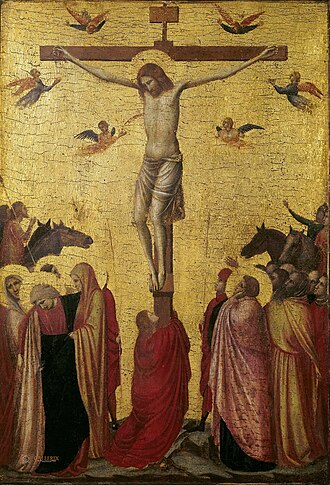 Crucifixion of Strasbourg - Giotto (1315)
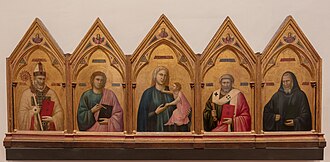 Badia Polyptychon - Giotto (1300s)
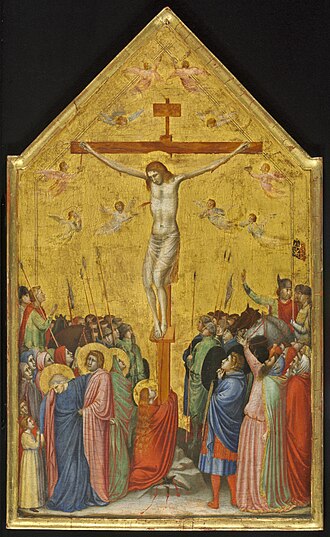 Die Kreuzigung Christi - Giotto (1310s)
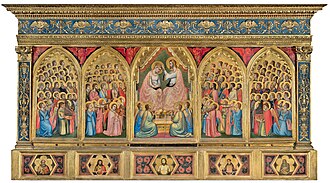 Marienkrönung mit Engeln und Heiligen - Giotto (1328)
 Scenes from the New Testament: Lamentation - Giotto (1291)