The Carpet Merchant
Jean-Léon Gérôme · 1887
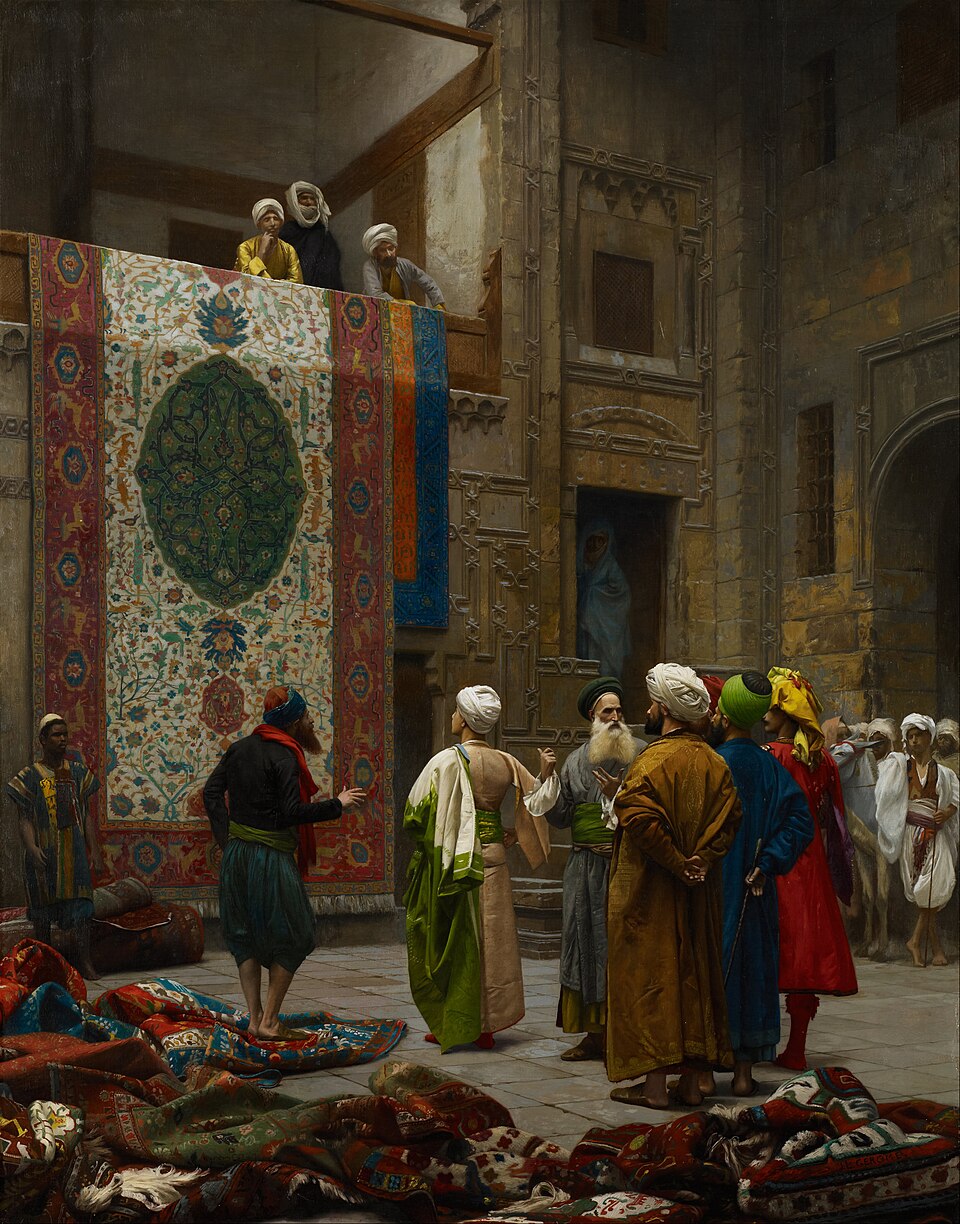
A great carpet hangs from a gallery down to the floor of a Cairo courtyard. Below it, merchants gesture and praise while silent buyers, seen from behind, tilt their heads up to judge it. Gérôme stages the sale like theatre.
The story behind the painting
After the 1873 World's Fair in Vienna, and with a growing middle class in Britain, a large market opened for Persian carpets. Demand grew so strong that wool was imported into Iran from Manchester, and Cairo was one of the busiest centres of the trade. Jean-Léon Gérôme was one of the most assertive and influential French Orientalist painters, working in a realist manner where faces, bodies, buildings and landscapes are precisely rendered. Wikidata dates this canvas to 1887.
What to look for
The scene, with a theatrical effect, takes place in the courtyard of a palace. The merchant's porters display a large carpet hanging from the first floor down to the courtyard. Four elegantly dressed buyers, seen from behind, stand silent with their noses in the air, while two merchants extol the carpet with wide, eloquent gestures. To the right wait the buyers' servants and a white donkey to carry the purchase away; to the left a Black guard, armed and wrapped in his cloak, stands in silence. The carpet, painted with small strokes from a rich palette, has a central rosette on a green ground. Note too the folds of carpets on the floor and the merchants' clothing.
Meaning and intent
Orientalism, which peaked in the late nineteenth century, explored exotic themes and reveries drawn from non-European cultures, especially the Arab world and the Middle East. Art historians distinguish realists who painted what they saw from those who imagined such scenes without leaving the studio, and Gérôme belongs with the realists. The source reads the green field, the sacred colour for Arabs, as a sign the carpet was made for the Arab world and meant for a mosque, where one must not walk on that green heart in shoes. The merchants are shown as belonging to a different social class from the rich buyers.
Legacy
The painting, oil on canvas, belongs to the Minneapolis Institute of Art. Wikidata gives its size as 86 by 68.7 cm. It is an example of how Gérôme's skill with fabrics, folds and costume detail served the Orientalist taste of his time. Its French title is Marchand de tapis au Caire, and in English it is also called The Carpet Merchant in Cairo. The scene also preserves a moment in a real trade: the years after 1873, when demand for Persian carpets grew so fast that Cairo's courtyards became showrooms for buyers.
Schon gewusst?
- Wikidata dates the painting to 1887.
- Set in Cairo, a major centre of the carpet trade.
- Gérôme was a leading French Orientalist painter.
- Held by the Minneapolis Institute of Art.
Über den Künstler
Jean-Léon Gérôme (1824-1904)
Genreszene · Minneapolis Institute of Art
Mehr von Jean-Léon Gérôme
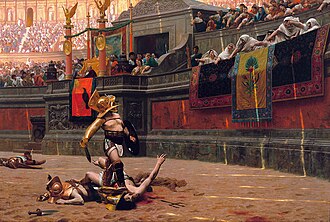 Pollice verso - Jean-Léon Gérôme (1872)
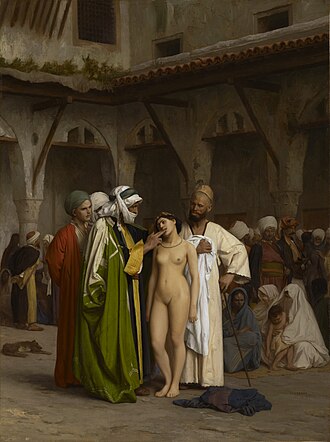 Der Sklavenmarkt - Jean-Léon Gérôme (1866)
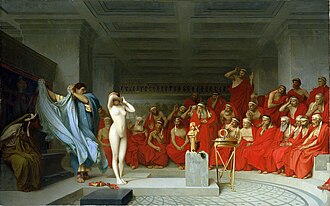 Phryne vor dem Areopag - Jean-Léon Gérôme (1861)
 Die Wahrheit steigt aus dem Brunnen - Jean-Léon Gérôme (1896)
 Bonaparte Before the Sphinx - Jean-Léon Gérôme (1867)
 Cleopatra and Caesar - Jean-Léon Gérôme (1866)
 The Duel After the Masquerade - Jean-Léon Gérôme (1857)
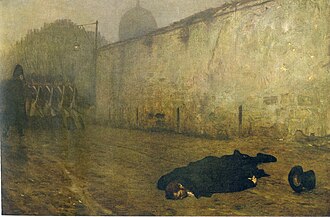 The Execution of Marshal Ney - Jean-Léon Gérôme (1868)
Werke verwandter Künstler
 Das Frühstück im Grünen - Édouard Manet (1863)
 Olympia - Édouard Manet (1863)
 Der Ursprung der Welt - Gustave Courbet (1866)
 Ein Begräbnis in Ornans - Gustave Courbet (2020)
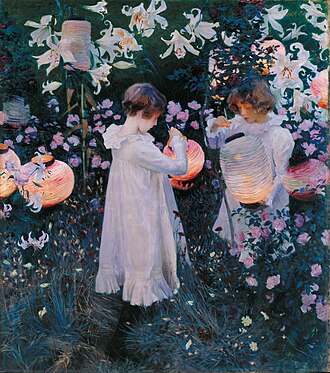 Nelke, Lilie, Lilie, Rose - John Singer Sargent (1885-1886)
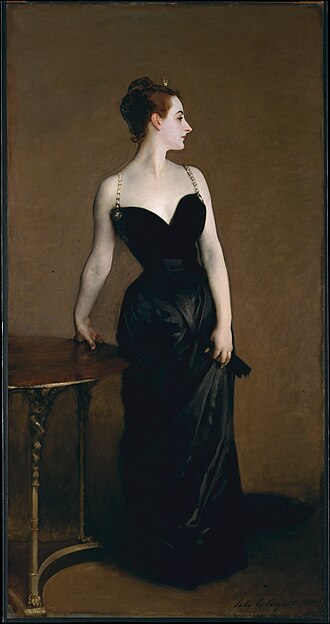 Madame X - John Singer Sargent (1884)
 Die Freiheit führt das Volk - Eugène Delacroix (1830)
 Der Tod des Sardanapal - Eugène Delacroix (1827)
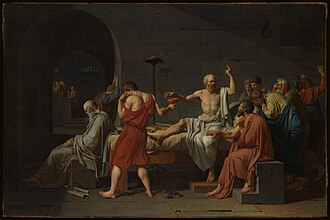 Der Tod des Sokrates - Jacques-Louis David (1787)
 Der Schwur der Horatier - Jacques-Louis David (1784)
 Die Schwestern Waldegrave - Joshua Reynolds (1780)
 Porträt des Colonel George K. H. Coussmaker vom Regiment der Garde-Grenadiere - Joshua Reynolds (1782)