St Paul
Giotto di Bondone · 1291
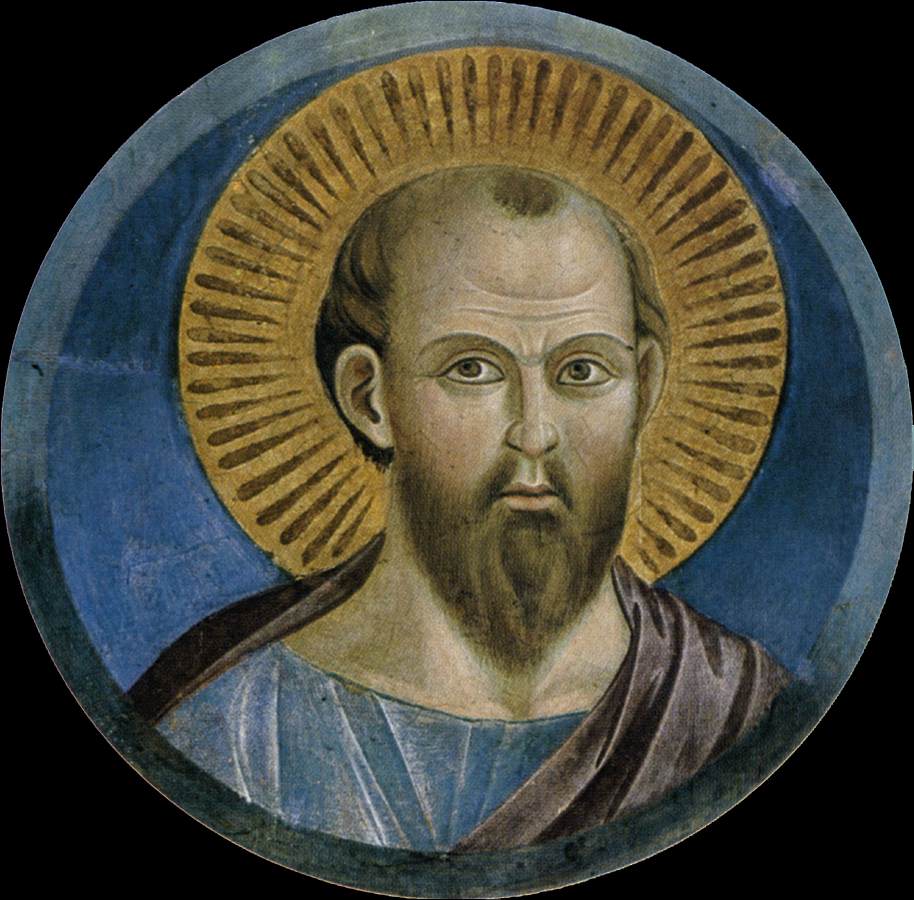
High above the doors of the basilica at Assisi, Saint Paul looks out from a painted circle, his beard chestnut brown, his body turning ever so slightly. Next to the rigid Saint Peter, he seems almost about to move.
The story behind the painting
This fresco is in the upper church of the Basilica of San Francesco in Assisi, on the inner side of the entrance wall. It is dated to around 1291-1295; Wikidata gives 1291. The attribution is cautious: it is given to Giotto di Bondone or perhaps to his workshop. Almost all the paintings on this inner façade are attributed to the young Giotto and his collaborators, at a moment just before the start of the Stories of Saint Francis. Above the doorway are three medallions with a smiling Madonna and Child and two angels. Higher up, beyond the lunette with Pentecost and the Ascension, are two large medallions with Saint Peter and Saint Paul.
What to look for
Saint Paul appears half-length inside a clipeus, a round painted shield or medallion, roughly half a metre across according to Wikidata. He bears his traditional features: chestnut hair and beard, a head balding at the temples, and a garment in the ancient style. The fresco is in good condition, so these details can still be read clearly. The key thing to look for is movement. While the figure of Peter faces us rigidly from the front, Paul seems to begin a slight twist of his upper body toward the left. It is a small change, but it gives the apostle a breath of life within his circular frame.
Meaning and intent
Placed high on the entrance wall, Peter and Paul together symbolise the direct protection of the papacy over the basilica. They are set like guardians above those who enter and leave. The contrast between them is telling. Peter is frontal and fixed, the solid foundation; Paul turns slightly, as if in thought or about to speak. Painted in medallions, they also recall ancient portrait shields, giving the two saints a monumental, timeless presence above the doors. For worshippers walking out of the church, Paul's slight turn makes him feel present and watchful.
Legacy
Historians have offered different views on who painted this fresco. Cesare Gnudi in 1959 noted Roman and Tuscan influences. Decio Gioseffi, in 1957 and 1963, and Roberto Salvini in 1962 spoke of an anonymous master inspired by Giotto, active after the Franciscan stories were painted. Current views suggest it was carried out from a drawing by the master of the Franciscan stories, probably by leading members of Giotto's workshop. Whatever the exact hand, this well-preserved medallion offers a glimpse of a workshop finding new life in old forms.
Schon gewusst?
- Fresco, about 1291-1295 (Wikidata: 1291), inner façade of the upper church, Assisi
- Attributed to Giotto or his workshop
- Paired with a medallion of Saint Peter; together they symbolise papal protection
- In good condition; Wikidata size 50 × 50 cm
Über den Künstler
Giotto di Bondone (1267-1337)
religiöse Kunst · Basilika San Francesco · Paulus von Tarsus
Mehr von Giotto di Bondone
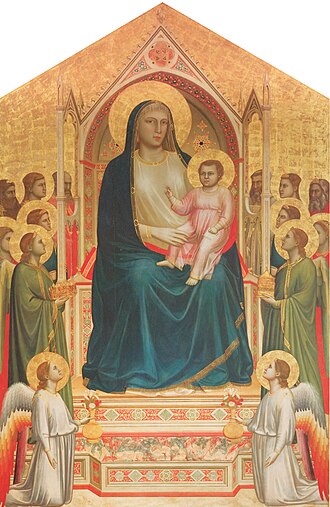 Ognissanti-Madonna - Giotto (1300s)
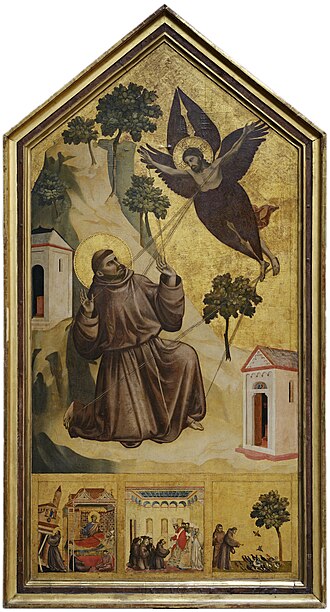 Die Stigmatisation des hl. Franziskus - Giotto (1290s)
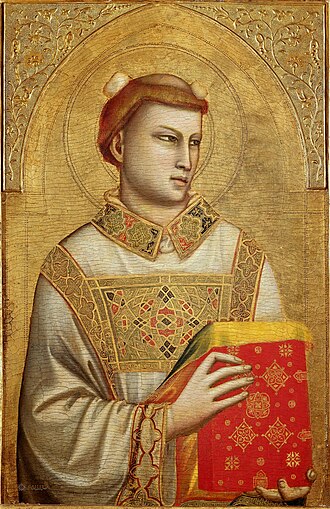 Heiliger Stephan - Giotto (1320)
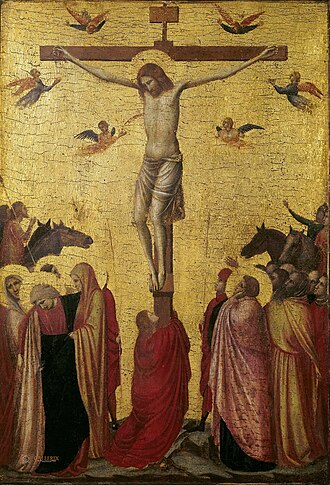 Crucifixion of Strasbourg - Giotto (1315)
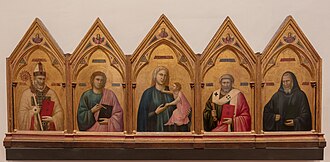 Badia Polyptychon - Giotto (1300s)
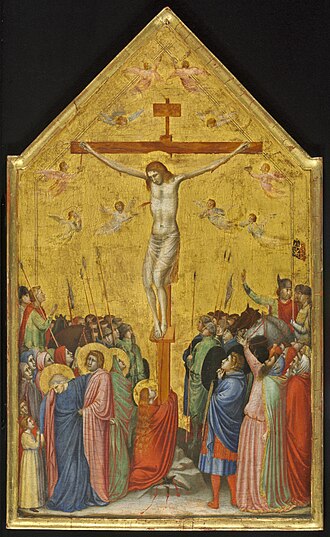 Die Kreuzigung Christi - Giotto (1310s)
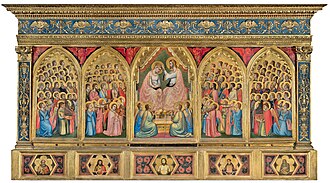 Marienkrönung mit Engeln und Heiligen - Giotto (1328)
 Scenes from the New Testament: Lamentation - Giotto (1291)