Porträt des Cornelis van der Geest
Anthonis van Dyck · 1619
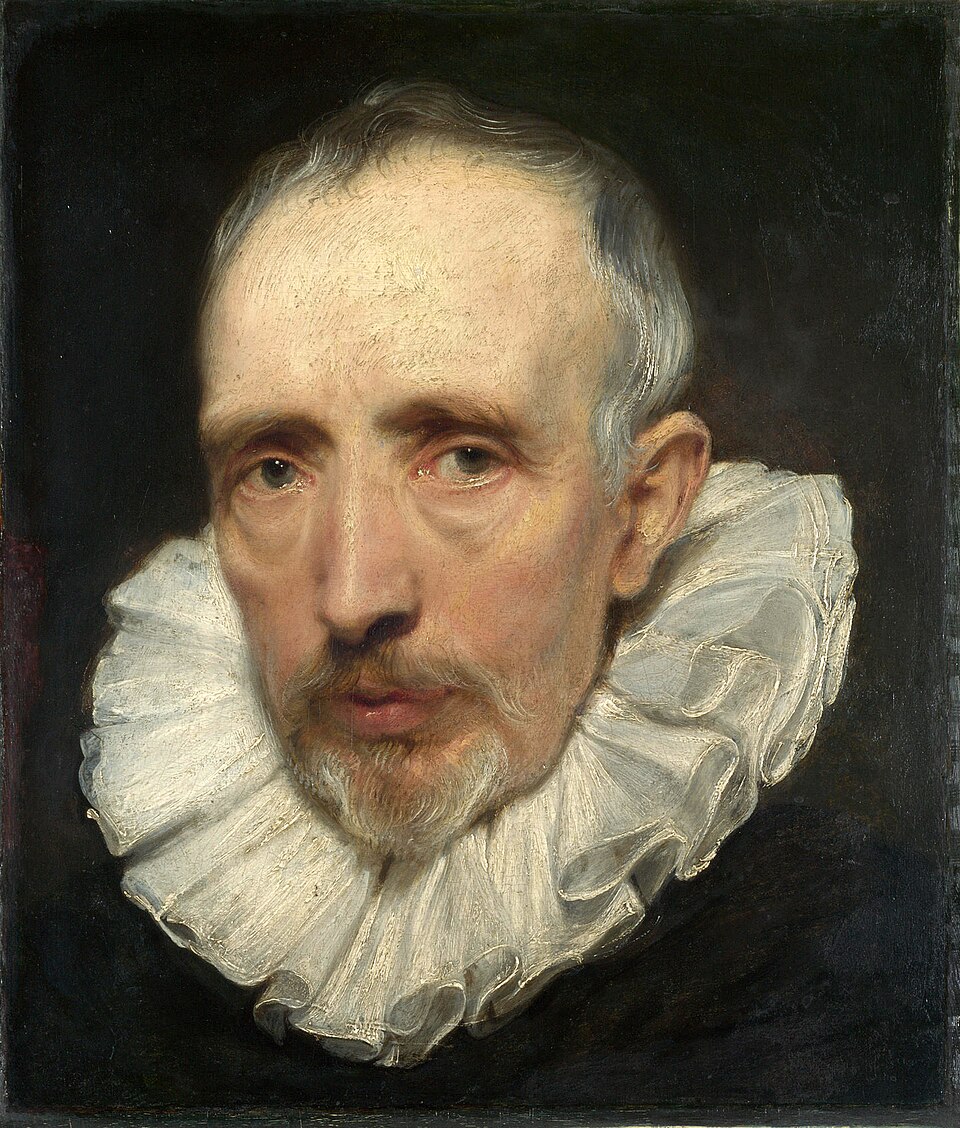
An old Antwerp merchant looks out with wet, shining eyes above a white ruff. Van Dyck was only about 21 when he painted him, and for a long time nobody even knew the sitter's name or the painter's.
The story behind the painting
Around 1620, when the portrait was made, van Dyck was 21 and Cornelis van der Geest was 65. Wikidata dates it 1619. Van der Geest was a wealthy spice merchant from Antwerp, an avid art collector and patron, and he commissioned the painting. It is one of van Dyck's earliest works, yet it is considered a masterpiece. Then the trail goes cold: from about 1620 to 1796 nobody knows who owned it. When it reappeared at auction in 1796 it was thought to show the Flemish diplomat Gaspar Gevartius.
What to look for
The panel is small, 37.5 by 32.5 cm, and shows only the head and shoulders, so all attention falls on the face and the white ruffled collar. Light comes from a single source in front and above. The National Gallery calls the brushwork virtuosic: long strokes, thick paint in places. Look at the eyes, where touches of white create the glisten of moisture. Steve Holmes praised the animated brightness of those eyes, and Lionel Cust described the picture as built up and modelled to the extreme point of academic precision.
Meaning and intent
This is also a portrait with layers of other hands. X-rays show that the original may have been only the head inside a painted oval, without the dark background. Wood was added to the bottom of the oak oval, probably in the 1630s, to turn the face into a bust, and the National Gallery judged that this was not van Dyck's work. Parts of the ruff were painted later too. The gallery is certain that the head and collar are by van Dyck but unsure about the rest, and it calls the work a problem painting.
Legacy
In 1798 Julius Angerstein bought it at auction, where a copy was also sold, and in 1815 he showed it as a work by Rubens. The sources differ on the next step: the Wikipedia article says the National Gallery bought it in 1824, and elsewhere says 1864; it agrees that by 1864 the gallery had named the sitter and van Dyck as painter. Cleanings in 1948 and 1950 removed its glazes, which may have harmed it. Many copies exist, and engravings by George Thomas Doo in 1830 and by John Rogers, who titled his Gevartius, carried the face further.
Schon gewusst?
- Painted around 1620; Wikidata gives 1619.
- Van Dyck was about 21, his sitter 65.
- Long thought to show Gaspar Gevartius and to be by Rubens.
- Now in the National Gallery, London.
Über den Künstler
Anthonis van Dyck (1599-1641)
Porträt · Mann · National Gallery · Barock · Schnurrbart · Halskrause · weißhaarig · Goatee
Mehr von Anthonis van Dyck
 Dreifachporträt von Karl I. - Anthony van Dyck (1635)
 Karl I mit M. de St. Antoine - Anthony van Dyck (1636)
 Karl I. auf der Jagd - Anthony van Dyck (1635)
 Selbstporträt - Anthony van Dyck (1632)
 Lord John Stuart and His Brother, Lord Bernard Stuart - Anthony van Dyck (1638)
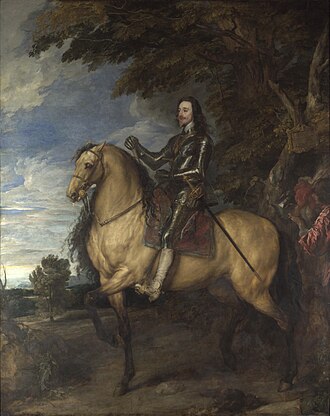 Reiterporträt Karls I - Anthony van Dyck (1637)
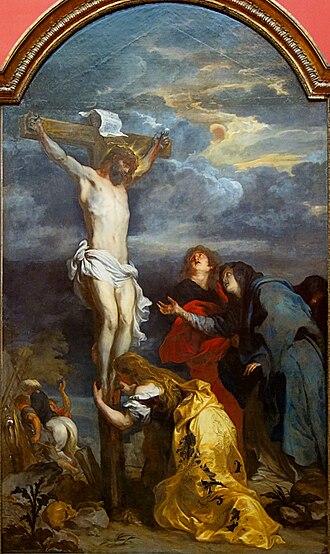 Crucifixion - Anthony van Dyck
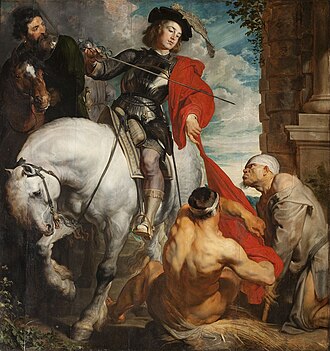 Die Mantelteilung des Hl. Martin - Anthony van Dyck (1621)
Werke verwandter Künstler
 Das Abendmahl in Emmaus - Caravaggio (1601)
 Die Berufung des Hl. Matthäus - Caravaggio (1609)
 Las Meninas - Diego Velázquez (1656)
 Die Übergabe von Breda - Diego Velázquez (1635)
 Saint Francis in Meditation - Francisco de Zurbarán (1639)
 The Immaculate Conception - Francisco de Zurbarán (1661)
 Die Aufrichtung des Kreuzes - Peter Paul Rubens (1609)
 Der Raub der Töchter des Leukippos - Peter Paul Rubens (1618)
 Die Nachtwache - Rembrandt van Rijn (1642)
 Selbstbildnis - Rembrandt van Rijn (1659)
 Ein Schütze einen Berkemeyer haltend, bekannt als „Der fröhliche Trinker" - Frans Hals (1620s)
 Der lachende Kavalier - Frans Hals (1624)