Reiterporträt Karls I
Anthonis van Dyck · 1637
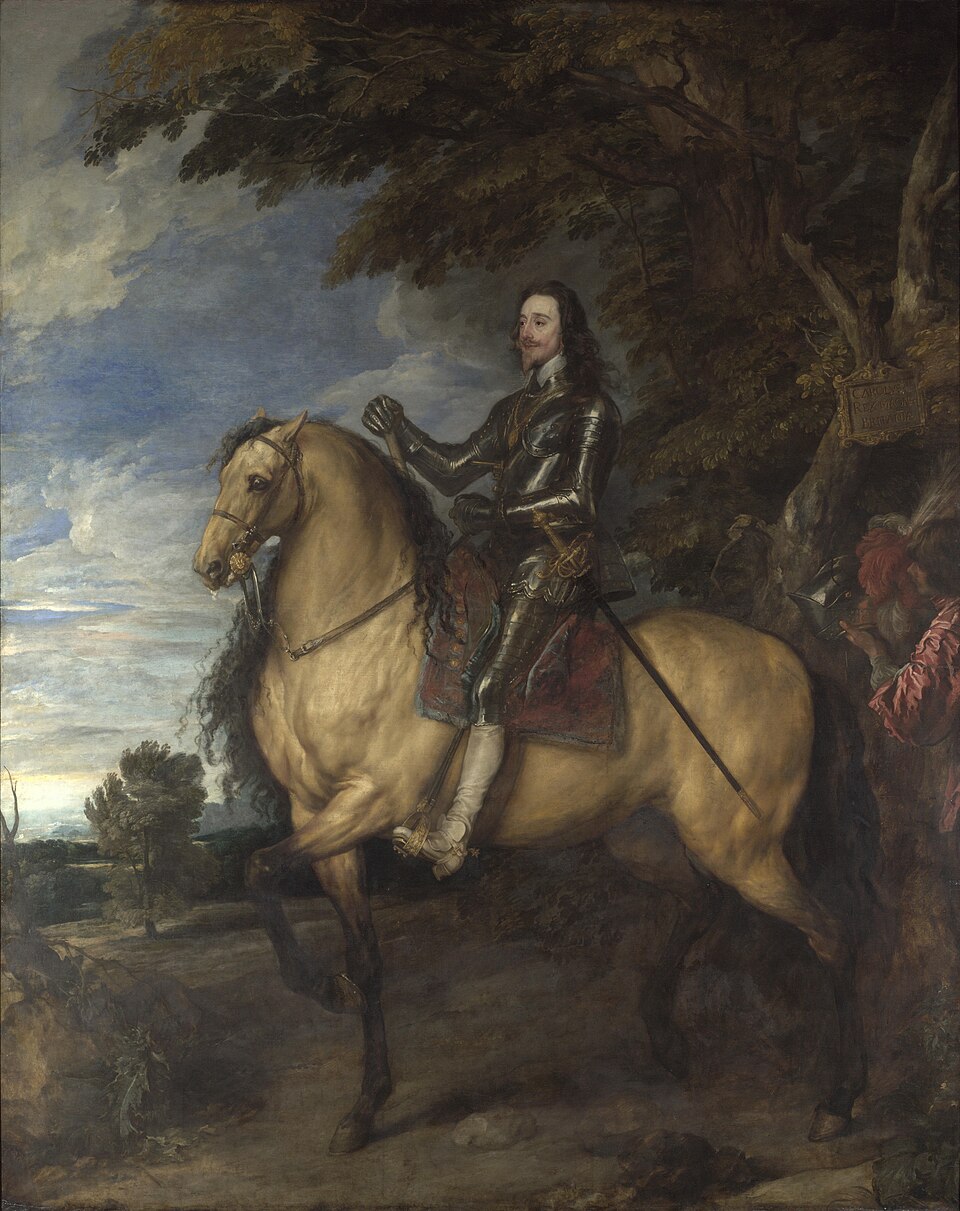
A king in armour rides out of a dark wood, gazing far away with a melancholy, distant look. Painted a few years before civil war tore his kingdoms apart, it is van Dyck's vision of Charles I as a philosopher king.
The story behind the painting
Charles I became King of England, Scotland and Ireland in 1625, and van Dyck became his Principal Painter in Ordinary in 1632. This portrait is thought to date from about 1637 to 1638, only a few years before the English Civil War broke out in 1642; Wikidata gives 1637. It was van Dyck's second equestrian portrait of the king, after Charles I with M. de St Antoine of around 1633, and he also painted the dismounted Charles I at the Hunt around 1635. The king was only 5 feet 4 inches tall, about 163 cm, and keenly conscious of it.
What to look for
Charles rides a heavily muscled dun horse with a peculiarly small head. He wears the same suit of tilt armour as in the earlier equestrian portrait, carries a baton of command, has a long sword at his side and wears the medallion of the Sovereign of the Order of the Garter. To the right a page offers a helmet. A tablet tied to a branch reads Carolus I Rex Magnae Britaniae, Charles I King of Great Britain. The canvas is huge, 3.67 metres high and 2.92 metres wide. Analysis at the National Gallery found smalt, ochres, vermilion, red lake and azurite in its subdued tones.
Meaning and intent
Charles appears as a heroic philosopher king, contemplatively surveying his domain; his melancholy, distant expression was seen as a sign of wisdom. The armour is itself a statement, since the last royal tilt had been held in 1616. So is the inscription: only 33 years after James I united the crowns and proclaimed himself King of Great Britain, nearly 70 years before the Acts of Union. The imperial tone echoes Titian's equestrian portrait of Emperor Charles V from 1548, and the composition may borrow from Durer's 1513 engraving Knight, Death and the Devil. Raising the king on horseback was also a way to increase his stature.
Legacy
The painting is listed in the first catalogue of the Royal Collection, compiled in 1637 to 1640, and hung at the end of a long gallery at Hampton Court Palace. After the king's execution the collection was dispersed, and in 1650 it was sold to Sir Balthazar Gerbier, the king's former agent in Antwerp. It passed to the Elector of Bavaria Maximilian II Emanuel in 1698, was taken from Munich as war booty by Emperor Joseph I, and given to John Churchill, 1st Duke of Marlborough, in 1706. It hung at Blenheim Palace until the National Gallery in London acquired it in 1895.
Schon gewusst?
- Painted about 1637-1638, a few years before the English Civil War.
- 3.67 metres high and 2.92 metres wide.
- Van Dyck's second equestrian portrait of Charles I.
- At Blenheim Palace until 1895; now in the National Gallery, London.
Über den Künstler
Anthonis van Dyck (1599-1641)
National Gallery · Barock · Hauspferd · Reiten · Reiterporträt · Karl I.
Mehr von Anthonis van Dyck
%20-%20Google%20Art%20Project.jpg) Dreifachporträt von Karl I. - Anthony van Dyck (1635)
Dreifachporträt von Karl I. - Anthony van Dyck (1635)%20with%20M.%20de%20St%20Antoine%20-%20Google%20Art%20Project.jpg) Karl I mit M. de St. Antoine - Anthony van Dyck (1636)
Karl I mit M. de St. Antoine - Anthony van Dyck (1636)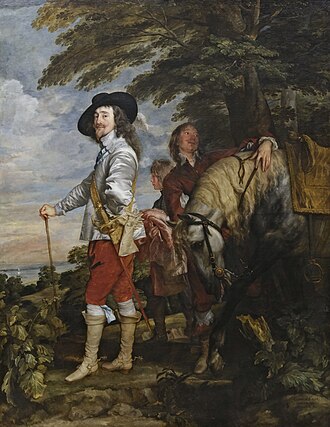 Karl I. auf der Jagd - Anthony van Dyck (1635)
 Selbstporträt - Anthony van Dyck (1632)
 Lord John Stuart and His Brother, Lord Bernard Stuart - Anthony van Dyck (1638)
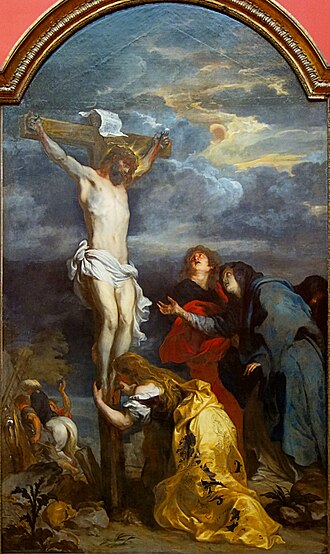 Crucifixion - Anthony van Dyck
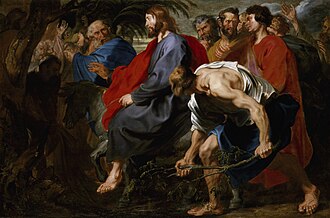 Entry of Christ into Jerusalem - Anthony van Dyck (1617)
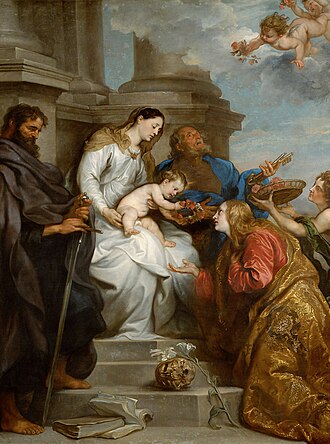 Maria mit Kind und den Hll. Rosalia, Petrus und Paulus - Anthony van Dyck (1629)
Werke verwandter Künstler
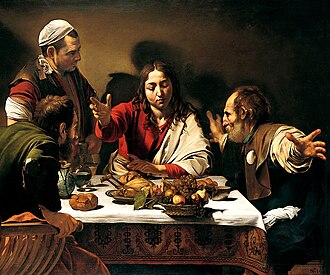 Das Abendmahl in Emmaus - Caravaggio (1601)
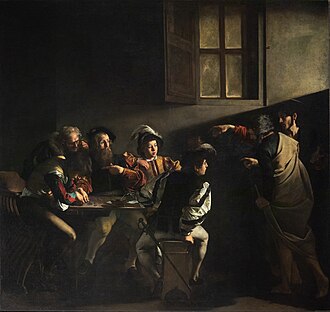 Die Berufung des Hl. Matthäus - Caravaggio (1609)
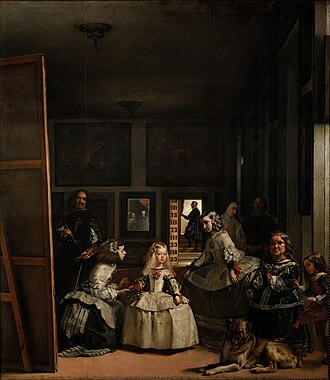 Las Meninas - Diego Velázquez (1656)
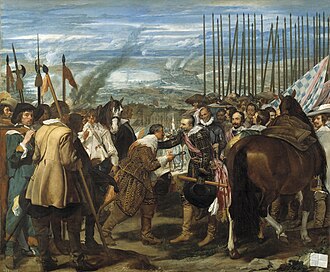 Die Übergabe von Breda - Diego Velázquez (1635)
.jpg) Die Aufrichtung des Kreuzes - Peter Paul Rubens (1609)
Die Aufrichtung des Kreuzes - Peter Paul Rubens (1609)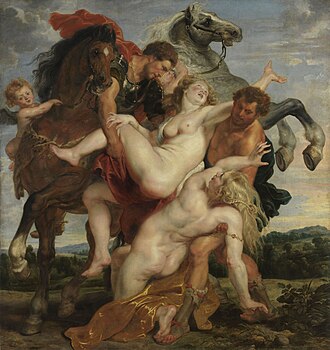 Der Raub der Töchter des Leukippos - Peter Paul Rubens (1618)
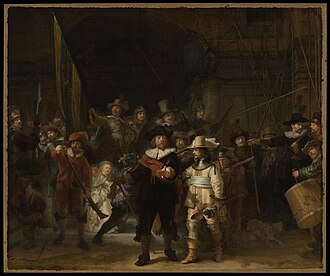 Die Nachtwache - Rembrandt van Rijn (1642)
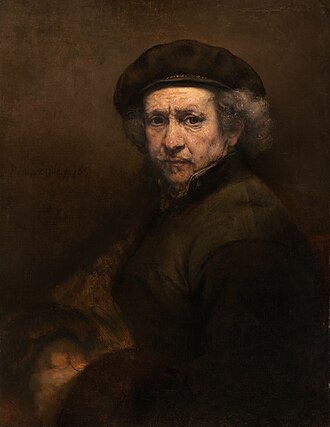 Selbstbildnis - Rembrandt van Rijn (1659)
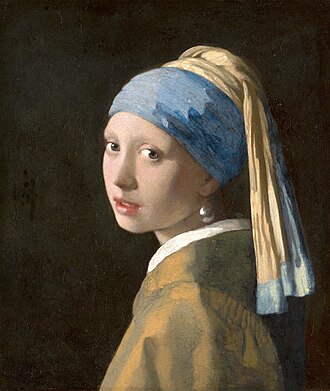 Das Mädchen mit dem Perlenohrgehänge - Johannes Vermeer (1665)
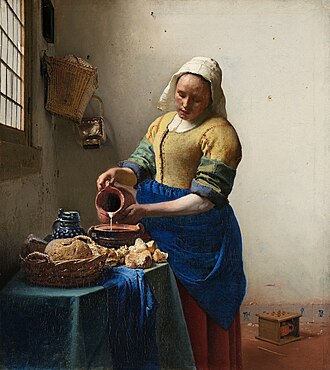 Dienstmagd mit Milchkrug - Johannes Vermeer (c. 1658)