Judith with the Head of Holofernes
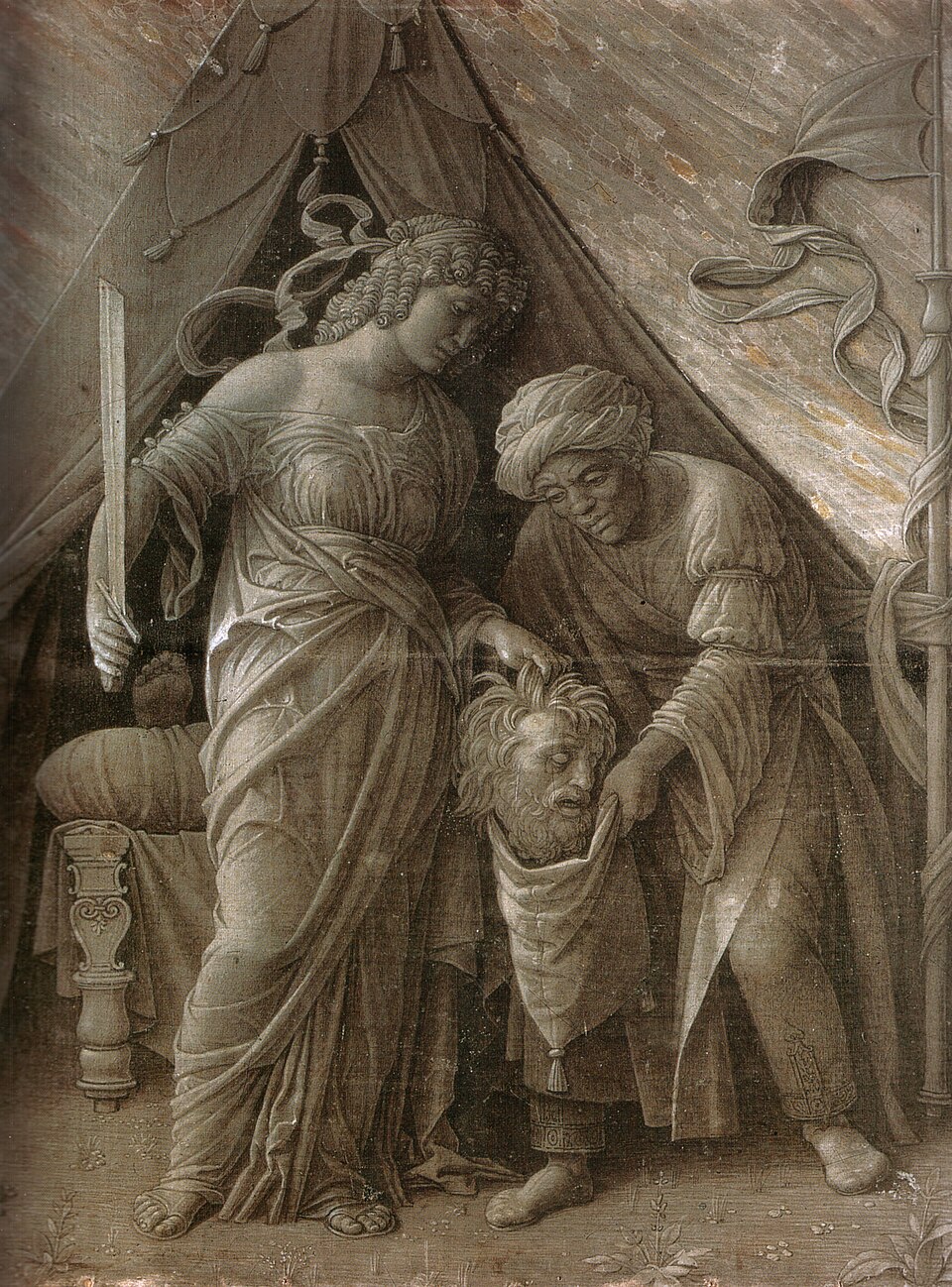
Painted only in greys and whites, Judith and her maid look carved rather than painted, slipping a head into a sack before a dark tent. Mantegna made stone come alive with a brush.
The story behind the painting
Mantegna painted this small picture around 1495 in glue tempera on canvas. In the later years of his career, from about 1495 to his death, he produced many grisailles, paintings in shades of grey that look almost like sculpture and were much admired at court. Near Mantua active sculptors were scarce and marble had to be imported, which helps explain the taste. The picture shares technique and theme with his Samson and Delilah, and it has been suggested that both hung together in one of Isabella d'Este's private rooms in the Ducal Palace of Mantua.
What to look for
Judith and her maid stand before Holofernes's triangular tent. Judith holds a sword and lowers his head into a sack held by the maid. Greys and white highlights, warmed here and there with brown strokes, sharpen the relief and the illusion of carved stone. The tent is left in shadow, with details surfacing from the dark, like Holofernes's foot on the bed. The background is mottled like imitation marble. Look at the drapery and at the flag on the right, twisting in the wind around itself and its pole. Painting on linen with almost no ground left no room for corrections.
Meaning and intent
Instead of the violence of the killing, Mantegna shows a quiet, composed aftermath, as if the heroine were a statue of virtue. The same composition appears in his other Judith and in a drawing of about 1491 now in the Uffizi's department of drawings and prints, showing how he returned to the image. The stone effect turns a story of a beheading into something calm and lasting, closer to a monument than a scene.
Legacy
The painting was acquired in Italy at an unknown time by Lewis Strange Wingfield, passed into the collection of John Malcolm of Poltalloch in Scotland, and was sold in 1896 to the director of the National Gallery of Ireland in Dublin, where it remains. In its first years on show, scholars doubted it, despite praise from Bernard Berenson and Paul Kristeller in 1901. Today it is generally attributed to Mantegna, though some give more or less weight to the hands of his students and assistants. Wikidata gives no date for it.
Schon gewusst?
- Glue tempera on canvas, about 1495.
- A grisaille imitating sculpture and marble.
- Possibly hung with Samson and Delilah in Isabella d'Este's rooms.
- In the National Gallery of Ireland since 1896.
Über den Künstler
Andrea Mantegna (1431-1506)
religiöse Kunst · Judith · beheaded head · National Gallery of Ireland
Mehr von Andrea Mantegna
 Beweinung Christi - Andrea Mantegna (1483)
 Madonna della Vittoria - Andrea Mantegna
 San-Zeno-Altar - Andrea Mantegna (1457)
 Anbetung der Hirten - Andrea Mantegna (1450)
 Madonna in der Felsengrotte - Andrea Mantegna (1489)
 Der Parnaß - Andrea Mantegna
 Die Einführung des Kybelekults in Rom - Andrea Mantegna (1500s)
 St. Hieronymus in der Wüste - Andrea Mantegna
Werke verwandter Künstler
 Die Geburt der Venus - Sandro Botticelli (c. 1485)
 Primavera - Sandro Botticelli (1480s)
 Die Geißelung Christi - Piero della Francesca (1450s)
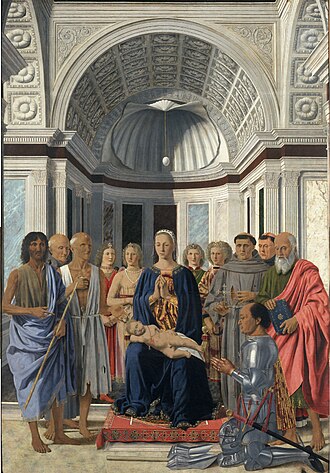 Madonna mit Kind, Heiligen, Engeln und Federico da Montefeltro (Altar des hl. Berhard} - Piero della Francesca (1472)
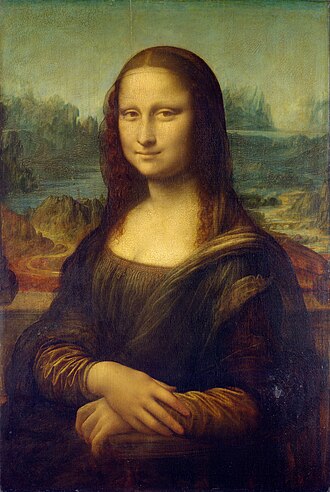 Mona Lisa - Leonardo da Vinci (1503-1519)
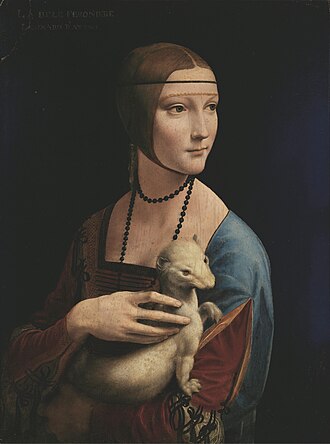 Dame mit dem Hermelin - Leonardo da Vinci (1490)
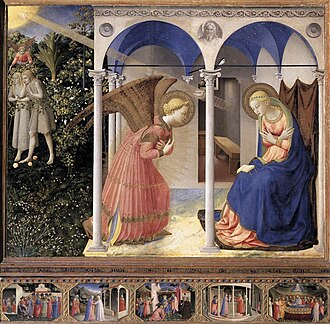 Verkündigung - Fra Angelico (1425)
 Die Anbetung der Könige, Tondo - Fra Angelico (1430)