Madonna mit Kind, Heiligen, Engeln und Federico da Montefeltro (Altar des hl. Berhard}
Piero della Francesca · 1472
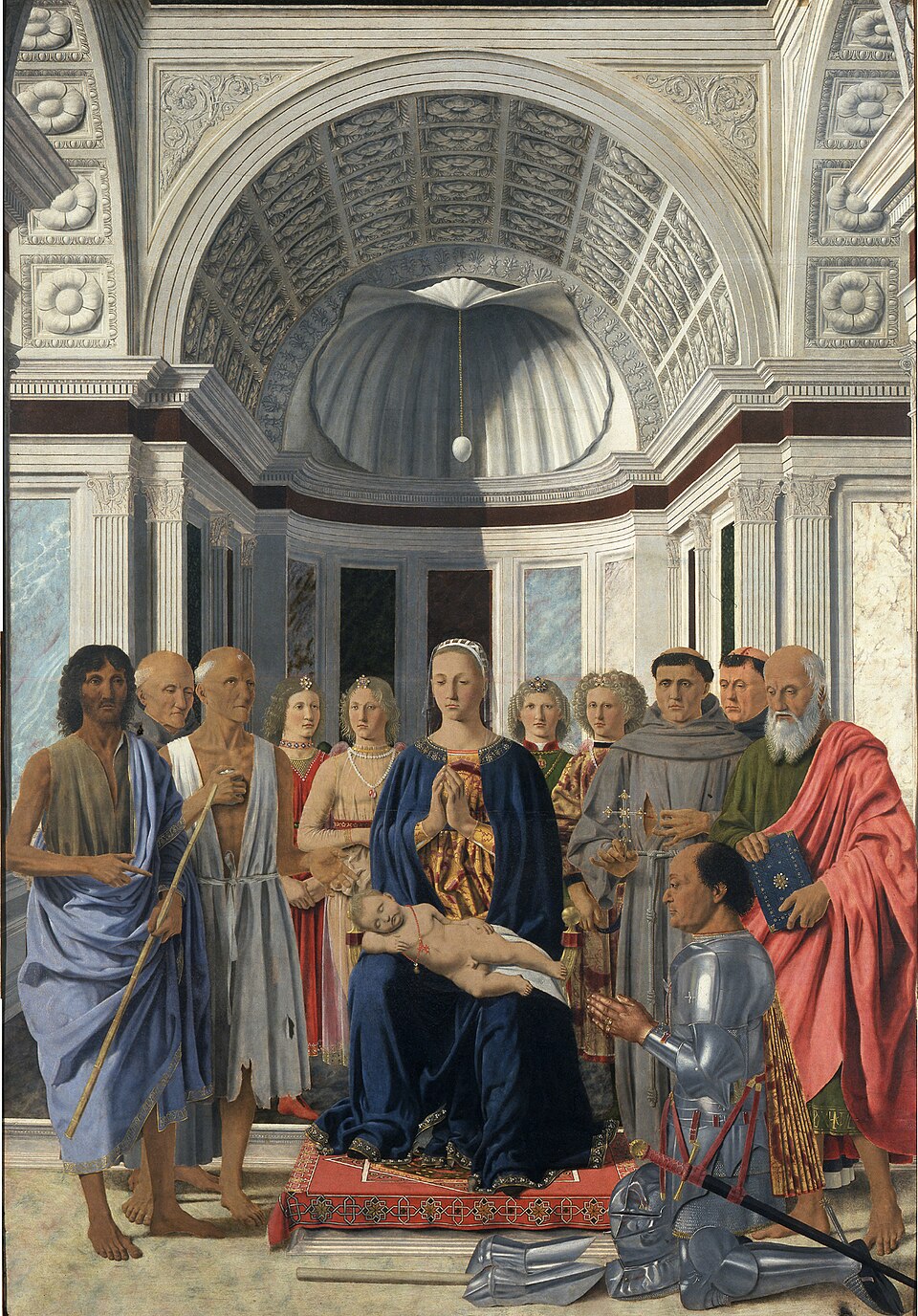
A duke in shining armour kneels before the Virgin and her sleeping Child, and above them all, hanging by a single thread from a shell, an egg holds perfectly still. Piero della Francesca built a whole church of light around that quiet moment.
The story behind the painting
Federico da Montefeltro, Duke of Urbino, commissioned this sacra conversazione from Piero della Francesca. One account says it celebrated the birth of his son Guidobaldo in 1472; other sources say it marked his conquest of several castles in the Maremma. If the birth is the reason, the Child may stand for Guidobaldo, and the Virgin may carry the features of Battista Sforza, Federico's wife, who died that same year and was buried at San Bernardino. Wikidata gives 1472, while Wikipedia dates the work 1472 to 1474: Federico does not yet wear the insignia of the Order of the Garter, which he received in 1474.
What to look for
The Virgin sits enthroned at the centre, the Child asleep across her lap, surrounded by angels and saints. Usually named are John the Baptist, Bernardino of Siena and Jerome on the left, and Francis, Peter Martyr and Andrew on the right; the historian Ricci saw in Andrew a portrait of the mathematician Luca Pacioli. Federico kneels in the lower right corner in reflective armour. Behind them, a Renaissance apse is drawn in such exact perspective that the depth of its coffered vault can be calculated. Look for the red coral necklace on the Child, the jewels of the angels and the oriental carpet under the Virgin's feet, details that show the influence of Early Netherlandish painting.
Meaning and intent
Kneeling in armour before holy figures was new for a donor portrait; here it speaks of Federico's military strength and his promise to protect his faith. The egg hanging from the shell is read as Mary's fruitfulness and a promise of regeneration and immortality, as Creation itself, and as Guidobaldo's birth; the ostrich was also a heraldic emblem of the Montefeltro. Another reading sees a pearl, born from the shell without any male part, as a sign of the virgin conception. The coral recalls blood, life and death and the redemption brought by Christ, though coral was also simply given to teething babies.
Legacy
Napoleon had the altarpiece deposited in the Pinacoteca di Brera in Milan, where it remains. When it was rediscovered there at the end of the 19th century, darkened varnish had disfigured it so much that it was attributed to Fra Carnevale, because Piero's use of oil was not yet known. Modern cleaning revealed the fine detail of the clothes, the jewels and Federico's gleaming armour. The art historian Carlo Ludovico Ragghianti argued that the panel was cut down on both sides, pointing to traces of entablature barely visible in the upper corners. Wikidata records it at 248 by 170 cm.
Schon gewusst?
- Commissioned by Federico da Montefeltro, Duke of Urbino.
- Dated 1472 to 1474, before Federico received the Order of the Garter.
- Once attributed to Fra Carnevale under darkened varnish.
- Now in the Pinacoteca di Brera, Milan.
Über den Künstler
Piero della Francesca (1415-1492)
religiöse Kunst · Frau · Maria · Jesuskind · Junge · Frührenaissance · Mutter · Johannes der Täufer · Pinacoteca di Brera
Mehr von Piero della Francesca
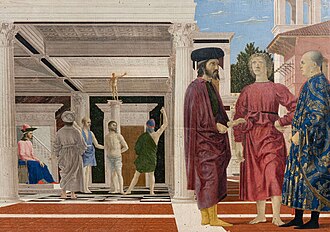 Die Geißelung Christi - Piero della Francesca (1450s)
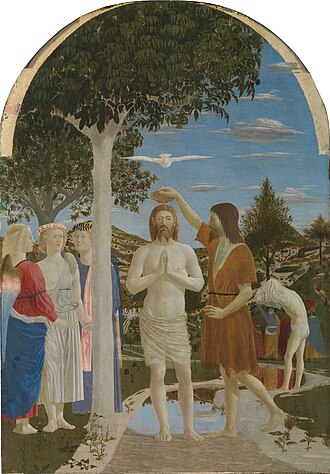 Taufe Christi - Piero della Francesca (1448)
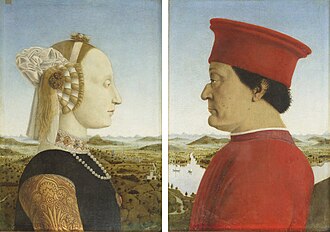 Diptychon des Federico da Montefeltro mit seiner Gattin Battista Sforza - Piero della Francesca (1465)
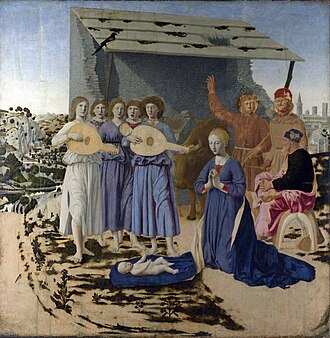 The Nativity - Piero della Francesca (1480s)
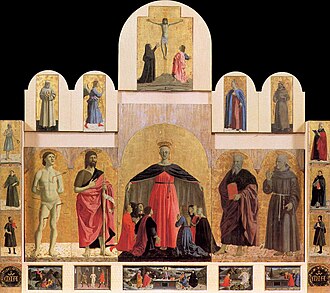 Polyptychon der Madonna der Barmherzigkeit - Piero della Francesca (1460s)
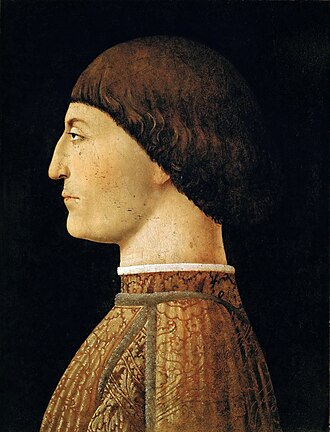 Porträt von Sigismondo Malatesta - Piero della Francesca (1450s)
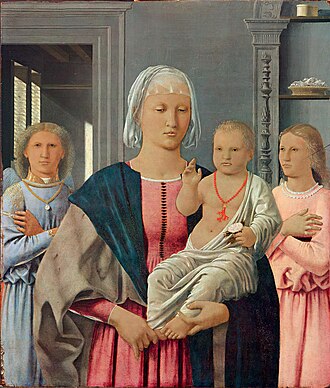 Madonna di Senigallia - Piero della Francesca (1470s)
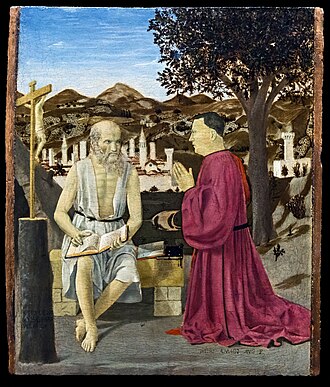 Hl. Hieronymus und ein Stifter - Piero della Francesca (1440)
Werke verwandter Künstler
 Die Geburt der Venus - Sandro Botticelli (c. 1485)
 Primavera - Sandro Botticelli (1480s)
 Mona Lisa - Leonardo da Vinci (1503-1519)
 Dame mit dem Hermelin - Leonardo da Vinci (1490)
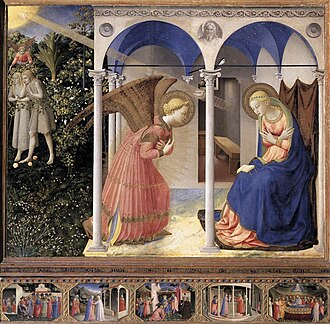 Verkündigung - Fra Angelico (1425)
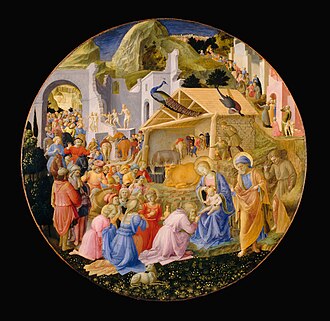 Die Anbetung der Könige, Tondo - Fra Angelico (1430)
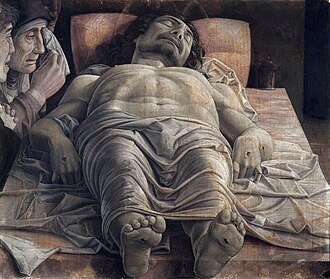 Beweinung Christi - Andrea Mantegna (1483)
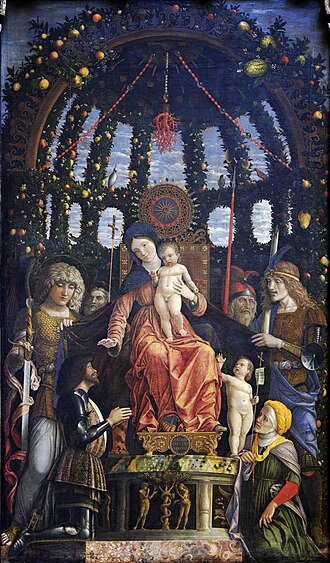 Madonna della Vittoria - Andrea Mantegna