St. Hieronymus in der Wüste
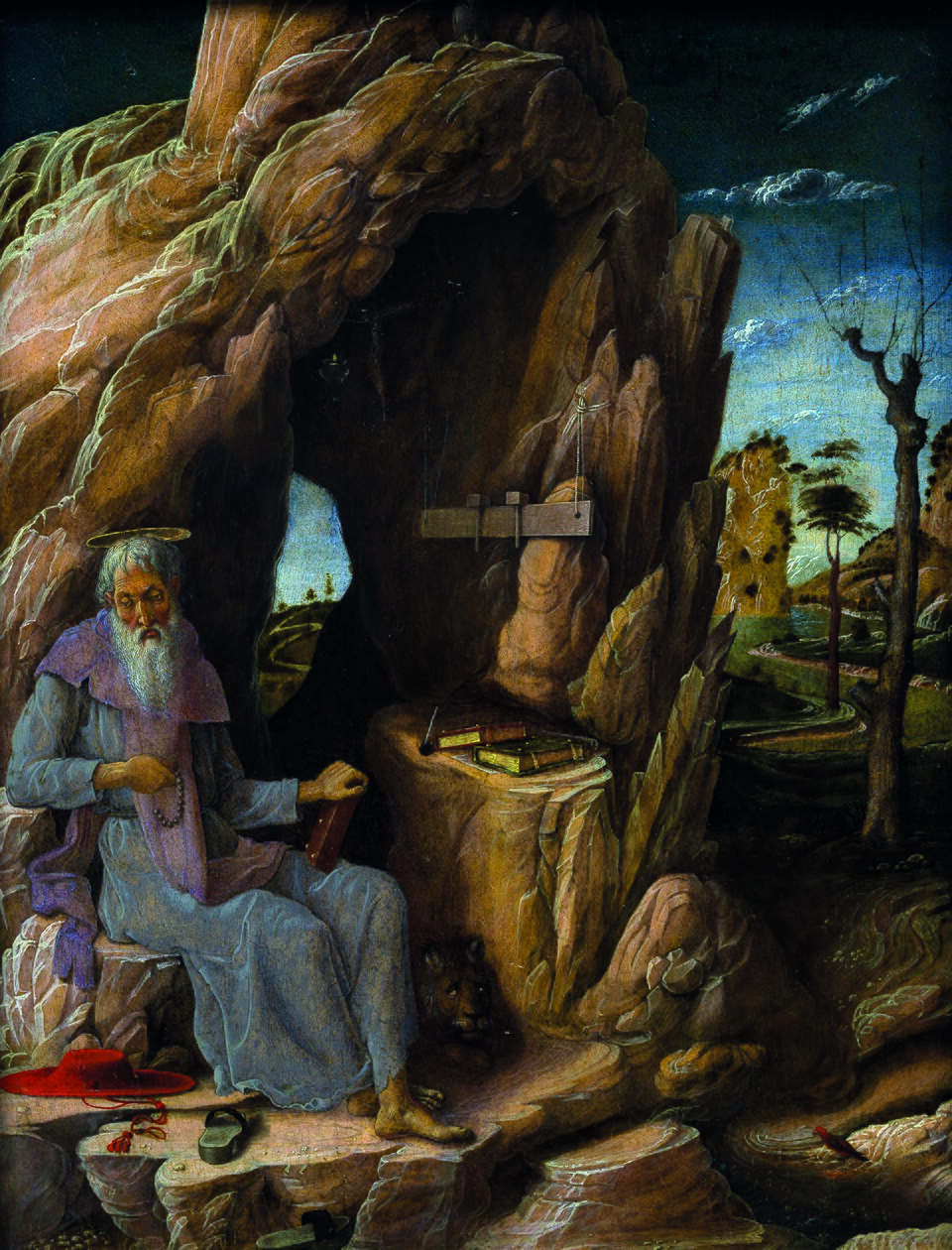
A barn owl watches from above the cave, a sandal lies abandoned in the foreground, and Jerome sits between scholarship and penance. This small panel is one of young Mantegna's first private commissions.
The story behind the painting
The panel is usually seen as an early work, painted between 1448 and 1451, shortly after Mantegna left the studio of Francesco Squarcione in 1448. That freedom let him move from religious works for others to private commissions in many genres. This one is thought to have been ordered by the humanist and poet Ulisse degli Aleotti, and probably relates to Mantegna's first trip to Ferrara in 1449 to work at the court of Leonello d'Este. The painting is attributed to Mantegna, and Wikidata gives no date for it.
What to look for
It is small, tempera on panel, 51 by 40 cm. Look at the details. In the foreground lies an abandoned sandal, a motif probably borrowed from Flemish works Mantegna could have seen in the Este collections. Inside the cave, two hammers rest on a hanging beam. Above the entrance perches a barn owl. A drawing of Saint Jerome with a lion in the Kupferstichkabinett in Berlin, from about the same time, shows a very similar saint in a different pose, perhaps a preparatory study or a study for a lost work.
Meaning and intent
The painting merges the two usual ways of showing Jerome: the scholar and the ascetic. The hammers may refer to Christ's Passion. The owl was traditionally linked to magic and superstition, things that Jerome, and the humanist patron Ulisse, fought with the light of reason. So the little picture is both a devotional image and a statement of humanist values, a saint who prays and thinks, set against the darkness the owl stands for.
Legacy
The painting, tempera on a small wooden panel, is now in the São Paulo Museum of Art in Brazil, far from the Ferrara court where it may have begun. It gives a rare look at Mantegna at the very start of his independent career, already absorbing northern details like the sandal and filling a small space with careful symbols. For anyone who knows his later grand works, this modest panel shows where his precision and his love of meaningful objects began.
Schon gewusst?
- Tempera on panel, 51 by 40 cm.
- Dated 1448 to 1451, attributed to Mantegna.
- Probably commissioned by the humanist Ulisse degli Aleotti.
- Now in the São Paulo Museum of Art.
Über den Künstler
Andrea Mantegna (1431-1506)
religiöse Kunst · Landschaft · Hieronymus · Museu de Arte de São Paulo · Löwe
Mehr von Andrea Mantegna
 Beweinung Christi - Andrea Mantegna (1483)
 Madonna della Vittoria - Andrea Mantegna
 San-Zeno-Altar - Andrea Mantegna (1457)
 Anbetung der Hirten - Andrea Mantegna (1450)
 Madonna in der Felsengrotte - Andrea Mantegna (1489)
 Der Parnaß - Andrea Mantegna
 Die Einführung des Kybelekults in Rom - Andrea Mantegna (1500s)
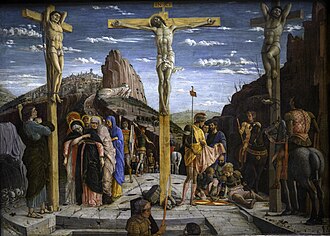 Kreuzigung - Andrea Mantegna (1450s)
Werke verwandter Künstler
 Die Geburt der Venus - Sandro Botticelli (c. 1485)
 Primavera - Sandro Botticelli (1480s)
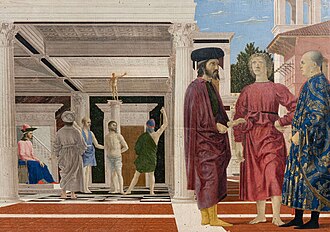 Die Geißelung Christi - Piero della Francesca (1450s)
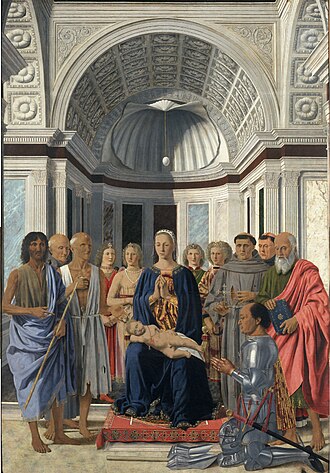 Madonna mit Kind, Heiligen, Engeln und Federico da Montefeltro (Altar des hl. Berhard} - Piero della Francesca (1472)
 Mona Lisa - Leonardo da Vinci (1503-1519)
 Dame mit dem Hermelin - Leonardo da Vinci (1490)
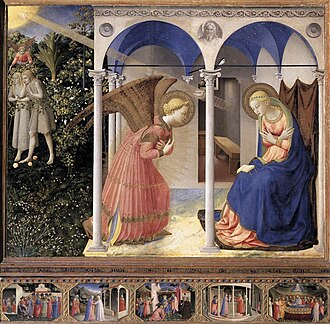 Verkündigung - Fra Angelico (1425)
 Die Anbetung der Könige, Tondo - Fra Angelico (1430)