Franciscan allegories
Giotto di Bondone · 1334
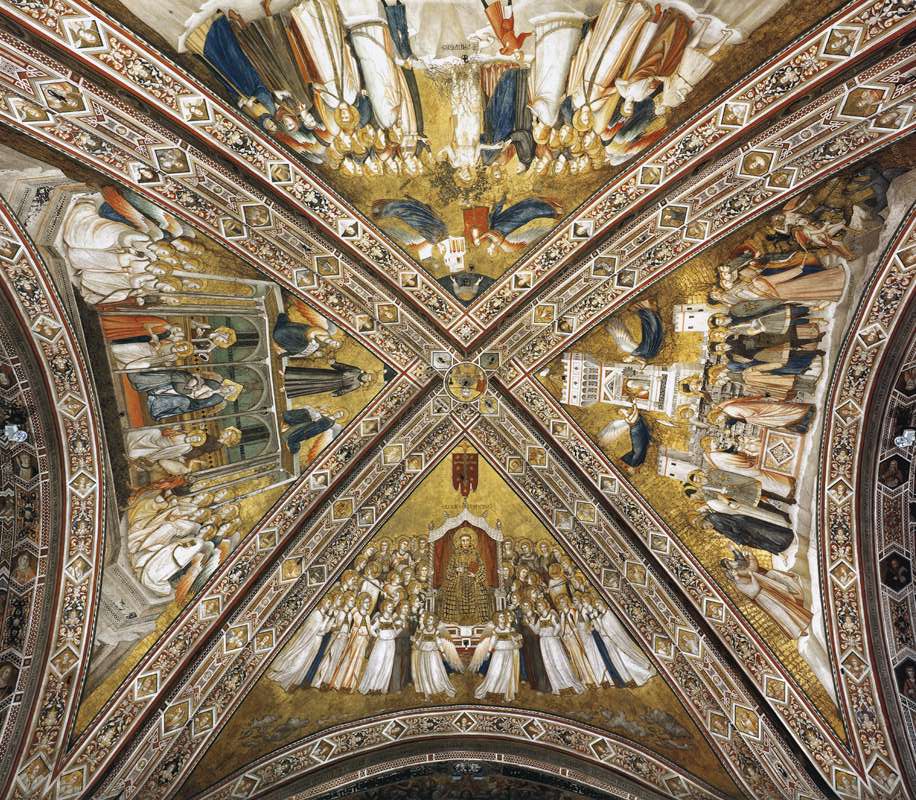
High above the main altar of the Lower Church in Assisi, four golden vaults turn the ideals of Saint Francis into a heavenly pageant.
The story behind the painting
The Franciscan Allegories are frescoes on the cross vault above the high altar of the Lower Church of the Basilica of San Francesco in Assisi, datable to around 1334. Vasari described them in detail and credited them to Giotto, but the attribution has long been debated: Adolfo Venturi already rejected it in 1905, and today they are given to Giotto and his workshop, especially the painters known as the Parente di Giotto and the Maestro delle Vele. The art historian Cesare Gnudi found links with the Stefaneschi Triptych and proposed that Cardinal Giacomo Stefaneschi, protector of the Franciscan Order, commissioned them.
What to look for
The four large sections of the vault show the allegories of Chastity, Poverty and Obedience, the cornerstones of the Franciscan rule, together with a Glorification of Saint Francis, all set on gold grounds, a rare luxury in fresco. In Poverty, Lady Poverty stands among thorns that turn to roses behind her, while Christ joins her hand to Francis, who offers her a ring; a boy throws a stone at her and a dog barks. In Chastity, a veiled woman sits in a white tower guarded by warriors. Obedience sits beneath a loggia, finger to her lips, as a kneeling monk accepts the yoke. In the fourth vault, Francis sits enthroned, richly dressed, radiating light amid rejoicing angels.
Meaning and intent
The programme is a lesson in how to live, written in images and inscriptions. Poverty is wedded to Francis as a bride; Chastity is a fortress where a young man is washed before entering; Obedience silences pride, shown as a centaur turned back by an angel. Around the vows, scenes of refusal and acceptance give viewers a choice. The French source notes a striking tension: so much gold in praise of a saint who preached poverty reflects a clear shift away from his ideals. The whole scheme was also meant to stress how closely Francis resembled Christ.
Legacy
The scenes show a somewhat archaic taste and a decorative style influenced by the Sienese school, with many festive figures often wearing an expression of surprise. Yet there are also powerful inventions: in the Poverty vault, God leans forward from a halo at the top, a figure whose prototype goes back to Giotto's Baptism of Christ in the Scrovegni Chapel. Within the thickness of the arch between the choir and the nave, the first companions of Saint Francis appear in round frames. Above the altar where pilgrims still gather, the vault keeps its golden conversation about what it means to follow a saint.
Schon gewusst?
- Fresco cycle datable to around 1334.
- Attributed to Giotto and his workshop; the attribution is disputed.
- Four vaults: Poverty, Chastity, Obedience and Saint Francis in glory.
- Located above the high altar of the Lower Basilica, Assisi.
Über den Künstler
Giotto di Bondone (1267-1337)
Mehr von Giotto di Bondone
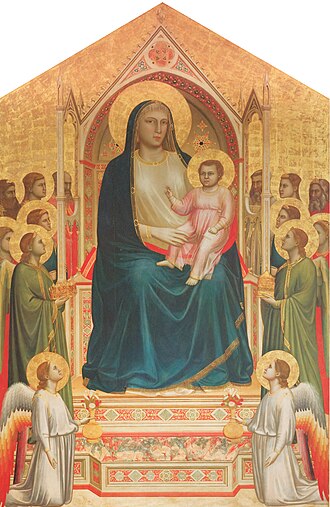 Ognissanti-Madonna - Giotto (1300s)
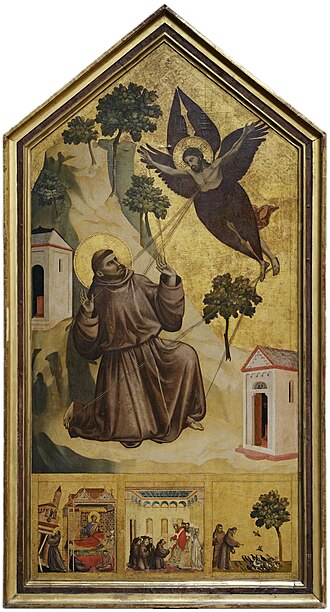 Die Stigmatisation des hl. Franziskus - Giotto (1290s)
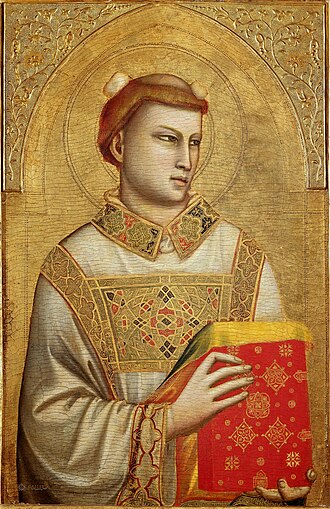 Heiliger Stephan - Giotto (1320)
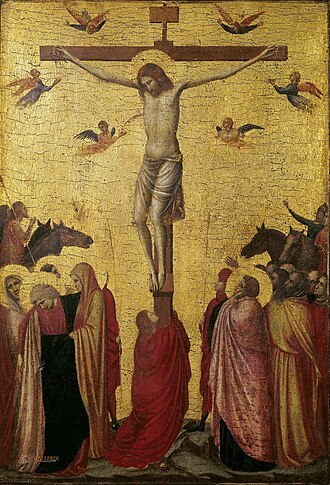 Crucifixion of Strasbourg - Giotto (1315)
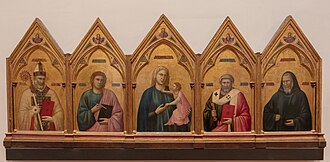 Badia Polyptychon - Giotto (1300s)
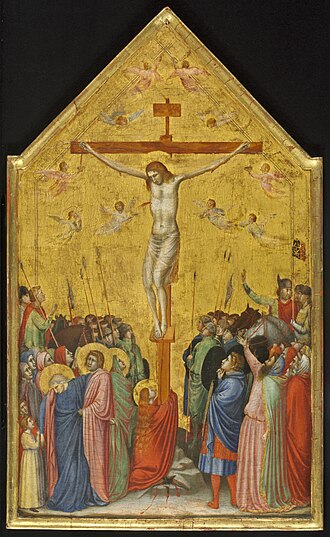 Die Kreuzigung Christi - Giotto (1310s)
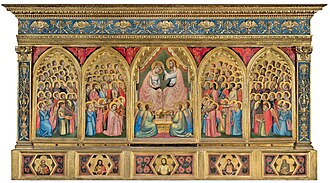 Marienkrönung mit Engeln und Heiligen - Giotto (1328)
 Scenes from the New Testament: Lamentation - Giotto (1291)