Androcles
Jean-Léon Gérôme · 1902
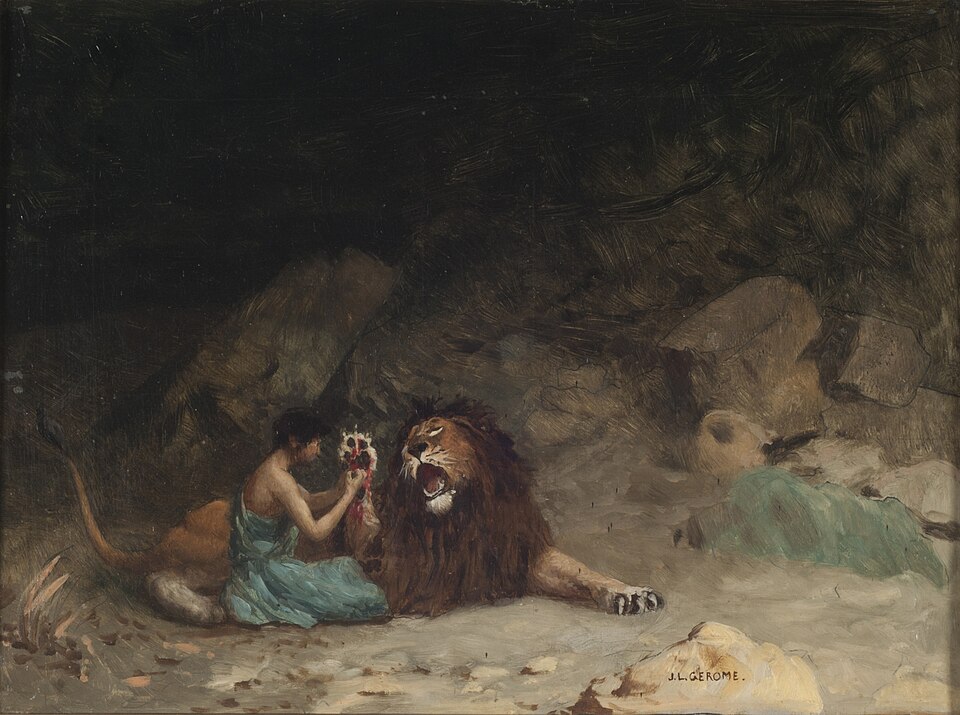
A runaway slave bends over a wounded lion and pulls a thorn from its paw, while the great beast opens its jaws with its eyes shut. Gérôme painted this moment of trust around 1902.
The story behind the painting
Jean-Léon Gérôme painted Androcles and the Lion in oil on canvas around 1902. The version in the National Museum of Fine Arts in Buenos Aires is small, 30 by 40 cm, and signed at lower right on a rock. Another version, 58 by 76 cm, belongs to a private collection and is signed at lower left on the ground. The legend tells of Androcles, a slave who fled his master into the desert and took shelter in a cave, where he came face to face with a lion wounded by a splinter in its right paw.
What to look for
Gérôme chose the moment of healing. The lion's paw is raised on its elbow, claws spread wide across the plane of the picture. The young man's face tilts toward the bloody wound with the concentration this delicate operation needs, and his expression is mostly hidden, leaving the lion to carry the emotion. The artist renders the animal's deep distress, a mix of pain and trust, in the contrast between its wide open jaws and its closed eyes. Look for the signature on a rock in the corner.
Meaning and intent
In the legend Androcles removes the splinter and cares for the wound, and the grateful lion shows him affection, so they live together for a time. Later Androcles is captured and condemned to the beasts of the arena. The lion released against him is the same one he healed, and instead of attacking, it recognises and spares him. The emperor pardons Androcles and gives him the lion. Gérôme often painted the games of the circus, and these pictures of Androcles offer a more hopeful counterpoint to his dramatic, violent scenes of the arena.
Legacy
The painting shows only the beginning of the story, the act of kindness on which everything else depends. A few years earlier, Gérôme had turned to the ending of the tale in a sculpture called The Beggar, showing Androcles walking with the lion, as tradition says he did through the city, receiving admiration and offerings. Together the canvas and the sculpture frame the legend from first touch to final reward, a rare tale of gratitude in a body of work that so often showed the arena as a place of death.
Schon gewusst?
- Painted by Gérôme around 1902.
- The Buenos Aires version measures 30 by 40 cm.
- A larger version is in a private collection.
- Gérôme also sculpted the end of the story as The Beggar.
Über den Künstler
Jean-Léon Gérôme (1824-1904)
mythologische Malerei · Akademische Kunst · Museo Nacional de Bellas Artes
Mehr von Jean-Léon Gérôme
 Pollice verso - Jean-Léon Gérôme (1872)
 Der Sklavenmarkt - Jean-Léon Gérôme (1866)
 Phryne vor dem Areopag - Jean-Léon Gérôme (1861)
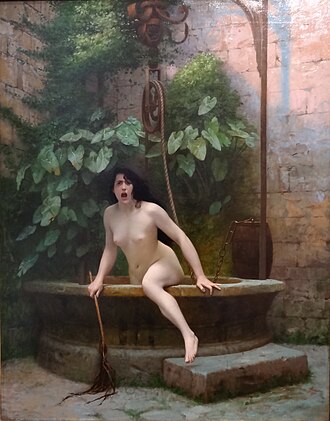 Die Wahrheit steigt aus dem Brunnen - Jean-Léon Gérôme (1896)
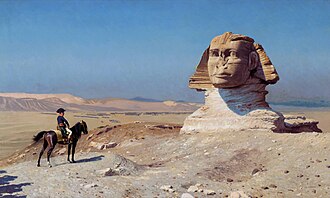 Bonaparte Before the Sphinx - Jean-Léon Gérôme (1867)
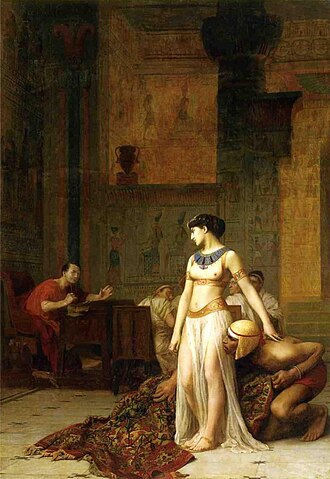 Cleopatra and Caesar - Jean-Léon Gérôme (1866)
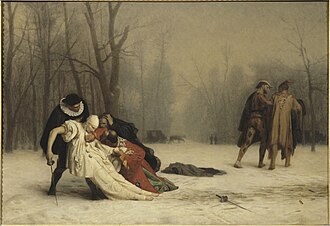 The Duel After the Masquerade - Jean-Léon Gérôme (1857)
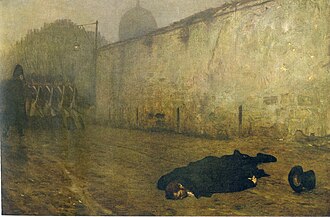 The Execution of Marshal Ney - Jean-Léon Gérôme (1868)
Werke verwandter Künstler
 Das Frühstück im Grünen - Édouard Manet (1863)
 Olympia - Édouard Manet (1863)
 Der Ursprung der Welt - Gustave Courbet (1866)
 Ein Begräbnis in Ornans - Gustave Courbet (2020)
 Nelke, Lilie, Lilie, Rose - John Singer Sargent (1885-1886)
 Madame X - John Singer Sargent (1884)
 Die Freiheit führt das Volk - Eugène Delacroix (1830)
 Der Tod des Sardanapal - Eugène Delacroix (1827)
 Der Tod des Sokrates - Jacques-Louis David (1787)
 Der Schwur der Horatier - Jacques-Louis David (1784)
 Die Schwestern Waldegrave - Joshua Reynolds (1780)
 Porträt des Colonel George K. H. Coussmaker vom Regiment der Garde-Grenadiere - Joshua Reynolds (1782)