Lovis Corinth
1858-1925
Lovis Corinth, a tanner's son from East Prussia, began as a careful realist and ended as one of the most vital painters of his age. After a stroke left him partly paralysed, he learned to paint again and found a freer, brighter way of seeing.
Origins
He was born Franz Heinrich Louis on 21 July 1858 in Tapiau, in the Province of Prussia. The son of a tanner, he showed a talent for drawing as a child. In 1876 he went to study painting at the academy in Konigsberg, at first hoping to become a history painter, until his chief teacher, the genre painter Otto Gunther, talked him out of it. In 1880 he went to Munich, then a rival to Paris as a centre of new art, and studied at the Academy of Fine Arts under Ludwig von Loefftz, whose teaching stressed careful observation of colour and value. Courbet and the Barbizon school, seen through the Munich painters Wilhelm Leibl and Wilhelm Trubner, also shaped his early realism.
Life and turning points
After military service in 1882 and 1883 and study until 1884, he went to Antwerp, where he greatly admired Rubens, and then to Paris to study at the Academie Julian under William-Adolphe Bouguereau and Tony Robert-Fleury. Disappointed at never winning a Salon medal, he returned to Konigsberg in 1888 and took the name Lovis Corinth. He joined the Munich Secession in 1892 and moved to Berlin in 1900. In 1902 he opened a painting school for women and married his first student, Charlotte Berend, about 20 years younger, who became his muse and the mother of his two children. In December 1911 a stroke left his left side partly paralysed, yet within a year, with her help, he was painting again with his right hand. He led the Berlin Secession from 1915 to 1925 and died of pneumonia in Zandvoort in 1925, on a trip to see the Dutch masters.
Style and technique
His mature work as a painter and printmaker brought together impressionism and expressionism. His early pictures were naturalistic, and he was at first hostile to expressionism, but after his stroke his style loosened and took on many expressionist qualities. His colour grew more vibrant, and his portraits and landscapes gained great vitality and power. He painted nudes, biblical scenes, portraits and his family, which became a major theme through Charlotte. From 1919 the Walchensee, a lake in the Bavarian Alps where he owned a house, inspired bright, lively landscapes that many consider his best work. As a printmaker he tried every technique except aquatint, favouring drypoint and lithography, and in his last 15 years made more than 900 graphic works.
Stories and anecdotes
Corinth painted a self-portrait every year on his birthday as a way of examining himself, sometimes in disguise, as an armoured knight in The Victor of 1910 or as the blinded Samson in 1912. His years in Munich were not his most productive, and he was perhaps better known there for drinking large amounts of red wine and champagne. Not everyone loved his work: on hearing of his death, the Danish critic Georg Brandes wrote that it was Corinth's punishment for a wretched portrait of himself. In 1910 he gave his painting Golgatha to the altar of the church in his birthplace. It vanished when the Red Army entered East Prussia at the end of the Second World War, and since Tapiau was hardly damaged, it was likely looted rather than destroyed.
Legacy
In 1926 the Nationalgalerie in Berlin held a memorial exhibition of his paintings and watercolours, and by 1930 it had acquired several more major works. Under the Third Reich his art was condemned as degenerate: in 1937 the authorities removed 295 of his works from public collections, and seven were shown in the Degenerate Art Exhibition in Munich. In recent decades several of his paintings have been returned to the heirs of Jewish collectors persecuted by the Nazis, including Roman Landscape in 2007 and Still Life with Flowers in 2021. The house where he was born still stands in Tapiau, now Gvardeysk in Russia. His Walchensee landscapes and searching self-portraits still show a painter who turned hardship into intensity.
Schon gewusst?
- He made only 12 woodcuts, all between 1919 and 1924.
- In 1908 he published a book on learning to paint, Das Erlernen der Malerei.
- The University of Konigsberg gave him an honorary doctorate on 15 March 1921.
- His works were shown at the Venice Biennale in 1922.
Gemälde von Lovis Corinth
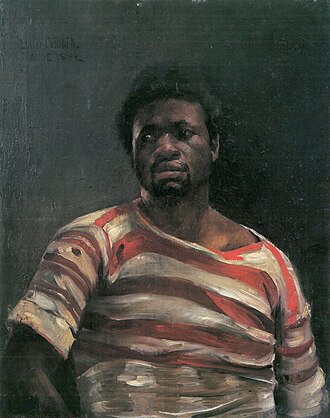 Un Othello - Lovis Corinth (1884)
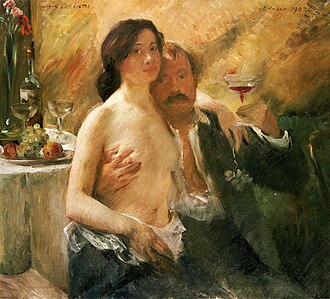 Selbstporträt mit Charlotte Berend und Sektglas - Lovis Corinth (1902)
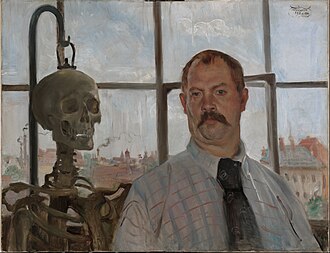 Selbstporträt mit Skelett - Lovis Corinth (1896)
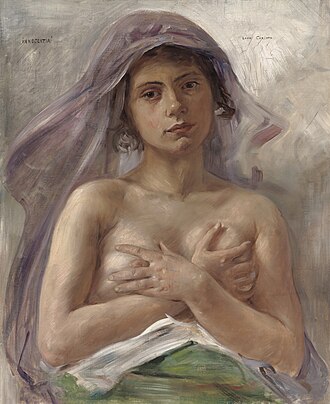 Innocentia - Lovis Corinth (1890)
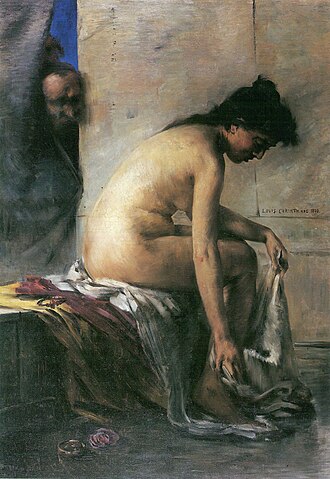 Susanna im Bade, 2. Fassung - Lovis Corinth (1890)
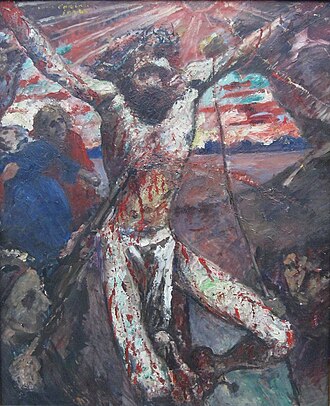 Der rote Christus - Lovis Corinth (1922)
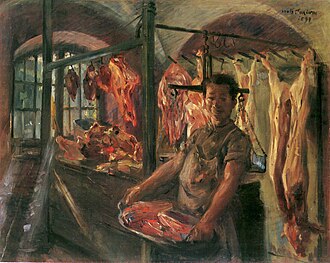 Schlachterladen in Schäftlarn an der Isar - Lovis Corinth (1897)
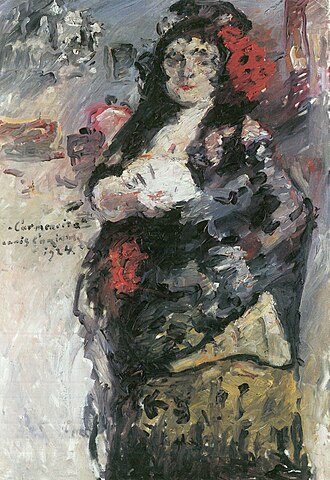 Carmencita - Lovis Corinth (1924)
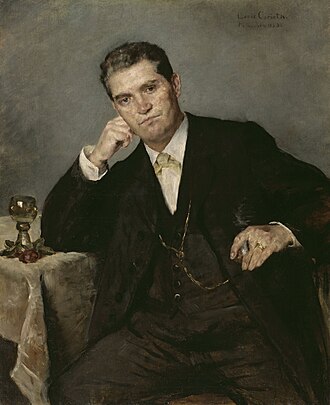 Franz Heinrich Corinth, der Vater des Künstlers - Lovis Corinth (1883)
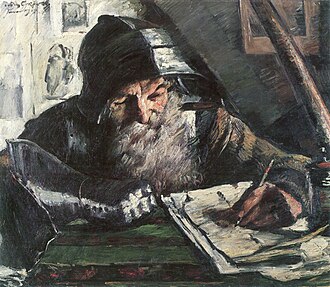 Götz von Berlichingen - Lovis Corinth (1917)
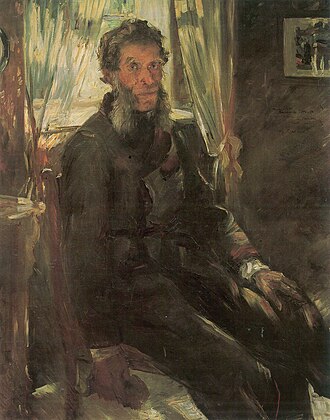 Porträt des Ohm Friedrich Corinth - Lovis Corinth (1900)
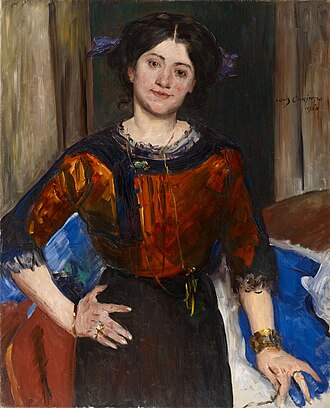 Porträt Charlotte Corinth in brauner Bluse - Lovis Corinth (1910)
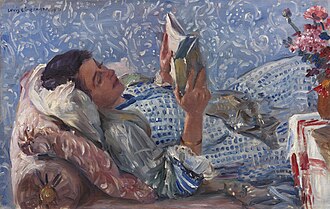 Die Lesende - Lovis Corinth (1911)
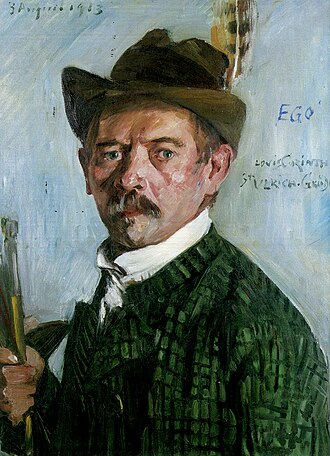 Selbstporträt mit Tiroler Hut - Lovis Corinth (1913)
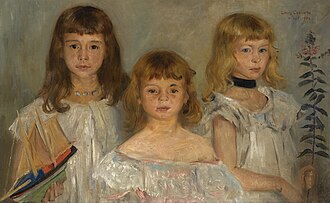 Drei kleine Mädchen - Lovis Corinth (1902)
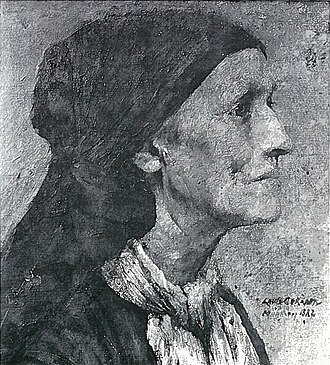 Alte Frau - Lovis Corinth (1885)
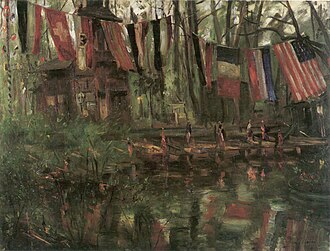 Der Neue See im Berliner Tiergarten - Lovis Corinth (1908)
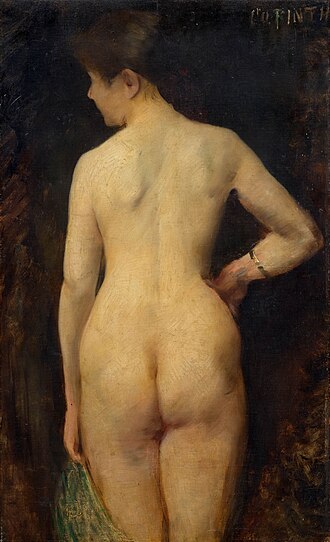 Weiblicher Akt - Lovis Corinth (1885)
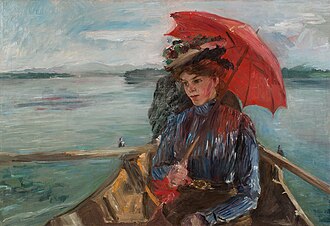 Fräulein Heck - Lovis Corinth (1897)
 Kuhstall - Lovis Corinth (1879)
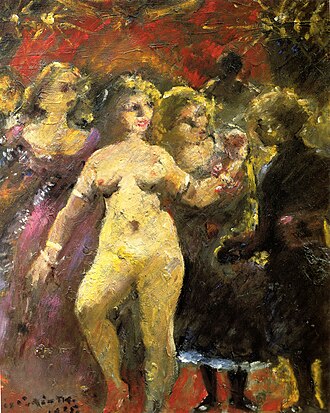 Die schöne Frau Imperia - Lovis Corinth (1925)
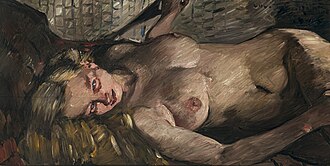 Liegender weiblicher Akt - Lovis Corinth (1915)
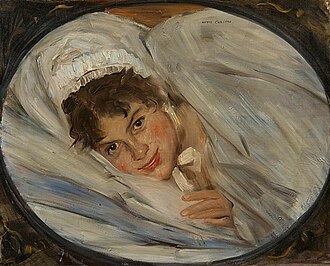 Mädchenkopf im Kissen - Lovis Corinth (1898)
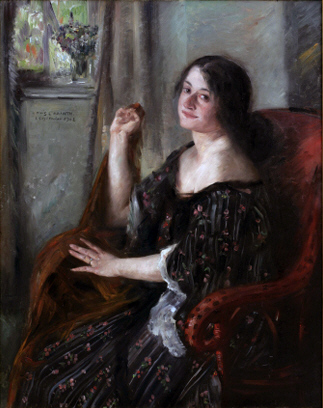 Petermannchen - Lovis Corinth (1902)
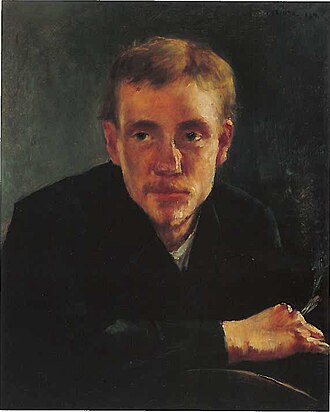 Porträt des Malers Paul Eugène Gorge - Lovis Corinth (1884)
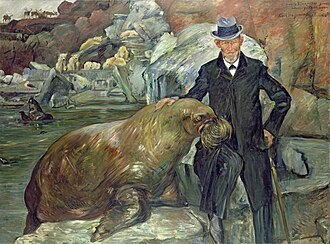 Porträt Carl Hagenbeck mit dem Walroß Pallas - Lovis Corinth (1911)
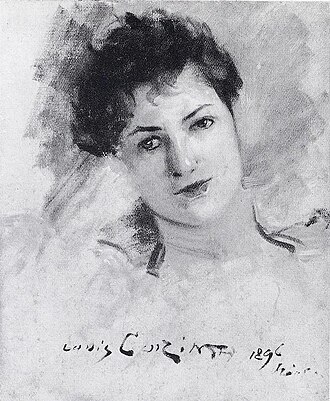 Porträt Emmi Sieger - Lovis Corinth (1896)
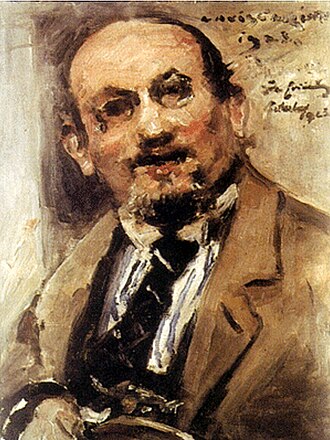 Porträt Walther Silberstein - Lovis Corinth (1923)
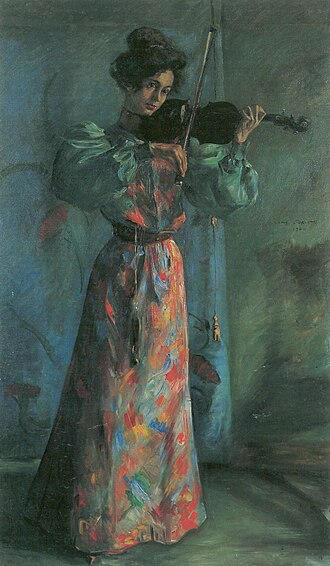 Die Geigenspielerin - Lovis Corinth (1900)