Franz Heinrich Corinth, der Vater des Künstlers
Lovis Corinth · 1883
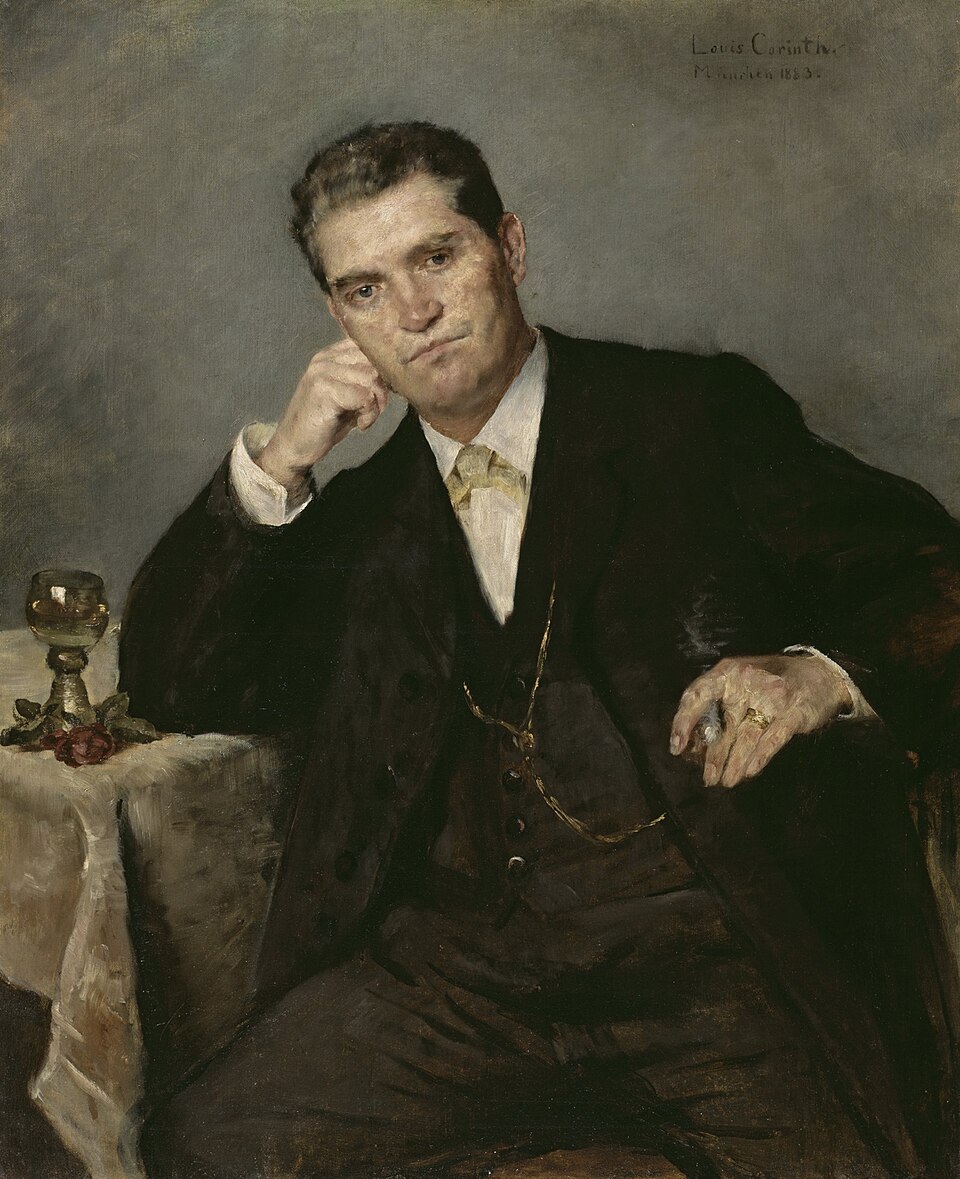
A tanner's son painted his father at a table with a cigar, a golden goblet and a red rose. Lovis Corinth's early portrait is a thank-you to the man who sold his farm so his boy could learn to paint.
The story behind the painting
Lovis Corinth grew up in Tapiau in East Prussia, the only shared child of the tanner and farmer Franz Heinrich Corinth and his wife Wilhelmine. He went to school in Königsberg from 1866 to 1873, living with an aunt, and returned to the family farm after his mother's death. In 1876 his father sold the farm and the tannery and paid for his son's training at the Königsberg art academy. In 1880 Corinth moved on to the Munich academy. His father visited him regularly, and in 1883, in Munich, the son painted him seated at a table.
What to look for
Franz Heinrich Corinth sits facing us and looks directly at the painter and the viewer. He wears respectable middle-class clothes: dark trousers and waistcoat, a white shirt with a light tie and a dark coat, with a gold watch chain disappearing under the coat. His left hand, with a gold ring, holds a cigar, while he rests his head on his right hand, elbow on the table. On a pale cloth stand a golden wine goblet and a red rose, against a green wall. At the upper right the picture is signed in two lines, Lovis Corinth, München 1883.
Meaning and intent
Lothar Brauner described it as the portrait of a respected man aware of his dignity, in the tradition of bourgeois portraiture in 1880s Munich. The picture also shows the deep honour and love Corinth felt for the father who made his study of painting possible. In his autobiography Corinth wrote that his father had only attended the village school but had great intelligence, and that his highest ambition was to get his boy into the best school. The steady gaze and the quiet objects on the table hold that pride.
Legacy
Corinth painted his father again in 1887, seated on a sofa with a letter, and twice in 1888, the year his father died: once standing in a brownish coat and once asleep on his sickbed. This early work passed through the dealer Fritz Gurlitt and the Swiss painter Hermann Hirzel, and since 1930 it has belonged to the Städtische Galerie im Lenbachhaus in Munich. It was first shown publicly only in 1923 at the Nationalgalerie in Berlin, two years before Corinth's death, and later travelled to Basel, London, St. Louis and other cities.
Schon gewusst?
- Painted in Munich in 1883 during Corinth's studies.
- The father had sold his farm and tannery to pay for his son's art training.
- First shown publicly in 1923.
- In the Lenbachhaus, Munich, since 1930.
Über den Künstler
Lovis Corinth (1858-1925)
Porträt · Munich Central Collecting Point · Vater · Weinglas · Städtische Galerie im Lenbachhaus und Kunstbau München
Mehr von Lovis Corinth
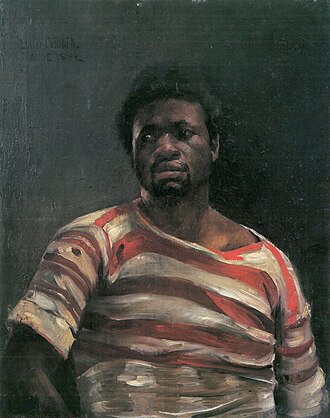 Un Othello - Lovis Corinth (1884)
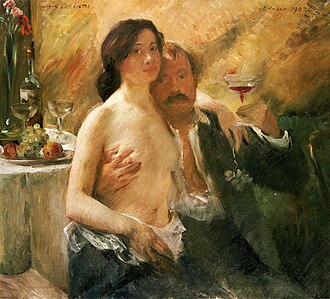 Selbstporträt mit Charlotte Berend und Sektglas - Lovis Corinth (1902)
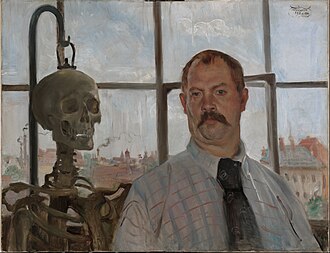 Selbstporträt mit Skelett - Lovis Corinth (1896)
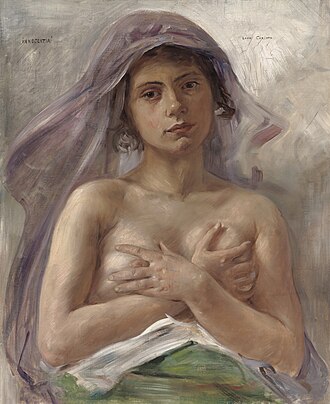 Innocentia - Lovis Corinth (1890)
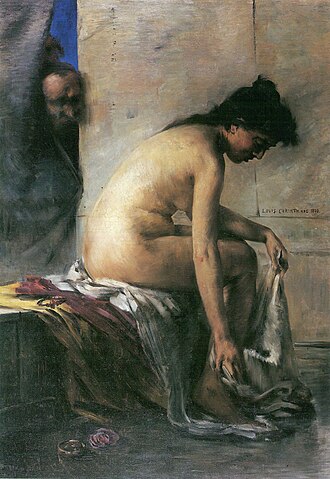 Susanna im Bade, 2. Fassung - Lovis Corinth (1890)
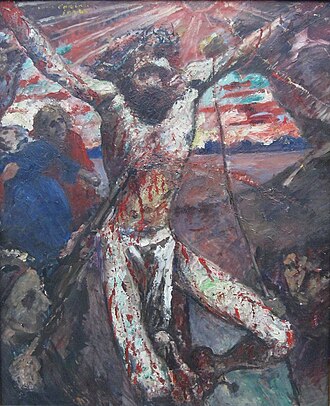 Der rote Christus - Lovis Corinth (1922)
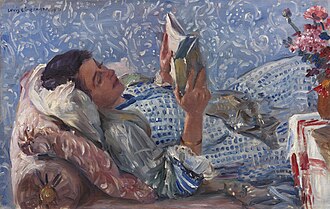 Die Lesende - Lovis Corinth (1911)
 Carmencita - Lovis Corinth (1924)