The Virgin and Child with the Magdalen and Saint John the Baptist
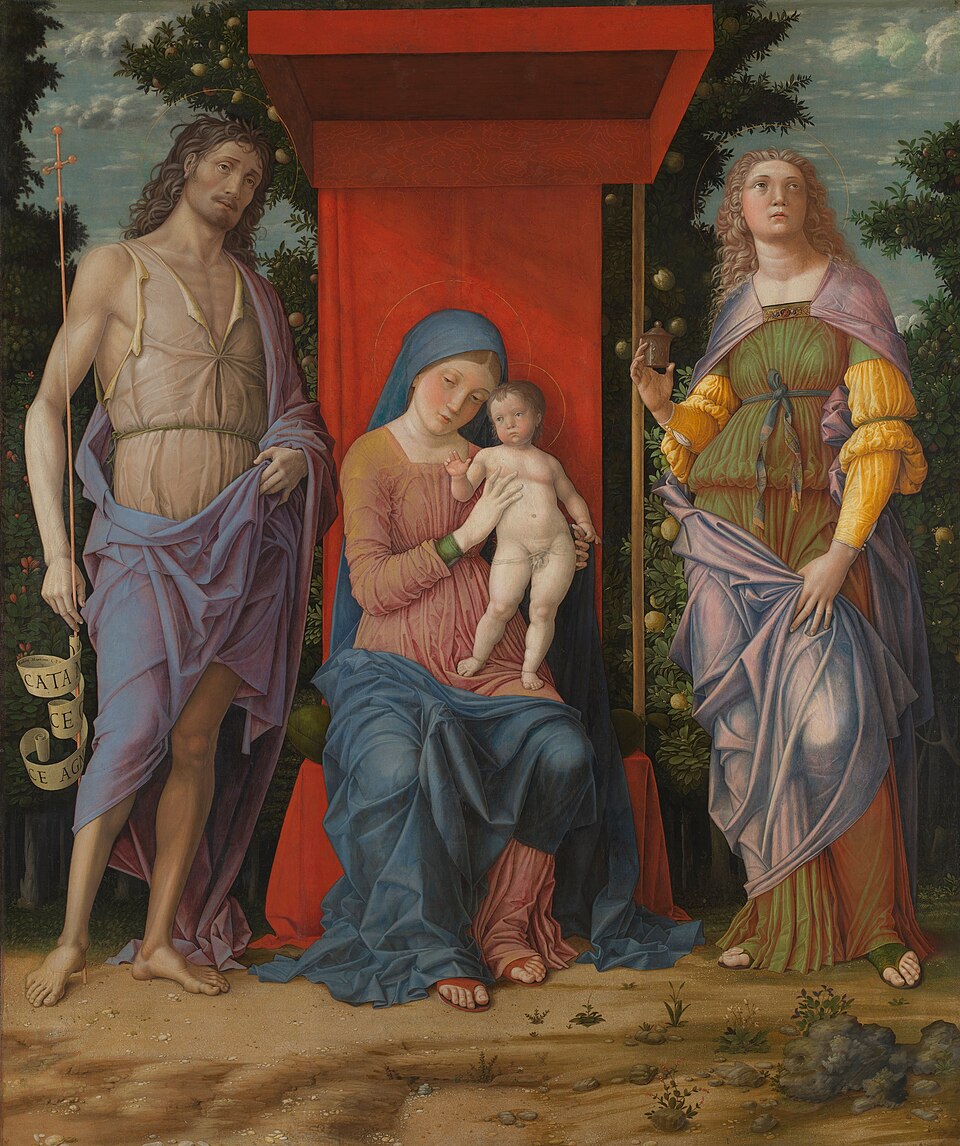
The Virgin sits beneath a deep red canopy, the Child standing on her knee, between Saint John the Baptist and Mary Magdalene, with citrus trees glowing behind. Mantegna signed himself here as a citizen of Padua.
The story behind the painting
Andrea Mantegna painted this altarpiece between 1490 and 1505, in tempera on canvas. It was made for a church or chapel, but its original location and the person who commissioned it remain unknown. The National Gallery in London bought it in 1855. The sources disagree slightly on its size: the French Wikipedia article gives 139.1 by 116.8 cm, while Wikidata gives 136 by 114 cm. Wikidata gives no date, so the span 1490 to 1505 comes from Wikipedia.
What to look for
The Virgin sits on a throne beneath a canopy that is entirely red, holding the Child, who stands on one of her knees. On the left is the adult Saint John the Baptist with his shepherd's staff topped by a cross. A scroll wound around its base carries the words Behold the Lamb of God, who takes away the sin of the world, and on its other side the painter's signature, ANDREAS MANTINIA C.P.F., meaning citizen of Padua made it. On the right stands Mary Magdalene, holding a small flask in her right hand. All wear circular haloes. Behind them, trees bear yellow and orange citrus fruit.
Meaning and intent
This is a sacred conversation: the Virgin and Child on a throne with holy figures, not a Holy Family, since Joseph and Anne are absent. The red of the canopy, the colour of Christ's Passion, forms a true jewel case around the infant Jesus, while the yellow and orange fruit symbolise celebration. Signing as a citizen of Padua shows his attachment to the city where he trained. The ground here is earthy, not stony or marble as often in his work, and the grey skies carry clouds.
Legacy
The painting belongs to Mantegna's last phase. The citrus trees already appear in his Trivulzio Altarpiece of 1497, the fanciful rippling drapery echoes his Madonna of Victory of the same year, and the metallic grey recalls his Introduction of the Cult of Cybele at Rome of 1505 to 1506. Bought by the National Gallery in 1855, it lets London visitors meet the late Mantegna at full strength: firm figures, crisp lines and a few rich colours set against a wall of fruit trees.
豆知識
- Painted by Andrea Mantegna between 1490 and 1505.
- Signed on John the Baptist's scroll as a citizen of Padua.
- Original church and patron are unknown.
- Bought by the National Gallery, London, in 1855.
画家について
アンドレア・マンテーニャ (1431-1506)
宗教美術 · 女性 · 聖母マリア · イエスの幼少時代 · ナショナル・ギャラリー · 少年 · ロングヘア · 母 · マグダラのマリア · 洗礼者ヨハネ
同じ画家の作品: アンドレア・マンテーニャ
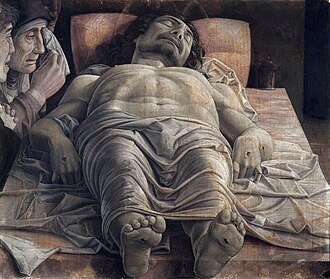 死せるキリスト - Andrea Mantegna (1483)
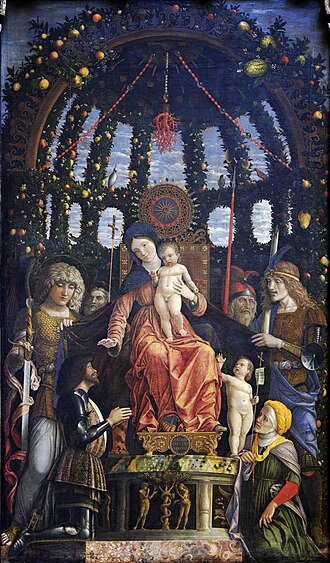 勝利の聖母 - Andrea Mantegna
 サンゼーノの祭壇画 - Andrea Mantegna (1457)
 羊飼いの礼拝 - Andrea Mantegna (1450)
 洞窟の聖母 - Andrea Mantegna (1489)
 パルナッソス - Andrea Mantegna
 キュベレ崇拝のローマ到来 - Andrea Mantegna (1500s)
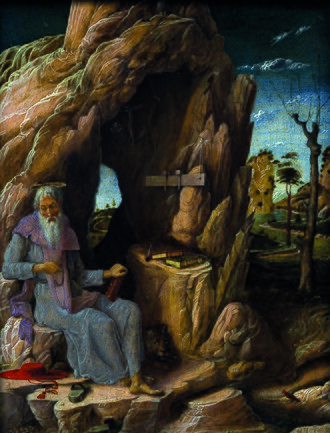 Saint Jerome in the desert - Andrea Mantegna
 ヴィーナスの誕生
 プリマヴェーラ
 キリストの鞭打ち
 ブレラ祭壇画
 モナ・リザ
 白貂を抱く貴婦人
 受胎告知
 東方三博士の礼拝