パルナッソス
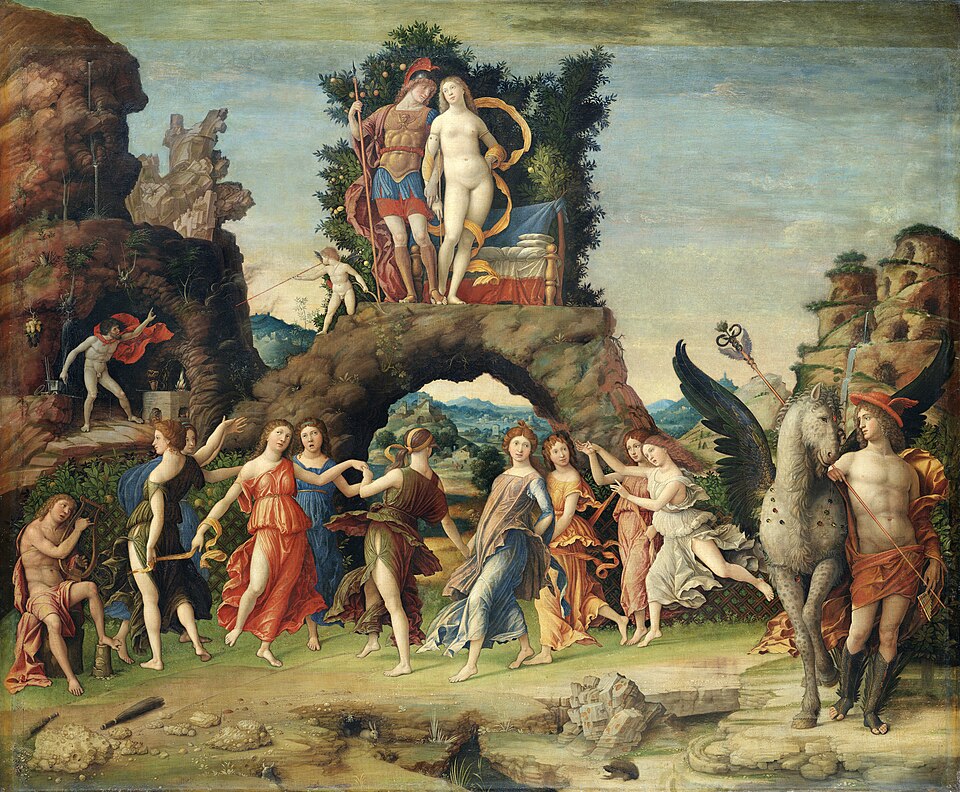
Nine Muses dance in a ring while Apollo plays the lyre, and above them, on an arch of rock, Venus and Mars stand side by side. Mantegna painted this scene in 1497 for the private study of Isabella d'Este, as an allegory of her court.
The story behind the painting
The Parnassus was the first picture Mantegna painted for Isabella d'Este's studiolo, her private cabinet in the Ducal Palace of Mantua. The shipping of his paint is documented in 1497, and a letter told Isabella, then at Ferrara, that she would find the work finished on her return. The theme was suggested by the court poet Paride da Ceresara. After Mantegna's death in 1506 the painting was partly repainted to bring it up to date with the oil technique that had become dominant, perhaps by Lorenzo Leonbruno, touching the heads of the Muses, Apollo, Venus and the landscape.
What to look for
Venus and Mars stand on a natural rock arch in front of a symbolic bed. Behind them, the vegetation on the right, the male side, carries many fruits, and on the left, the female side, only one. Venus's pose comes from ancient sculpture. A small Cupid aims a blowpipe at Vulcan, Venus's husband, working at his forge in a grotto, with grapes behind him. In the clearing below, Apollo plays and the Muses dance. On the right stand Pegasus, whose hoof can make a spring flow, and Mercury with winged hat, caduceus and winged shoes.
Meaning and intent
The traditional reading comes from a late 15th century poem by Battista Fiera, which saw the scene as Mount Parnassus crowned by an allegory of Isabella as Venus and her husband Francesco II Gonzaga as Mars. The dancing Muses stand for universal harmony, the fruits for fertility, Mercury for the protector of the two lovers. The source adds a twist: the waterfalls in the background belong to Mount Helicon, where the Muses traditionally danced, so the familiar name Parnassus may be mistaken. Mythological adultery here becomes flattery for a ruling couple.
Legacy
The painting stayed with the other works of the studiolo, including Mantegna's Triumph of the Virtues and pictures by Lorenzo Costa and Pietro Perugino. In 1627 Duke Charles I of Mantua gave them all to Cardinal Richelieu; they entered the French royal collections under Louis XIV and later the Louvre, where the Parnassus hangs today. Wikipedia dates it to 1497, while the Wikidata record gives no date. It remains a rare survivor of a Renaissance patron's personal programme of pictures.
豆知識
- Painted in 1497 for Isabella d'Este's studiolo in Mantua.
- Theme suggested by the court poet Paride da Ceresara.
- Partly repainted after Mantegna's death in 1506.
- Given to Cardinal Richelieu in 1627; now in the Louvre.
画家について
アンドレア・マンテーニャ (1431-1506)
神話画 · ルーヴル美術館絵画部門 · Early Renaissance · フォークダンス · 箒
同じ画家の作品: アンドレア・マンテーニャ
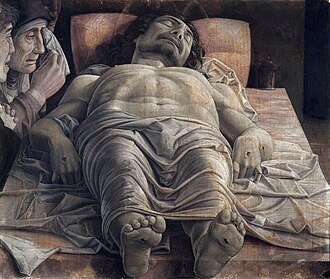 死せるキリスト - Andrea Mantegna (1483)
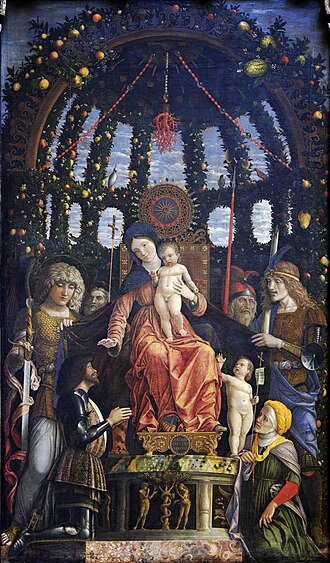 勝利の聖母 - Andrea Mantegna
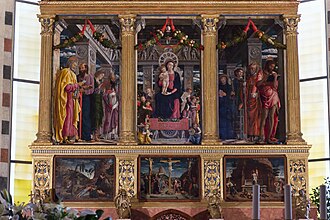 サンゼーノの祭壇画 - Andrea Mantegna (1457)
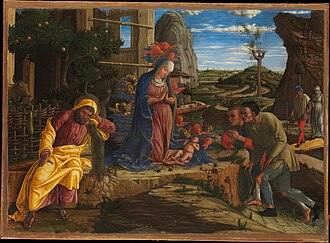 羊飼いの礼拝 - Andrea Mantegna (1450)
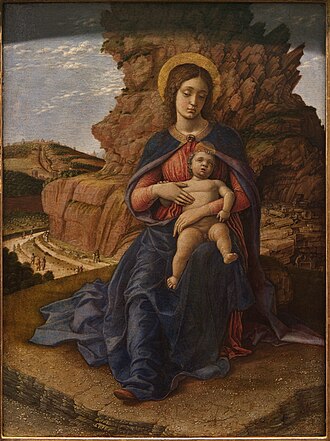 洞窟の聖母 - Andrea Mantegna (1489)
 キュベレ崇拝のローマ到来 - Andrea Mantegna (1500s)
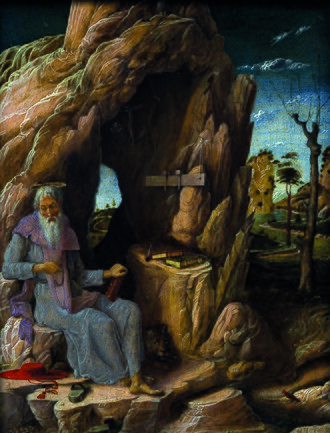 Saint Jerome in the desert - Andrea Mantegna
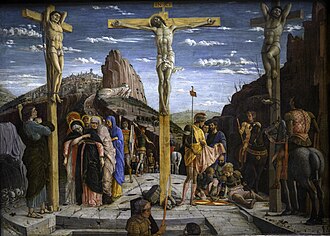 磔刑 - Andrea Mantegna (1450s)
 ヴィーナスの誕生
 プリマヴェーラ
 キリストの鞭打ち
 ブレラ祭壇画
 モナ・リザ
 白貂を抱く貴婦人
 受胎告知
 東方三博士の礼拝