王立フィリピン会社の総会
Francisco Goya · 1815
%20La%20Junte%20des%20Philippines%20-%20Francisco%20de%20Goya%20-%20Mus%C3%A9e%20Goya.jpg)
The largest painting Goya ever made shows a king, a long table and a vast, half-empty hall. It was meant to honour a trading company's annual meeting; instead it became, in one critic's words, an image of futility.
The story behind the painting
Around 1815 Goya was commissioned to commemorate the annual meeting of the Royal Company of the Philippines held on 30 March, attended by 51 shareholders and members. It was a bitter time for him. Ferdinand VII, back on the Spanish throne after exile, had turned away from the Enlightenment and ended liberal hopes for a more progressive Spain. Unexpectedly, the king decided to attend the meeting, meaning his presence as a sign of commitment to the empire. The source says it had the opposite effect: after the Peninsular War the economy and empire lay in ruins, and the company had become so unprofitable as to be irrelevant. The result is the largest work Goya produced, 320.5 by 433.5 cm.
What to look for
Ferdinand sits in the centre middle ground at a raised table, in full pomp and finery, flanked by trembling associates. To his left sits Miguel de Lardizabal, minister for the Indies, who was imprisoned the following September and forced into exile by the crown. In front of them, the assembly members are massed in two groups, divided left and right by a carpet. Then comes the most striking part: a wide expanse of light spilling across an empty floor before the absolute monarch, lit from a source near the viewer. Look at the faces of the notables and shareholders, who to many eyes look simply bored, and at the size of the room around them.
Meaning and intent
Although commissioned and meant to hang in the very hall it shows, the painting presents the king's central place and his powerless grip in an unflattering way, much as Goya had painted Charles IV and his family around 1800. The art historian Albert Boime saw a monarch who rules not through respect but through absolute power and fear, as a last resort. Martin Gayford called the subject fantastically dull on the face of it, the meeting of a company ruined by the Napoleonic Wars, and so an image of futility; above all, he wrote, it is a painting of an empty space in an enormous room, mysterious and somehow very Spanish.
Legacy
Ferdinand's return drove many Spanish intellectuals into exile. Goya stayed for some years and continued to portray his king, but in 1824 he too fled to France. Fittingly, this enormous canvas now hangs in France, at the Goya Museum in Castres. It has kept its power to puzzle. Gayford quoted the painter Lucian Freud, who went to see it and said it is really of absolutely nothing. That emptiness, the bright bare floor between a powerless king and his bored subjects, is exactly what makes the picture unforgettable, a court ceremony turned into a quiet portrait of a declining state.
豆知識
- Goya's largest painting, 320.5 by 433.5 cm.
- Commemorates the meeting of 30 March 1815, with 51 shareholders and members.
- Ferdinand VII attended the meeting unexpectedly.
- Held by the Goya Museum in Castres, France.
画家について
Francisco Goya (1746-1828)
同じ画家の作品: Francisco Goya
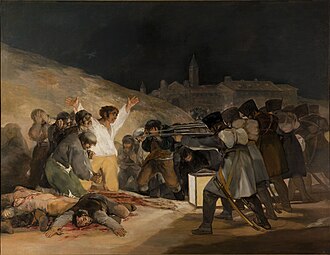 1808年5月3日 - Francisco Goya (1814)
.jpg) 裸のマハ - Francisco Goya (1800)
裸のマハ - Francisco Goya (1800).jpg) 我が子を食らうサトゥルヌス - Francisco Goya (1819)
我が子を食らうサトゥルヌス - Francisco Goya (1819)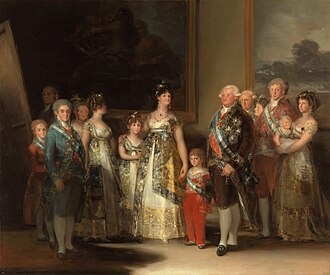 カルロス4世の家族 - Francisco Goya (1800)
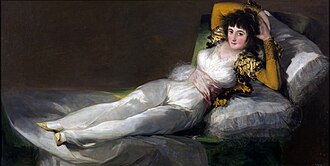 着衣のマハ - Francisco Goya (1800)
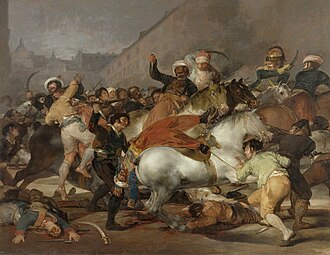 1808年5月2日、エジプト人親衛隊との戦闘 - Francisco Goya (1814)
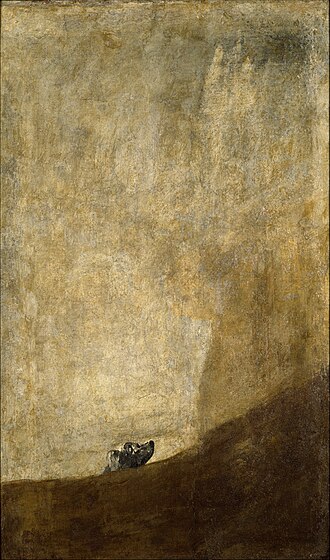 犬 - Francisco Goya (1819)
 魔女の夜宴 - Francisco Goya (1820s)
関連する画家の作品
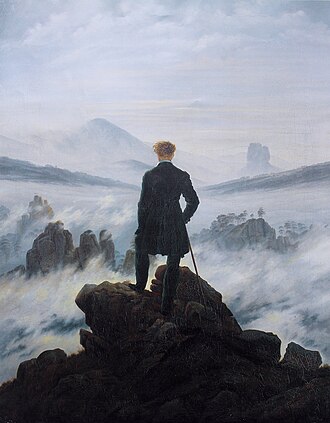 雲海の上の旅人 - Caspar David Friedrich (c. 1818)
 楡の木のある僧院 - Caspar David Friedrich (1800s)
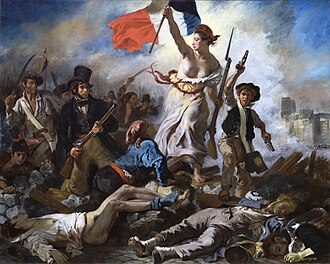 民衆を導く自由の女神 - Eugène Delacroix (1830)
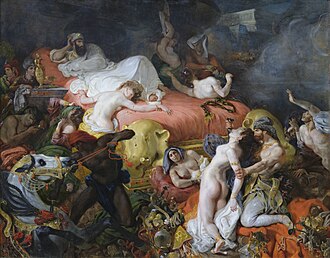 サルダナパールの死 - Eugène Delacroix (1827)
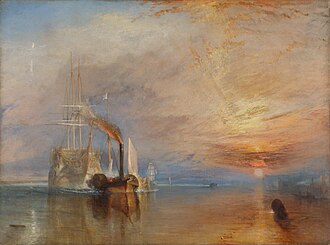 戦艦テメレール号 - J. M. W. Turner (1839)
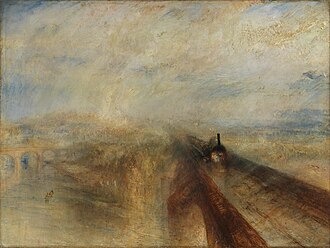 雨、蒸気、速度 - グレート・ウェスタン鉄道 - J. M. W. Turner (1844)
.jpg) 青衣の少年 - Thomas Gainsborough (1770)
青衣の少年 - Thomas Gainsborough (1770).jpg) アンドリューズ夫妻 - Thomas Gainsborough (1748)
アンドリューズ夫妻 - Thomas Gainsborough (1748)