黄金時代
ドミニク・アングル · 1862
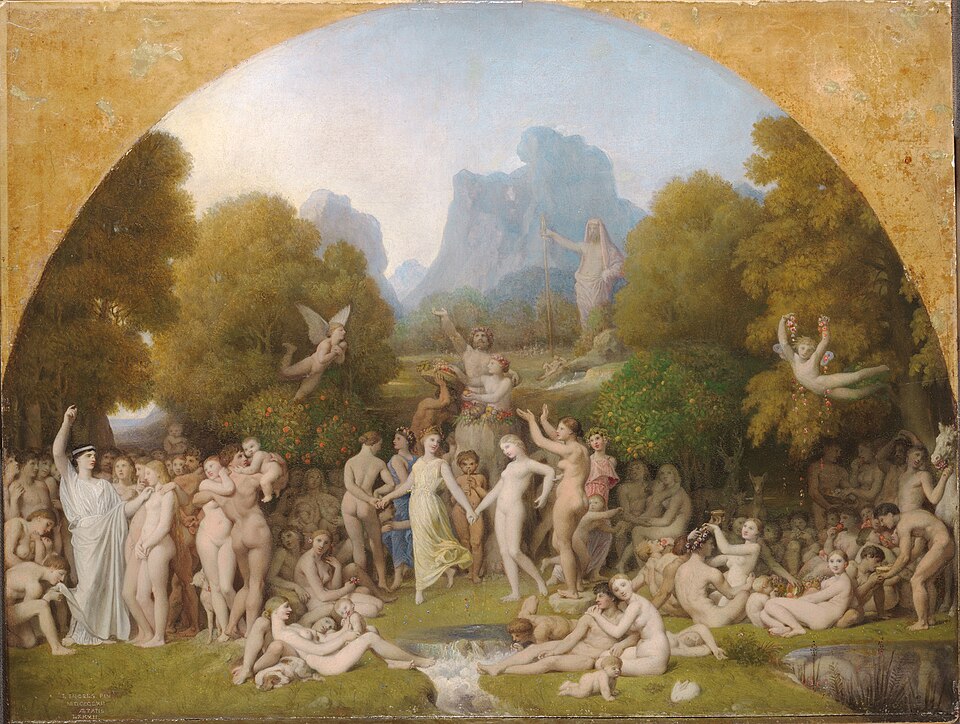
A crowd of beautiful idlers, Ingres called them: people who never grew old, lived on fruit, water, milk and nectar, and died as if falling asleep. This small oil on plaster is his reduction of a wall painting he never finished.
The story behind the painting
Ingres was called to the Château de Dampierre by the duke and philanthropist Honoré Théodoric d'Albert de Luynes to paint murals for the Minerva room. From 1843 to 1847 he spent part of each year at the château, helped by his assistants Alexandre Desgoffe, who painted the vegetation, and Amédée Pichot. He made at least five hundred preparatory sketches and drawings. When the duke first saw the work in 1844, he was shocked both by the many nudes and by how slowly it was advancing. Ingres stopped working on it around 1847. The painting here is a reduction of those murals, and Wikidata dates it 1862.
What to look for
The arched shape echoes the frescoes Raphael painted for the rooms of the Vatican palace in the early sixteenth century, a model Ingres chose deliberately. Look for a landscape full of nude figures at rest, with no old people anywhere among them, because Ingres decided this generation never knew old age. The picture is painted in oil on plaster, a technique Ingres was not used to. On canvas he could correct mistakes more easily, and the plaster gave him far less room for second thoughts. It measures about 46.5 by 62 cm.
Meaning and intent
The subject is the Golden Age, the first era of humanity described by the ancient poets as a utopia created by the gods before the reign of Zeus, or Jupiter. In a letter of 20 July 1843 Ingres set out his own short programme. The people of this age stayed beautiful and lived long, were good and just and loved one another. When they died they became kind spirits who watched over humankind. Astraea visited them to teach them to love Justice, and Saturn looked down on their happiness from the sky. The painting is a dream of a world before labour and ageing.
Legacy
The reduction is kept at the Fogg Art Museum, part of the Harvard Art Museums in Cambridge, Massachusetts. The same museum holds one of the most famous of the preparatory drawings for the project, a man and a woman holding hands. According to the source, that drawing is said to have later inspired a drawing by Paul Gauguin. So a mural left unfinished in a French château lives on in a small panel, hundreds of studies and a quiet echo in the work of a younger painter.
豆知識
- A reduction of murals Ingres painted for the Château de Dampierre from about 1842 to 1847.
- Painted in oil on plaster, about 46.5 x 62 cm.
- Ingres described the scene in a letter of 20 July 1843.
- Kept at the Fogg Art Museum, Harvard Art Museums.
画家について
ドミニク・アングル (1780-1867)
同じ画家の作品: ドミニク・アングル
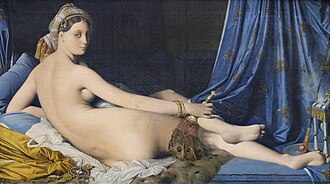 グランド・オダリスク - Jean-Auguste-Dominique Ingres (1814)
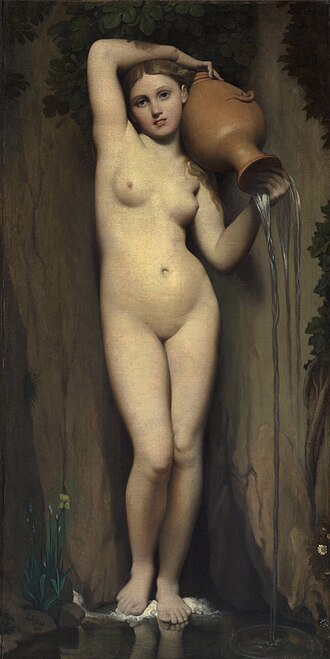 泉 - Jean-Auguste-Dominique Ingres (1856)
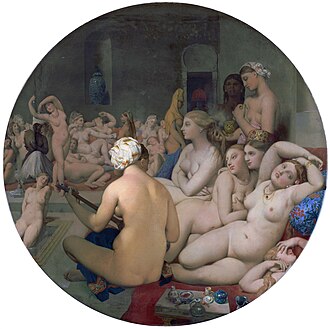 トルコ風呂 - Jean-Auguste-Dominique Ingres (1862)
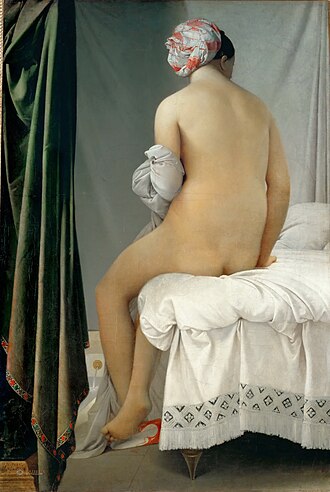 浴女 - Jean-Auguste-Dominique Ingres (1808)
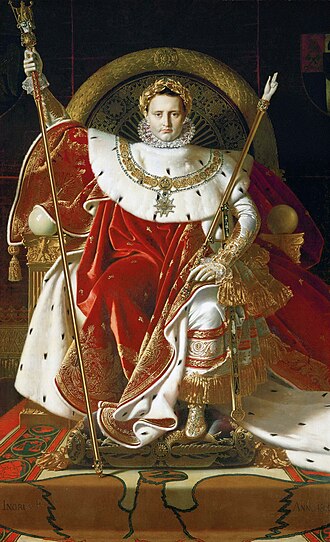 玉座のナポレオン - Jean-Auguste-Dominique Ingres (1806)
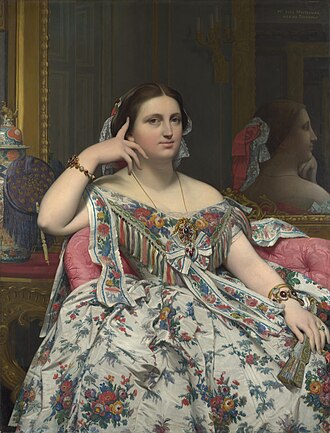 イネス・モワテシエ夫人の肖像 - Jean-Auguste-Dominique Ingres (1856)
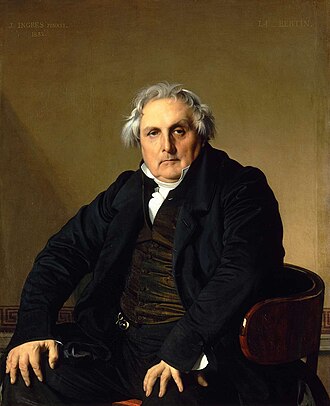 ルイ=フランソワ・ベルタン氏の肖像 - Jean-Auguste-Dominique Ingres (1832)
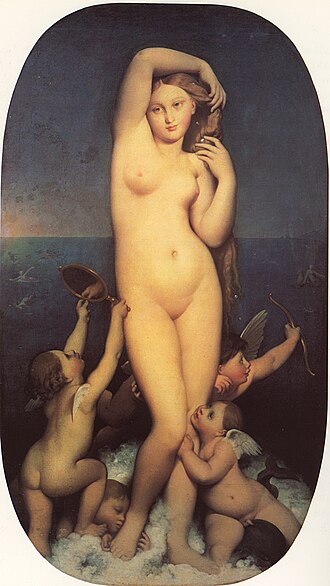 海から上がるヴィーナス - Jean-Auguste-Dominique Ingres (1808)
関連する画家の作品
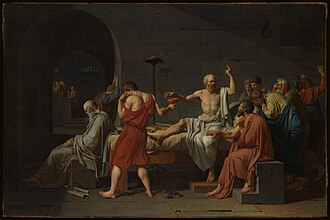 ソクラテスの死 - Jacques-Louis David (1787)
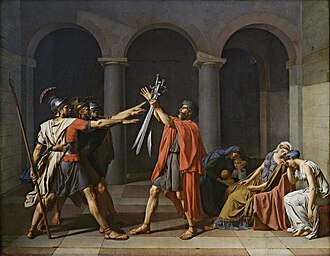 ホラティウス兄弟の誓い - Jacques-Louis David (1784)
 1808年5月3日 - Francisco Goya (1814)
 裸のマハ - Francisco Goya (1800)