死せる闘牛士
Édouard Manet · 1864
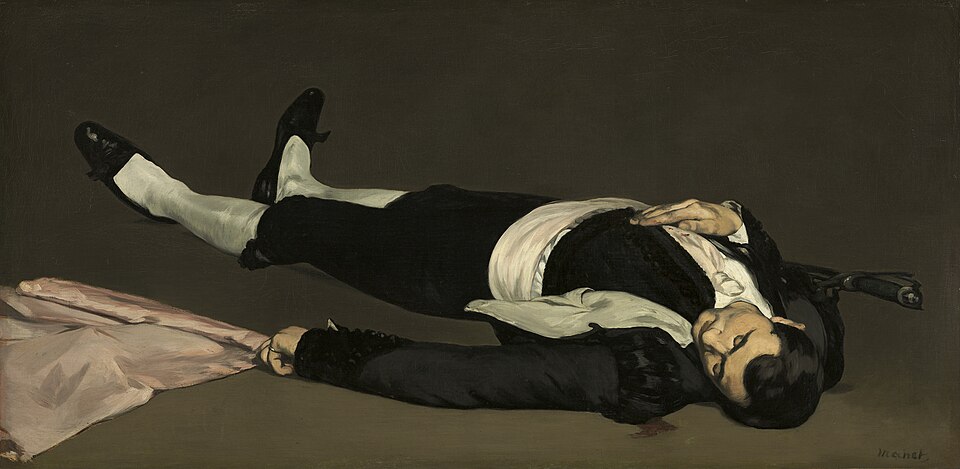
A bullfighter lies dead on the ground, utterly alone. Manet cut this figure out of a larger painting that critics had mocked, and turned it into a powerful work on its own.
The story behind the painting
The Dead Man, originally titled The Dead Toreador, is an oil on canvas by Édouard Manet from the 1860s; Wikidata dates it to 1864. It comes from a period when Manet was strongly influenced by Spanish themes, by painters such as Velázquez and Goya, and by bullfighting. The figure was first part of a larger composition, Episode from a Bullfight, influenced by Goya's Tauromaquia and Alfred Dehodencq's bullfight scenes, and accepted for the Salon of 1864. Critics mocked its lack of relief, poor proportions and unreal space. Stung, Manet cut the canvas up. He kept two parts: this one, which he reworked substantially, and another now called The Bullfight.
What to look for
The canvas, about 76 by 153 cm, is long and low, and almost entirely given over to a single figure lying on the ground. Wikidata's subject list helps us look: a man with brown hair in a bullfighter's costume, with breeches, stockings and a sash, lying as a corpse. Without the bullring and crowd that once surrounded him, nothing distracts from the body. The horizontal format stretches him across the whole picture, so that the eye moves slowly from head to feet. Manet reworked the figure after cutting it from the larger work, and the result is a stark, concentrated image of stillness, where the drama of the corrida has fallen silent.
Meaning and intent
When the Salon opened in 1864, many critics saw a painting known as A Dead Soldier, then attributed to Velázquez and in the Pourtalès collection, as the main inspiration for the figure. Théophile Thoré-Burger even claimed the dead toreador was boldly copied from it, a charge Baudelaire strongly refuted. Critics also pointed to Gérôme's Dead Caesar and an illustration for Gil Blas. The article judges that the main influence was probably Velázquez. By separating the figure and later renaming it The Dead Man for the Salon of 1867, Manet gave it a more universal character: no longer an episode from one bullfight, but an image of death itself.
Legacy
Manet's fascination with the bullfight continued. In a letter to Baudelaire dated 14 September 1865 he called the bull hunt one of the most beautiful, curious and terrible spectacles, and hoped to paint the brilliant, flickering and dramatic look of a corrida he had attended. The Dead Man has continued to inspire. In 2007 the painter Herman Braun-Vega appropriated it in a painting tracing artistic lines between Velázquez, Goya, Manet and Monet, treating it as a direct legacy of Velázquez. It also appears on the cover of the 1984 album Love Is the Law by the Minneapolis band The Suburbs. Wikidata records the painting at the National Gallery of Art in Washington.
豆知識
- Originally part of Episode from a Bullfight, shown at the Salon of 1864.
- Manet cut up the canvas after critics mocked it, keeping The Dead Man and The Bullfight.
- Renamed The Dead Man for the Salon of 1867.
- Wikidata dates it to 1864 and places it in the National Gallery of Art, Washington.
画家について
Édouard Manet (1832-1883)
男性 · 風俗美術 · 印象派 · ナショナル・ギャラリー・オブ・アート · 茶髪 · 遺体 · 臥位 · サッシュ · ストッキング · ブリーチ
同じ画家の作品: Édouard Manet
 草上の昼食 - Édouard Manet (1863)
 オランピア - Édouard Manet (1863)
 フォリー・ベルジェールのバー - Édouard Manet (1882)
 バルコニー - Édouard Manet (1868)
 テュイルリー公園の音楽会 - Édouard Manet (1862)
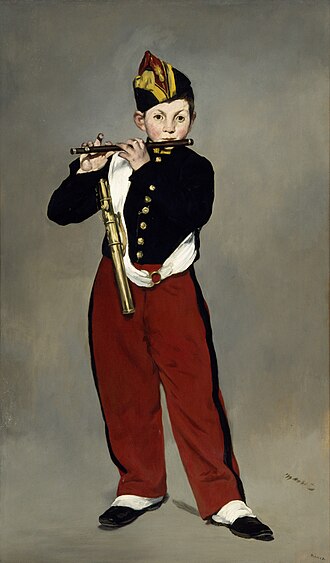 笛を吹く少年 - Édouard Manet (1866)
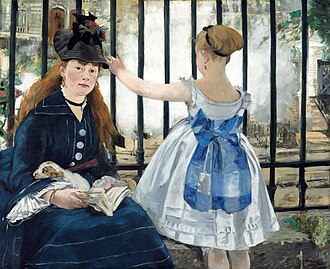 鉄道 - Édouard Manet (1873)
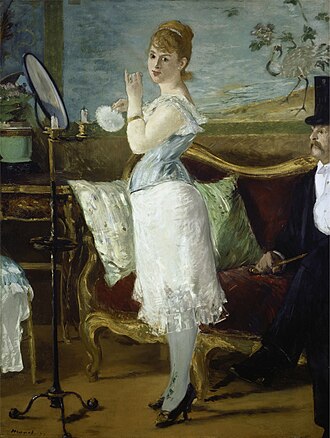 ナナ - Édouard Manet (1877)
関連する画家の作品
 印象・日の出 - Claude Monet (1872)
 睡蓮 - Claude Monet (1906)
 ムーラン・ド・ラ・ギャレットの舞踏会 - Pierre-Auguste Renoir (1876)
 舟遊びの昼食 - Pierre-Auguste Renoir (1881)
 ゆりかご - Berthe Morisot (1872)
 Summer's Day - Berthe Morisot (1879)
 アブサントを飲む人 - Edgar Degas (1875)
 The Bellelli Family - Edgar Degas (1858)
 The Canal du Loing at Moret - Alfred Sisley (1892)
 The Watering Pond at Marly with Hoarfrost - Alfred Sisley (1876)
 パリの通り、雨 - Gustave Caillebotte (1877)
 床削り - Gustave Caillebotte (1875)