アブサンを飲む男
Édouard Manet · 1859
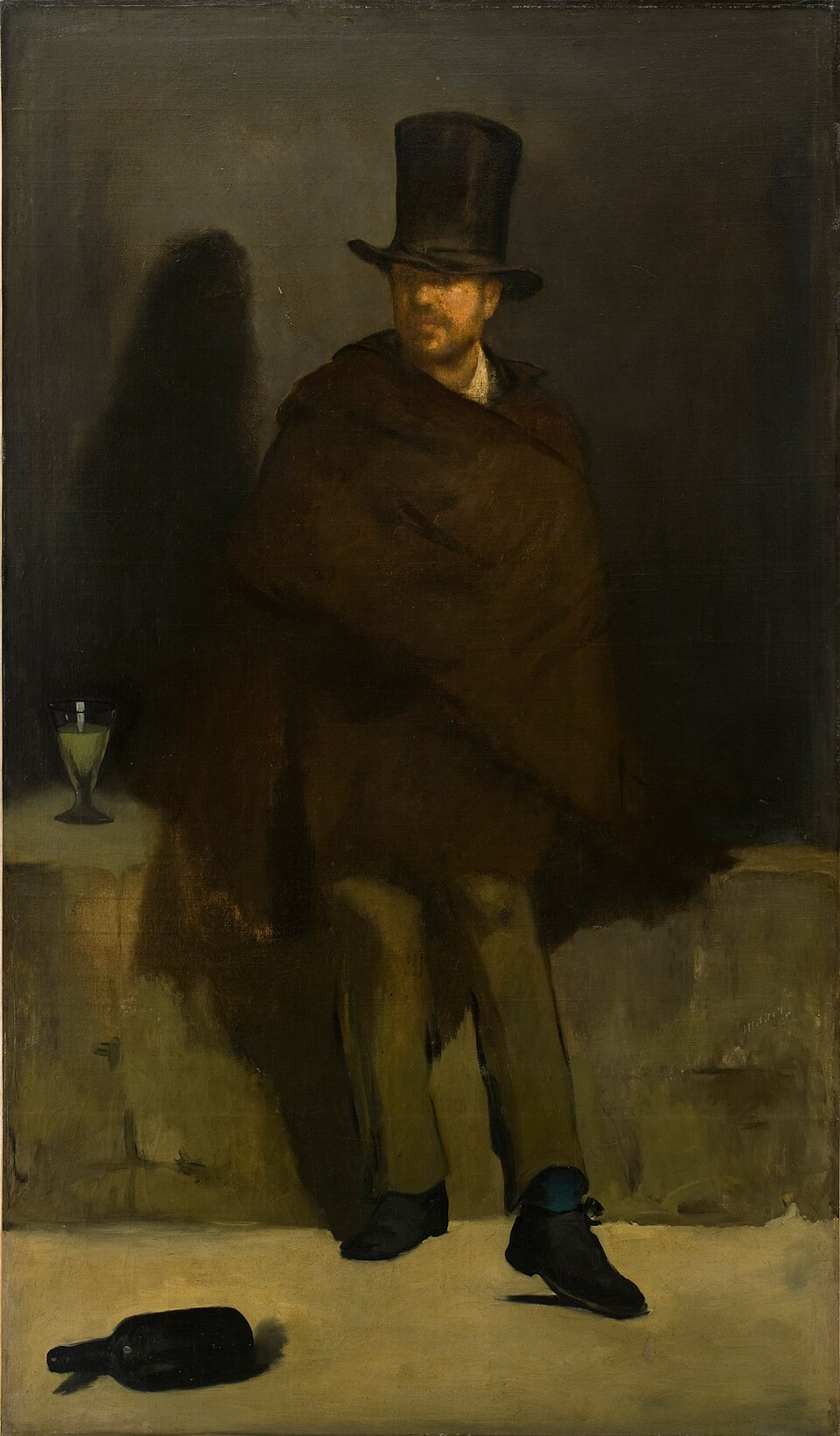
A rag-picker in a top hat and a cloak stands like an aristocrat, an empty bottle at his feet. This was Manet's first major painting, and his old teacher's verdict was brutal: you are the absinthe drinker, it is you who have lost your moral sense.
The story behind the painting
Manet studied in the studio of Thomas Couture from 1850, but grew to dislike his master's Salon style and set up his own studio in 1856. Little of his earliest work survives, and he may have destroyed much of it himself. The Absinthe Drinker, painted around 1859, is considered his first major painting and his first original work. The model was Collardet, an alcoholic rag-picker who haunted the area around the Louvre. When the picture was nearly finished, Manet showed it to Couture, who is said to have exclaimed that they paint abominations like that, and that it was Manet himself who had lost his moral sense.
What to look for
The figure is painted at full scale, about 180 by 106 cm, mostly in browns, greys and blacks. Collardet stands in a black top hat, wrapped in a brown cloak as if he were a nobleman, leaning on a ledge. An empty bottle lies discarded on the ground by his feet. On the ledge stands a half-full glass of absinthe, which Manet added late, sometime between 1867 and 1872. Notice the finish: it is uneven, with brushstrokes visible in places, and the legs meet the body awkwardly. These were seen as technical faults. The art historian Charles F. Stuckey suggests the 1859 version may have lacked the legs and the glass altogether.
Meaning and intent
Influenced by the realism of Gustave Courbet, Manet gave a lowly subject the large scale normally kept for important people. He may have drawn on Charles Baudelaire's poem The Rag-pickers' Wine from Les Fleurs du mal of 1857, on Diego Velázquez's paintings of ordinary people, especially his Aesop and Menippus, and on Watteau's L'Indifférent. The subject itself was provocative. Absinthe was thought addictive and morally degenerate, and this is one of the earliest depictions of the drink in art. By dressing a drunk rag-picker with aristocratic dignity, Manet asked viewers to look seriously at the people on the edges of modern Paris.
Legacy
It was the first work Manet submitted to the Paris Salon, in 1859, and it was rejected, with only Eugène Delacroix voting in its favour. Rejections of young painters' work would eventually lead to the Salon des Refusés in 1863. Manet kept revising the picture, reused the cloaked figure in The Old Musician of 1862, and by 1867 had cut it down to three-quarter length for his own retrospective during the Exposition Universelle. In 1872 he sold it with 22 other paintings to the dealer Paul Durand-Ruel. The singer Jean-Baptiste Faure bought it in 1906, and in 1914 it was acquired for the Ny Carlsberg Glyptotek in Copenhagen, one of its first modern works.
豆知識
- Painted around 1859; considered Manet's first major original work.
- The model was Collardet, a rag-picker who frequented the Louvre area.
- Rejected by the 1859 Salon, with only Delacroix voting for it.
- Now in the Ny Carlsberg Glyptotek, Copenhagen.
画家について
Édouard Manet (1832-1883)
男性 · 風俗美術 · 直立姿勢 · ズボン · 靴 · シルクハット
同じ画家の作品: Édouard Manet
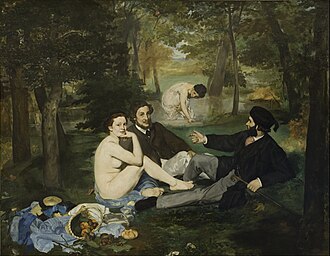 草上の昼食 - Édouard Manet (1863)
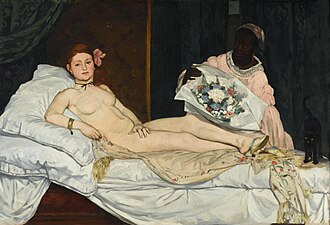 オランピア - Édouard Manet (1863)
%20(33539037428).jpg) フォリー・ベルジェールのバー - Édouard Manet (1882)
フォリー・ベルジェールのバー - Édouard Manet (1882)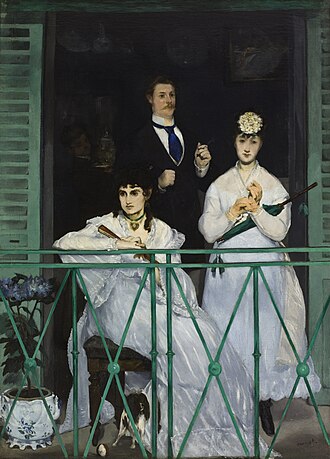 バルコニー - Édouard Manet (1868)
.jpg) テュイルリー公園の音楽会 - Édouard Manet (1862)
テュイルリー公園の音楽会 - Édouard Manet (1862).jpg) 笛を吹く少年 - Édouard Manet (1866)
笛を吹く少年 - Édouard Manet (1866)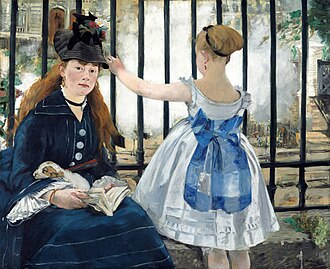 鉄道 - Édouard Manet (1873)
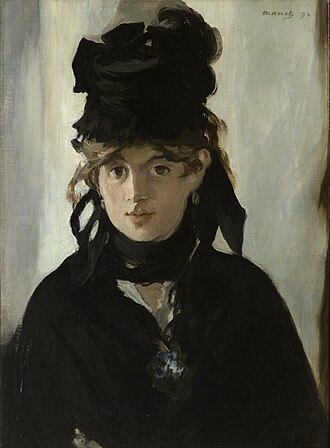 すみれの花束をつけたベルト・モリゾ - Édouard Manet (1872)
関連する画家の作品
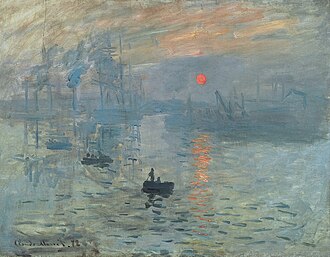 印象・日の出 - Claude Monet (1872)
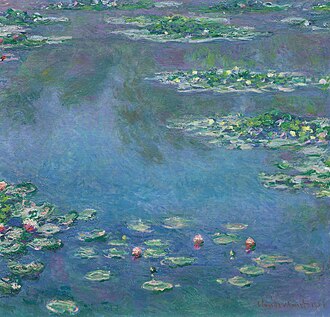 睡蓮 - Claude Monet (1906)
 ムーラン・ド・ラ・ギャレットの舞踏会 - Pierre-Auguste Renoir (1876)
 舟遊びの昼食 - Pierre-Auguste Renoir (1881)
 星月夜 - Vincent van Gogh (1889)
.jpg) 夜のカフェテラス - Vincent van Gogh (1888)
夜のカフェテラス - Vincent van Gogh (1888) 戦艦テメレール号 - J. M. W. Turner (1839)
 雨、蒸気、速度 - グレート・ウェスタン鉄道 - J. M. W. Turner (1844)
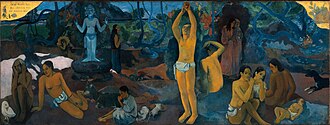 我々はどこから来たのか 我々は何者か 我々はどこへ行くのか - Paul Gauguin (1897-1898)
%201889.jpg) 黄色いキリスト - Paul Gauguin (1889)
黄色いキリスト - Paul Gauguin (1889)