St Peter
ジョット・ディ・ボンドーネ · 1291
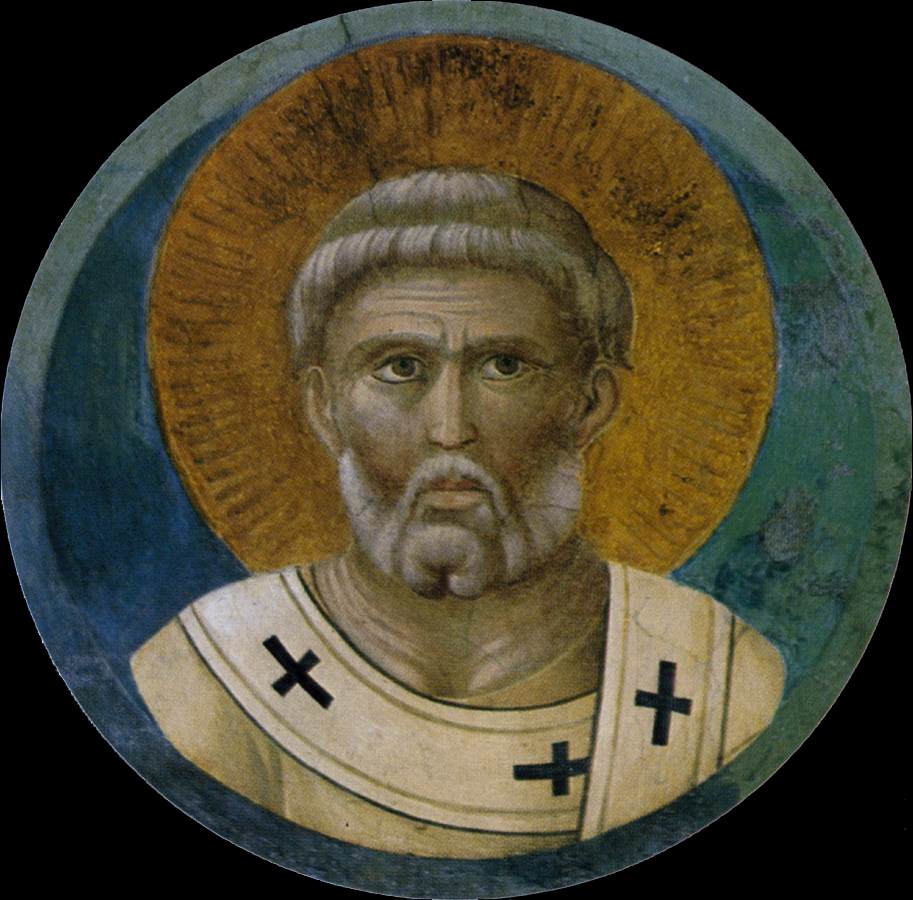
High above the doors of the Upper Church at Assisi, Saint Peter looks out from a painted roundel, white-haired and grey-bearded, keeping watch over everyone who enters.
The story behind the painting
This Saint Peter is a fresco, painted around 1291-1295 according to the French Wikipedia article, while Wikidata gives the date 1291. It sits in the upper part of the inner face of the entrance wall of the Upper Church of the Basilica of San Francesco in Assisi. Almost all the scenes on this wall are attributed to the young Giotto and his collaborators, at a moment just before work began on the famous Stories of Saint Francis. Who actually held the brush is still debated. The fresco is described as attributed to Giotto, or possibly his workshop, and Wikidata records it at about 50 by 50 cm. It is a small, quiet presence in one of the great painted churches of Italy.
What to look for
Look for a circle. Peter is shown in bust form inside a clipeus, the round medallion frame inherited from ancient portraiture. He carries the traditional physical signs by which medieval viewers recognised him at once: a white head, the tonsure, a grey beard, and a pallium marked with crosses. The fresco is reported to be in good condition, so these details remain legible today. Then let your eye travel across the wall. Above the main door are three medallions, a smiling Madonna and Child flanked by two angels. Higher still, beyond the lunette with the Pentecost and the Ascension, Peter has a partner: a matching great medallion of Saint Paul.
Meaning and intent
Why Peter and Paul, placed so high above the entrance? According to the source, the two large medallions symbolise the direct protection of the papacy over the basilica. Peter, the first of the apostles, and Paul together stand for the Church of Rome, so their presence on the entrance wall announces whose authority watches over this house of Saint Francis. The image is not a story but a sign. Its plain, frontal form, a holy face framed in a circle, invites recognition rather than narrative. A visitor turning to leave the church would meet these watchful faces, a reminder of the wider Church to which the Franciscan sanctuary belonged.
Legacy
Scholars have long argued over who painted this Peter. Cesare Gnudi, in 1959, noted Roman and Tuscan influences. Decio Gioseffi, in 1957 and 1963, and Roberto Salvini, in 1962, spoke instead of an anonymous master inspired by Giotto, working after the Franciscan stories were painted. More recent views suggest the fresco was executed from a drawing by the leader of the Stories of Saint Francis, probably directed by masters of Giotto's workshop. That uncertainty is part of its interest. The roundel belongs to the formative years of a painter, and a workshop, whose work is grouped today under the label Proto-Renaissance, and it lets us glimpse that circle of artists at work.
豆知識
- The fresco is dated about 1291-1295 in the French Wikipedia article; Wikidata gives 1291.
- Saint Peter appears in bust form inside a round clipeus, with tonsure, grey beard and a pallium marked with crosses.
- A matching medallion of Saint Paul accompanies him; together they symbolise papal protection of the basilica.
- Attribution is debated between the young Giotto, his workshop, and an anonymous follower.
画家について
ジョット・ディ・ボンドーネ (1267-1337)
宗教美術 · ペトロ · アッシジ、フランチェスコ聖堂と関連修道施設群
同じ画家の作品: ジョット・ディ・ボンドーネ
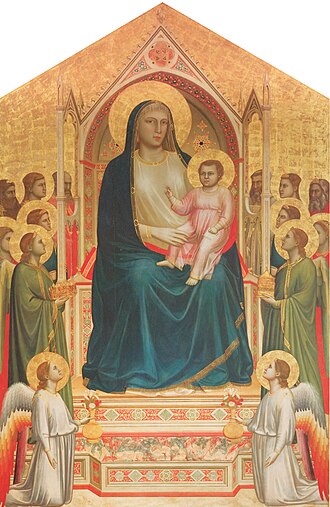 オンニサンティの聖母 - Giotto (1300s)
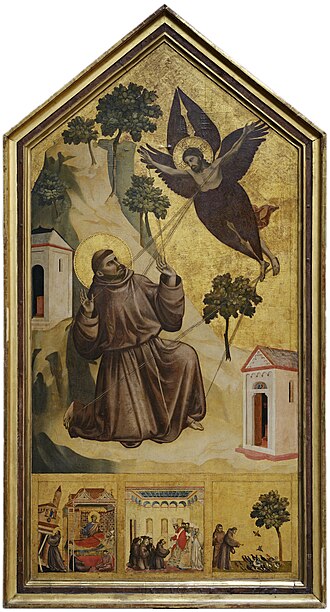 聖痕を受けるフランチェスコ - Giotto (1290s)
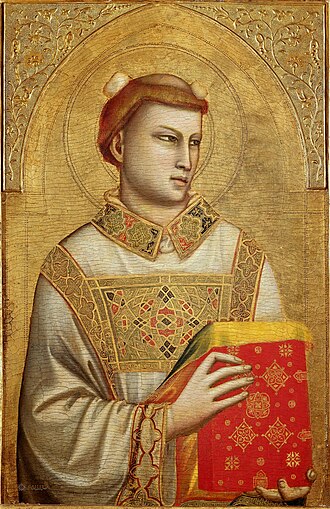 聖ステファノ - Giotto (1320)
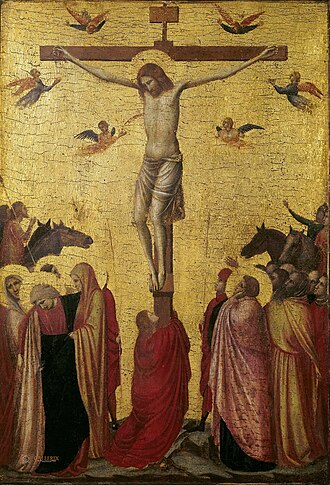 磔刑 - Giotto (1315)
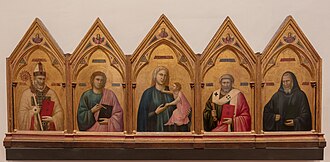 バディア多翼祭壇画 - Giotto (1300s)
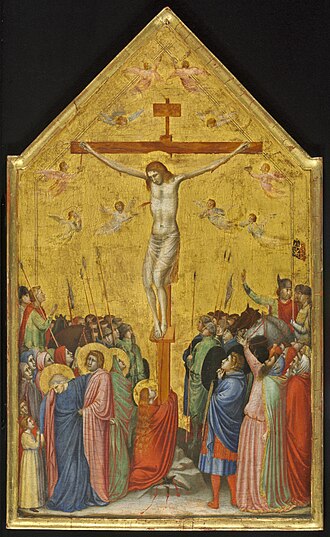 磔刑 - Giotto (1310s)
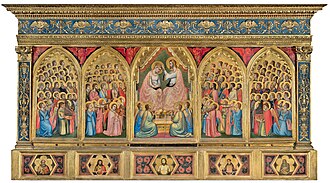 Coronation of Mary with Angels and Saints - Giotto (1328)
 Scenes from the New Testament: Lamentation - Giotto (1291)