洗礼者ヨハネ
Caravaggio · 1605
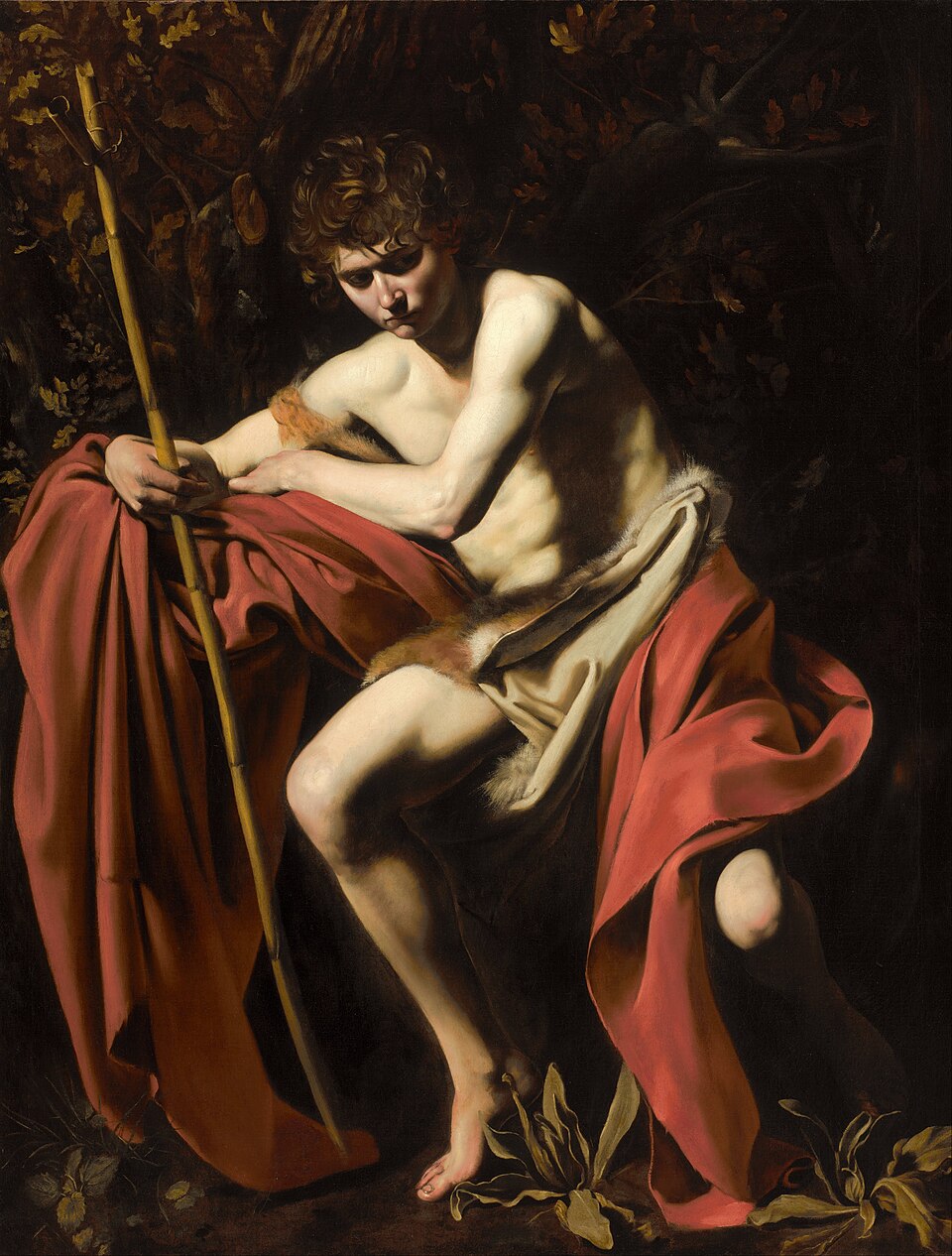
No halo, no lamb, only a thin reed cross and a brooding young man in hard, almost lunar light. Caravaggio's Kansas City Baptist is a saint stripped of his story and left alone with his thoughts.
The story behind the painting
In May 1602 Caravaggio received a commission for a Saint John the Baptist from Ottavio Costa, a Vatican banker and patron who already owned his Judith Beheading Holofernes and his Martha and Mary Magdalene. Costa meant to place it on the altar of a small chapel in his family's fief at Cosciente, a village near Albenga in Liguria. But he liked the finished picture so much that he sent a copy to the chapel and kept the original, as the Costa family inventory of 1693 shows. The French Wikipedia dates it 1602 to 1604, noting estimates up to 1605, the date Wikidata gives.
What to look for
The canvas, about 172.7 by 132.1 cm according to Wikidata, shows an adolescent, almost a man, seated alone. Peter Robb sees it as a psychological mirror of Caravaggio's first Baptist, every feature reversed: the bright morning light has turned harsh and almost lunar in its contrasts, and the soft green foliage has become brown, dry and dead. There is almost nothing to say this is a religious image, no halo, no lamb, no leather belt, only the thin reed cross.
Meaning and intent
The reed cross recalls the metaphor of the reed that Jesus used when speaking of John. Robb calls the work an example of Caravaggio's sensitivity to the drama of human presence. The youth seems a prisoner of an inner world known only to his maker. How do we know it is the Baptist, and what story does the scene tell? From Giotto to Bellini, John had been an accessible narrative and a symbol all could read; the idea that a painting could express an inner world rather than a shared religious experience was radically new.
Legacy
After the Costa inventory of 1693 the painting disappears from the record until 1844, when it is found in a private English collection. In 1952 it entered the Nelson-Atkins Museum of Art in Kansas City, where it remains. It is one of seven versions of the theme by Caravaggio, some of them disputed. Its quiet revolution, a lone saint largely stripped of his narrative identity, feels strikingly modern, as if painted for viewers of a much later age.
豆知識
- Commissioned in May 1602 by the banker Ottavio Costa.
- Costa kept the original and sent a copy to his chapel.
- Recorded in an English private collection in 1844.
- In the Nelson-Atkins Museum of Art, Kansas City, since 1952.
画家について
Caravaggio (1571-1610)
宗教美術 · バロック · 洗礼者ヨハネ · ネルソン・アトキンズ美術館
同じ画家の作品: Caravaggio
 エマオの晩餐 - Caravaggio (1601)
 聖マタイの召命 - Caravaggio (1609)
 洗礼者聖ヨハネの斬首 - Caravaggio (1608)
 エマオの晩餐 - Caravaggio (1601)
 メドゥーサの首 - Caravaggio (1597)
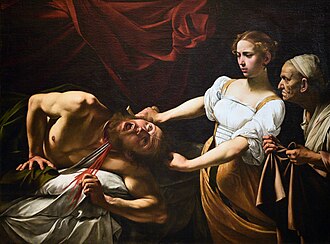 ホロフェルネスの首を斬るユーディット - Caravaggio (1598)
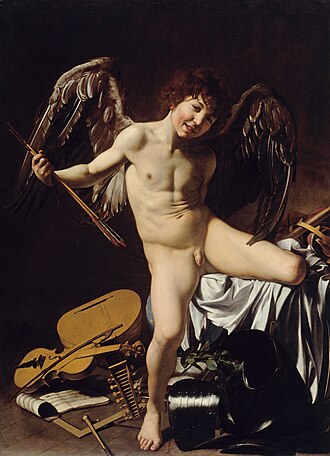 愛の勝利 - Caravaggio (1600s)
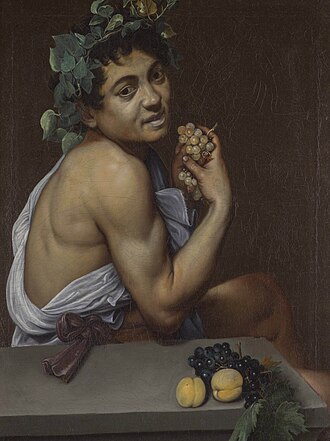 病めるバッカス - Caravaggio (1595)
関連する画家の作品
 ラス・メニーナス - Diego Velázquez (1656)
 ブレダの開城 - Diego Velázquez (1635)
 Saint Francis in Meditation - Francisco de Zurbarán (1639)
 The Immaculate Conception - Francisco de Zurbarán (1661)
 チャールズ1世の三面肖像画 - Anthony van Dyck (1635)
 馬上のチャールズ1世とサン・アントワーヌの領主の肖像 - Anthony van Dyck (1636)
 キリスト昇架 - Peter Paul Rubens (1609)
 レウキッポスの娘たちの略奪 - Peter Paul Rubens (1618)
 夜警 - Rembrandt van Rijn (1642)
 自画像 - Rembrandt van Rijn (1659)
 陽気な酒飲み - Frans Hals (1620s)
 微笑む騎士 - Frans Hals (1624)