法悦の聖フランチェスコ
Caravaggio · 1590s
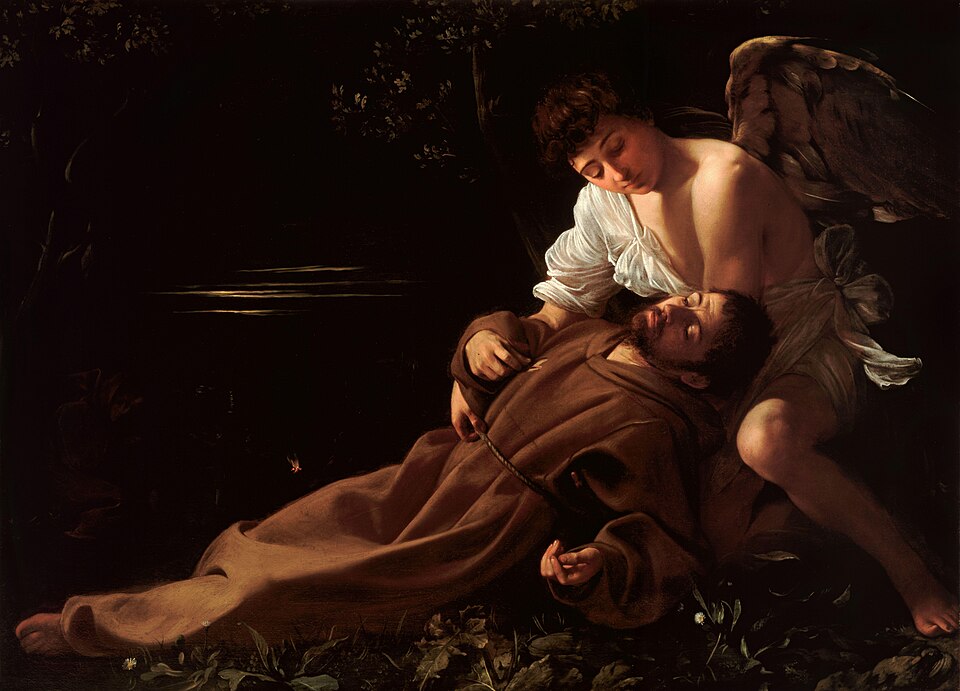
In the dark of a mountain night, a saint sinks back, unconscious, into the arms of an angel. There is no blaze of fire here, only a soft light and a moment of overwhelming love.
The story behind the painting
This is thought to be Caravaggio's very first religious painting, made around 1595, soon after he entered the household of Cardinal Francesco Maria del Monte in Rome. It was presumably painted for del Monte himself, and Francis of Assisi was the Cardinal's name-saint. The subject is the moment Francis received the Stigmata, the wounds of Christ's crucifixion. According to his companion Brother Leo, Francis withdrew to the wilderness in 1224 to pray that he might know both Christ's suffering and his love, and at night a six-winged seraph descended to him in a dazzling, violent vision. Del Monte kept the painting until the end of his life. It now belongs to the Wadsworth Atheneum in Hartford, Connecticut.
What to look for
Caravaggio turns Leo's storm of fire into something quiet. The six-winged seraph becomes a single two-winged angel, a boy wrapped in a sheet with what look like stage-prop wings, and he looms much larger than the fainting saint. Francis, in his Franciscan robe, leans back peacefully into the boy's arms. Look for the wound at his side: it is almost the only sign of the Stigmata. In the middle distance, nearly lost in shadow, are his companions. On the horizon, strange glimmers of light flicker across a night landscape. The two main figures glow with an unearthly light, so the scene feels at once real and unreal. The sources note that the saint has the features of del Monte.
Meaning and intent
Earlier painters, from Giotto around 1290 to Giovanni Bellini around 1480-85, had shown Francis receiving the wounds as a public, awe-filled event. Caravaggio makes it intimate. Instead of shouts and blood there is a body letting go, held tenderly by a messenger from heaven. The ecstasy of the title is not drama but surrender: the saint has been overwhelmed by what he prayed for, and the angel catches him. By removing almost every conventional sign, Caravaggio asks us to feel the experience rather than read it. The atmosphere, the sources say, remains genuinely spiritual, carried by light, darkness and the closeness of two figures.
Legacy
As Caravaggio's first venture into sacred subjects, this canvas points toward the religious work that would later define him. The model for the angel resembles the boy in Boy Peeling a Fruit, the Cupid in The Musicians, and especially the cheated youth in The Cardsharps, linking it to his early circle of studio models. Several copies went into circulation and were greatly valued, a sign that the new, quieter vision found admirers. Today in Hartford, the picture still invites a slow look: let your eyes adjust to the darkness, and the faint figures and distant lights begin to appear, just as they might on a mountain at night.
豆知識
- Thought to be Caravaggio's first religious painting, c. 1595.
- Francis was the name-saint of Cardinal del Monte, who kept the work until his death.
- Held at the Wadsworth Atheneum, Hartford, Connecticut; 93.5 × 128.4 cm.
画家について
Caravaggio (1571-1610)
宗教美術 · 天使 · バロック絵画 · アッシジのフランチェスコ · ワズワース・アテネウム美術館
同じ画家の作品: Caravaggio
 エマオの晩餐 - Caravaggio (1601)
 聖マタイの召命 - Caravaggio (1609)
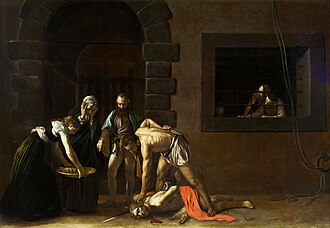 洗礼者聖ヨハネの斬首 - Caravaggio (1608)
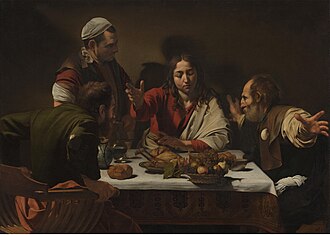 エマオの晩餐 - Caravaggio (1601)
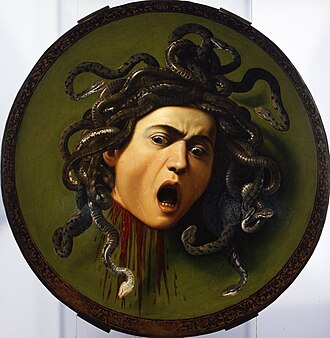 メドゥーサの首 - Caravaggio (1597)
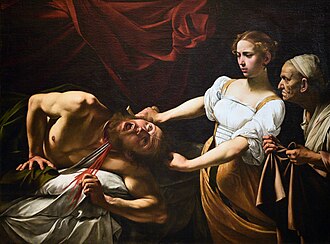 ホロフェルネスの首を斬るユーディット - Caravaggio (1598)
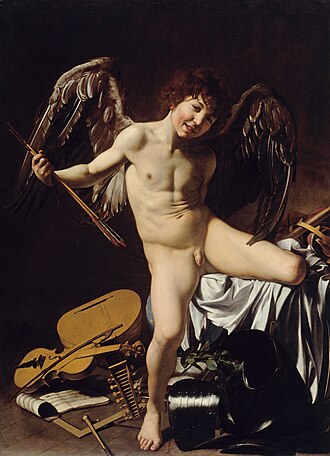 愛の勝利 - Caravaggio (1600s)
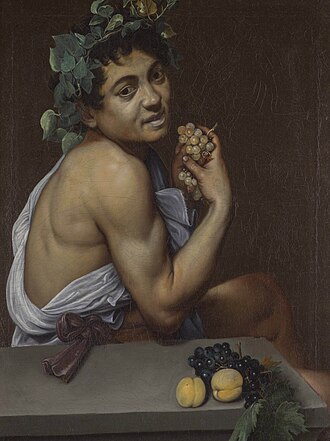 病めるバッカス - Caravaggio (1595)
関連する画家の作品
 ラス・メニーナス - Diego Velázquez (1656)
 ブレダの開城 - Diego Velázquez (1635)
 Saint Francis in Meditation - Francisco de Zurbarán (1639)
 The Immaculate Conception - Francisco de Zurbarán (1661)
 チャールズ1世の三面肖像画 - Anthony van Dyck (1635)
 馬上のチャールズ1世とサン・アントワーヌの領主の肖像 - Anthony van Dyck (1636)
 キリスト昇架 - Peter Paul Rubens (1609)
 レウキッポスの娘たちの略奪 - Peter Paul Rubens (1618)
 夜警 - Rembrandt van Rijn (1642)
 自画像 - Rembrandt van Rijn (1659)
 陽気な酒飲み - Frans Hals (1620s)
 微笑む騎士 - Frans Hals (1624)