ラファエロとラ・フォルナリーナ
ドミニク・アングル · 1814
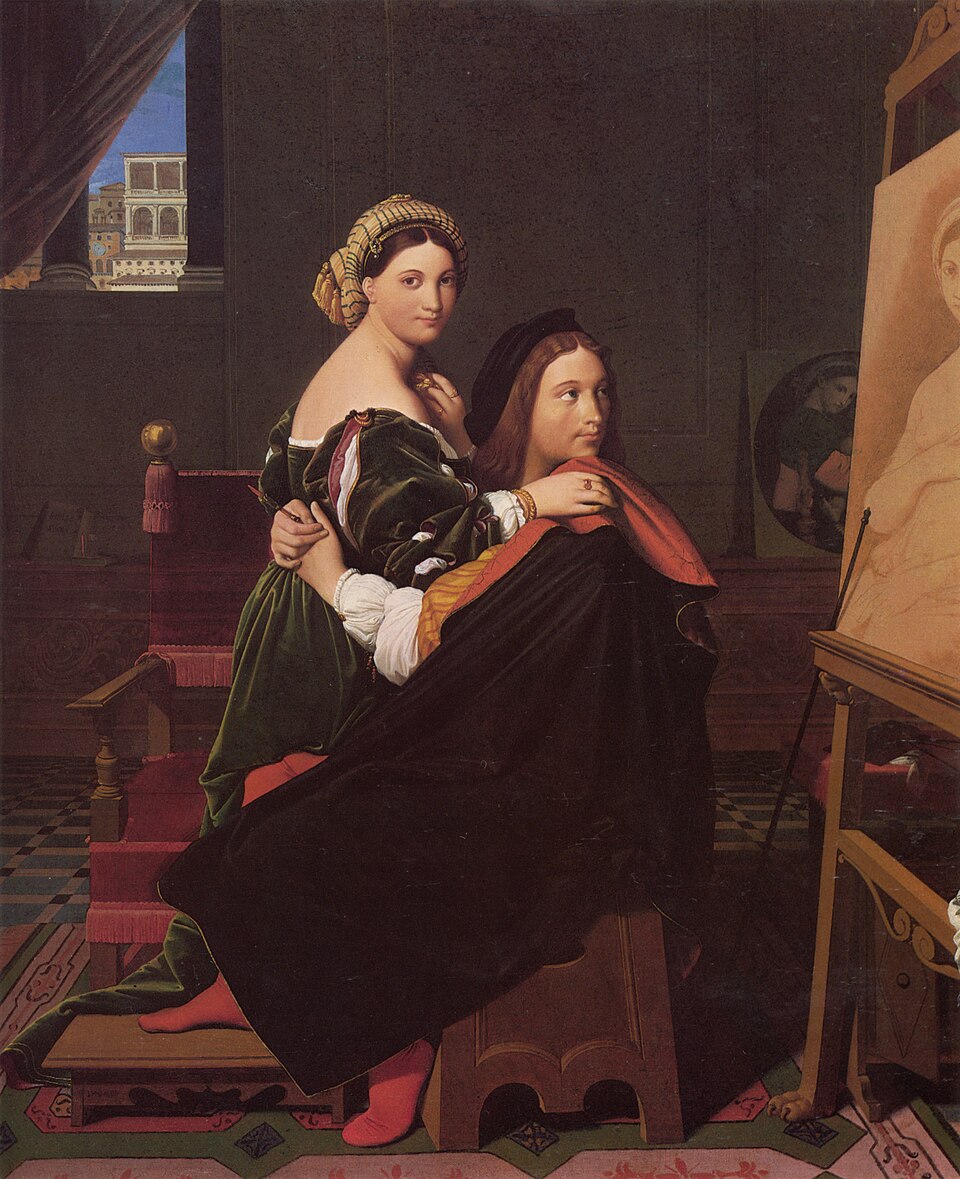
Raphael holds his beloved on his knee, yet his eyes turn away from her toward her portrait on the easel. Ingres painted this quiet tug between love and art in Italy, and kept returning to it for the rest of his life.
The story behind the painting
Around the turn of the nineteenth century, paintings glorifying the lives of famous artists became popular with the bourgeoisie and appeared at the Paris Salon. Ingres had grown curious about Raphael after seeing a copy of the Madonna della Seggiola in his teacher's studio in Toulouse. After winning the Prix de Rome he went to study in Italy, read Raphael's biographies by Giorgio Vasari and Angelo Comolli, and planned a series on his life, though he only painted two scenes. Wikipedia says this first version was painted in Italy in 1813 and shown at the Salon of 1814; Wikidata gives 1814.
What to look for
Raphael sits in his studio with his mistress, the Fornarina, the baker's daughter, on his knee. She wears a turban scarf, a green velvet gown and gold jewellery, her shoulders bare, and she looks straight at us while her arms rest on his shoulders. Ingres modelled her on Raphael's own La Fornarina and the painter on Raphael's self-portrait in the Uffizi. Behind them hang the Madonna della Seggiola, with the Christ child cut off, and through the window lies the Vatican courtyard where Raphael painted his frescoes. Columns, coloured tiles, an easel, an armchair and a stool build a precise Renaissance studio.
Meaning and intent
Raphael embraces the woman he loves but gazes at the painting he made of her, and the source reads this as the painter's conflict between who he loves and what he loves. Her pose both hugs him and pulls away. Rosalind Krauss suggests she is embraced only after he has admired his work. Because her face echoes the Madonna in the background, she seems saintlike, yet she also resembles Ingres's Grande Odalisque, and Wendy Leeks writes that in these works the Virgin and the odalisque are not merely sisters, they are one. The parallel links Raphael and Ingres as painters of what they desire.
Legacy
This was the first of five versions Ingres painted of the subject between 1813 and his death in 1867, a sign of how long the theme held him. The painting is an example of the Troubadour style, which treated great figures of the past in detailed, intimate settings. The first version, about 65 by 53 cm, is now at the Harvard Art Museums, in the Fogg Museum in Cambridge, Massachusetts.
豆知識
- First of five versions Ingres painted between 1813 and 1867.
- Shown at the Paris Salon of 1814.
- The Madonna della Seggiola hangs in the background.
- Now at the Harvard Art Museums (Fogg Museum).
画家について
ドミニク・アングル (1780-1867)
歴史画 · ハーバード美術館群 · イーゼル · フォッグ美術館 · マルゲリータ・ルーティ
同じ画家の作品: ドミニク・アングル
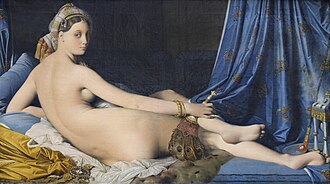 グランド・オダリスク - Jean-Auguste-Dominique Ingres (1814)
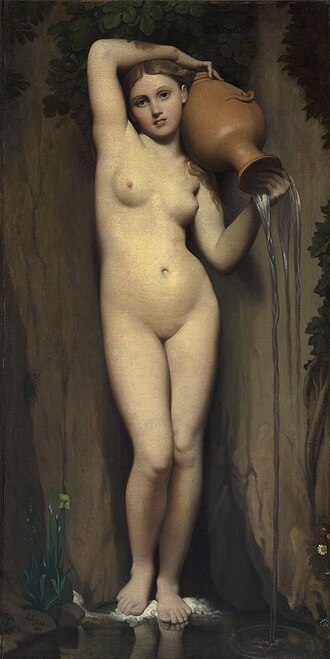 泉 - Jean-Auguste-Dominique Ingres (1856)
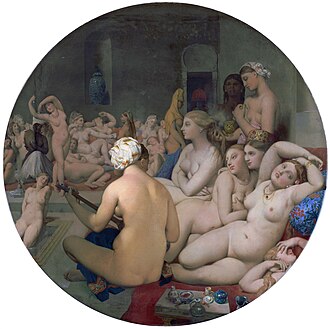 トルコ風呂 - Jean-Auguste-Dominique Ingres (1862)
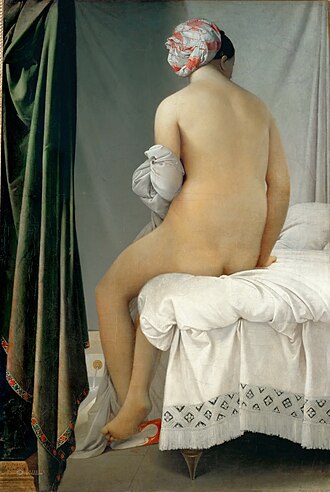 浴女 - Jean-Auguste-Dominique Ingres (1808)
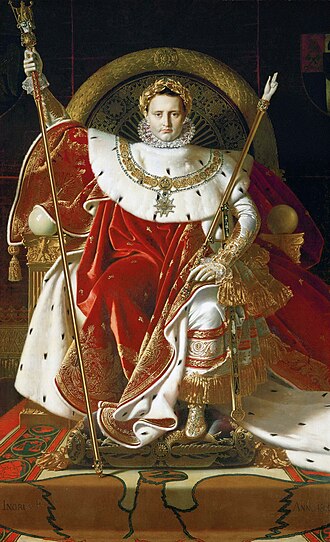 玉座のナポレオン - Jean-Auguste-Dominique Ingres (1806)
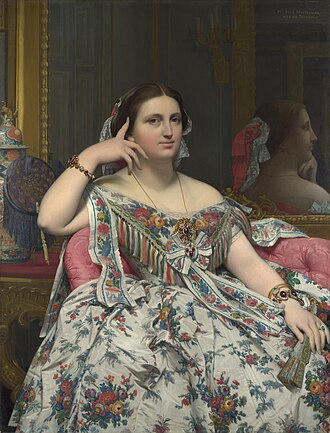 イネス・モワテシエ夫人の肖像 - Jean-Auguste-Dominique Ingres (1856)
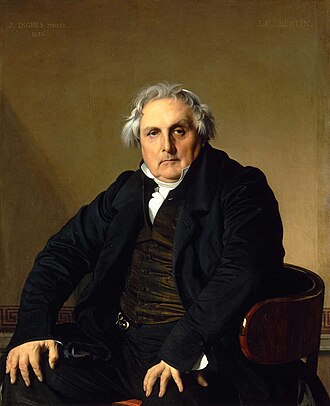 ルイ=フランソワ・ベルタン氏の肖像 - Jean-Auguste-Dominique Ingres (1832)
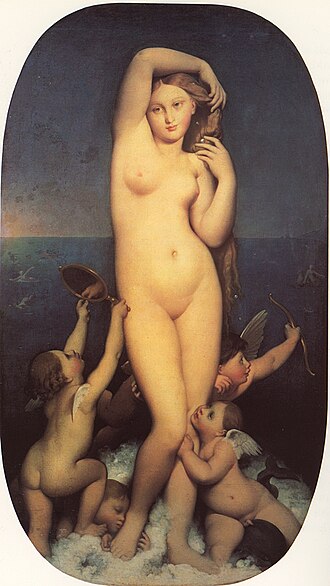 海から上がるヴィーナス - Jean-Auguste-Dominique Ingres (1808)
関連する画家の作品
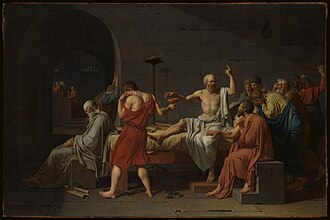 ソクラテスの死 - Jacques-Louis David (1787)
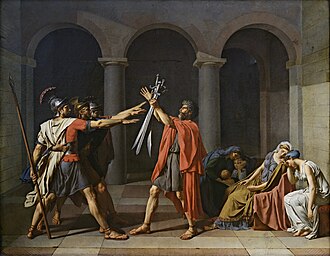 ホラティウス兄弟の誓い - Jacques-Louis David (1784)
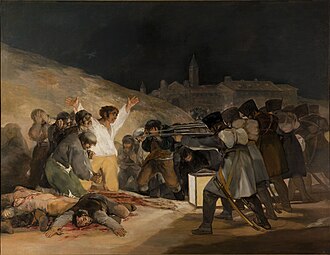 1808年5月3日 - Francisco Goya (1814)
.jpg) 裸のマハ - Francisco Goya (1800)
裸のマハ - Francisco Goya (1800)