前線からの捕虜
ウィンスロー・ホーマー · 1866
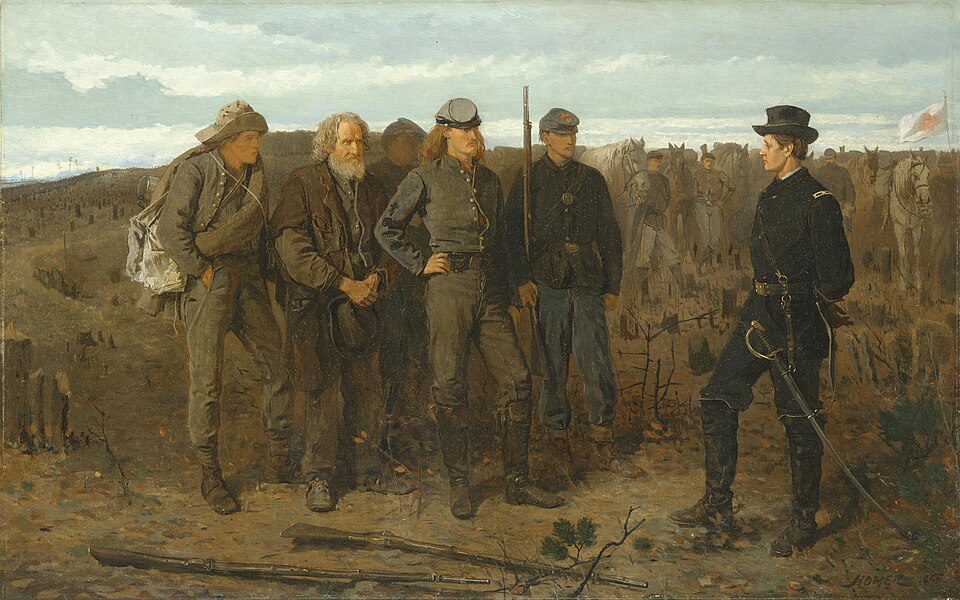
Three Confederate prisoners stand before a Union general on a ruined field. They have laid down their rifles, but they do not bow. Homer painted the end of a war without a clear winner's pose.
The story behind the painting
Prisoners from the Front is an 1866 painting by Winslow Homer and one of his most notable early works. It shows Confederate officers surrendering to the Union brigadier general Francis Channing Barlow during the American Civil War. Homer had worked as a war correspondent, and that experience likely shaped the picture. Infrared photography and many studies show that the painting changed a great deal before it was finished. The critic Peter Schjeldahl, citing its style, tone and provenance, called it the most telling of all paintings about the Civil War.
What to look for
Look at the gap between the two sides. The Union officer, General Barlow, is recognisable, but the Confederate soldiers stay anonymous. Homer breaks with traditional surrender scenes in which the defeated bow down: these prisoners have put their rifles down, yet they stand with pride. They are of different ages. The old man in the centre of the group looks the most submissive. The young prisoner beside him keeps a hand in his pocket, with a confident nonchalance. Around them stretches a barren, grim landscape, scarred by war.
Meaning and intent
The painting puzzled critics, who could not fit it into the usual genres, since it mixes history painting with genre painting. Many scholars read it as a comment on the whole war rather than a record of one event. Frances Pohl argues that by shrinking the contrast between winner and loser, Homer presents the war as a renegotiation of terms between North and South, not a complete break. The standoff suggests lasting Confederate bitterness and the North's failure to grasp it, and hints that reconciliation would need growth on both sides.
Legacy
Art historians note that Homer blends history painting, landscape painting and photography to show the damage of war to the land and to people. Over time the picture's meaning shifted toward brotherly feeling and shared humanity, leaving behind a strictly partisan reading. It is still seen as historical art that lives on ambiguity, carrying conflicting messages about the war as a tragic, fratricidal event. The film Gettysburg features it in its opening credits and echoes it in a scene where Lieutenant Thomas Chamberlain talks with three Confederate prisoners.
豆知識
- Painted in 1866, one of Homer's notable early works.
- The Union officer is General Francis Channing Barlow.
- Infrared photography shows many changes during painting.
- Seen in the opening credits of the film Gettysburg.
画家について
ウィンスロー・ホーマー (1836-1910)
男性 · 風俗美術 · メトロポリタン美術館 · 兵士 · 囚人
同じ画家の作品: ウィンスロー・ホーマー
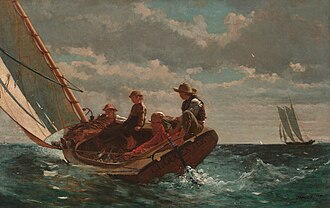 風が強まる - Winslow Homer (1873)
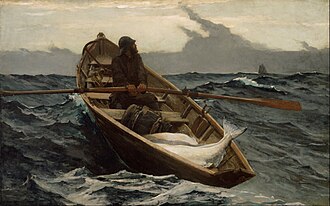 濃霧警報 - Winslow Homer (1885)
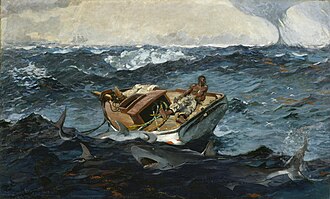 メキシコ湾流 - Winslow Homer (1899)
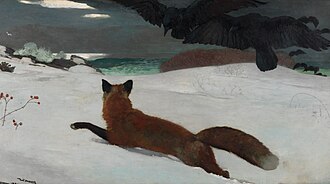 キツネ狩り - Winslow Homer (1893)
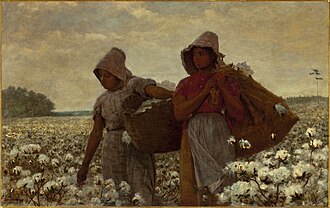 The Cotton Pickers - Winslow Homer (1876)
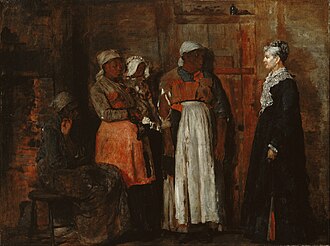 A Visit from the Old Mistress - Winslow Homer (1876)
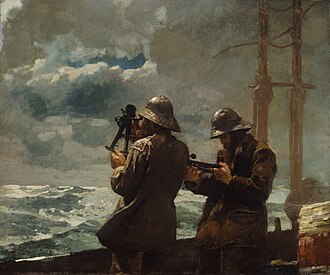 八点鐘 - Winslow Homer (1886)
 In Front of Yorktown - Winslow Homer (1860s)
 世界の起源
 オルナンの埋葬
 草上の昼食
 オランピア
 星月夜
 夜のカフェテラス