Portrait of Pope Paul V
Caravaggio · 1600s
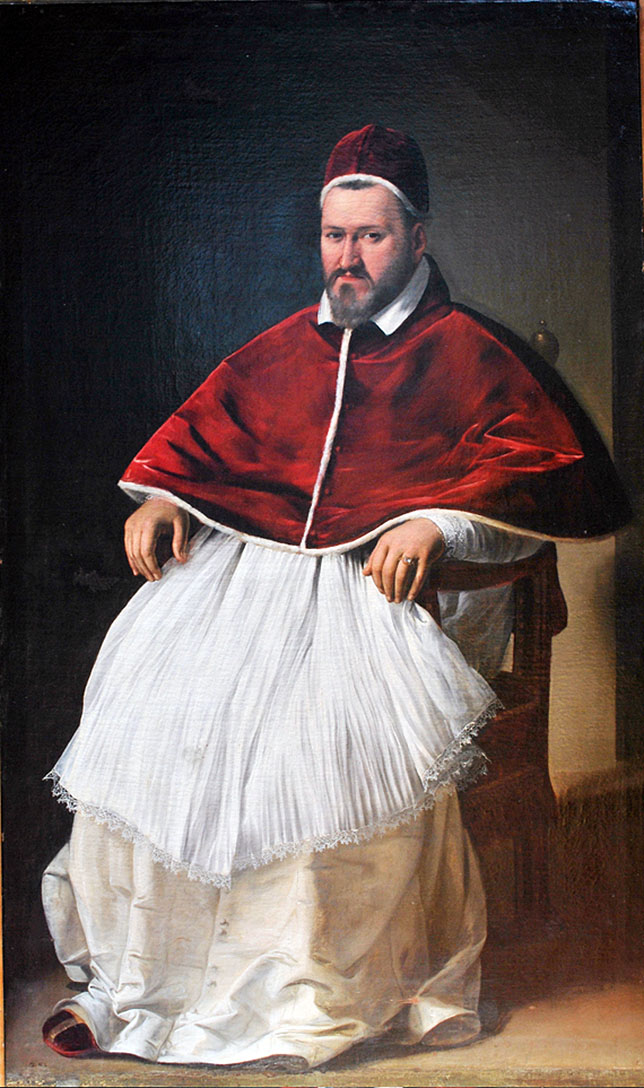
A seated pope, still and reserved, gazes out with narrowed eyes. Is this Caravaggio's hand? Scholars still disagree.
The story behind the painting
Camillo Borghese reigned as Pope Paul V from 1605 to 1621. Caravaggio's biographer Giovanni Bellori records that the painter made a seated portrait of him as pope. That places the work, dated about 1605-1606, between Borghese's election on 16 May 1605 and Caravaggio's flight from Rome in May 1606, after the death of Ranuccio Tommassoni. Wikidata gives only the 1600s. According to Bellori, Caravaggio was introduced to the pope by the papal nephew, Cardinal Scipione Borghese, an avid collector who would acquire many of the painter's canvases. The portrait is recorded in the Borghese Collection from 1650 and is today in the Galleria Borghese in Rome.
What to look for
The picture is large, 203 by 119 cm, and shows the pope seated. The pose is calm and formal rather than dramatic. Look at his face, especially the eyes, which are narrowed. Many writers have read suspicion or even malice in them, but the scholar John Gash explains them as the result of chronic myopia. The overall bearing is unostentatious. Wikipedia also invites comparison with Velazquez's Portrait of Pope Innocent X, noting striking similarities between the two papal portraits.
Meaning and intent
The painting is attributed to Caravaggio, but that attribution is debated. Many scholars have doubted it, finding the composition too uninspired for his style. John Gash, in his revised 2003 catalogue, believes it is genuine. He argues that the pose would have been beyond the artist's control, since Paul V was known for a dignified, even taciturn manner and would hardly have accepted direction. For Gash, the unostentatious bearing expresses the sober, cautious and genuinely religious spirit of the man. Read this way, the plainness is not a weakness but a portrait of character.
Legacy
The work also opens a window on the Borghese circle that shaped Caravaggio's last years. Wikipedia describes Scipione Borghese as a collector who often preferred extortion and sharp practice to support and purchase, and who would become one of the crucial figures in Caravaggio's final days. The portrait has stayed in the family collection since at least 1650. Today, in the Galleria Borghese, visitors can stand before the pope and weigh the question for themselves: an uninspired picture, or a faithful image of a reserved and nearsighted man.
豆知識
- Dated about 1605-1606, between May 1605 and May 1606 (Wikipedia)
- Attribution doubted by many scholars; John Gash (2003) considers it genuine (Wikipedia)
- Recorded in the Borghese Collection from 1650 (Wikipedia)
画家について
Caravaggio (1571-1610)
肖像 · バロック絵画 · ボルゲーゼ美術館 · ボルゲーゼ・コレクション
同じ画家の作品: Caravaggio
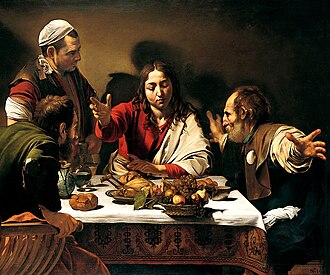 エマオの晩餐 - Caravaggio (1601)
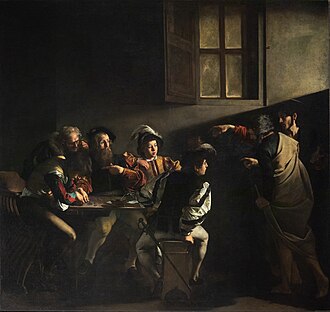 聖マタイの召命 - Caravaggio (1609)
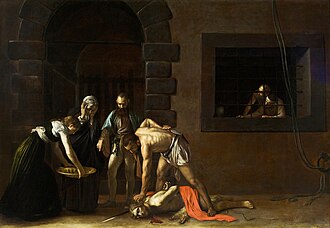 洗礼者聖ヨハネの斬首 - Caravaggio (1608)
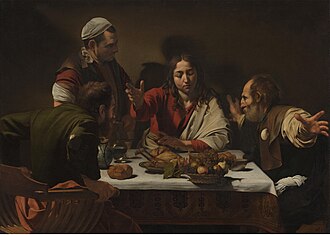 エマオの晩餐 - Caravaggio (1601)
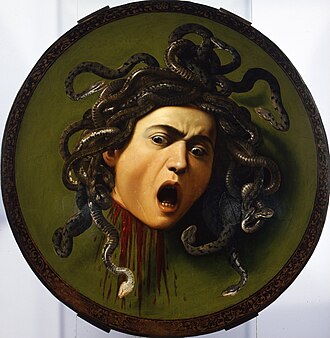 メドゥーサの首 - Caravaggio (1597)
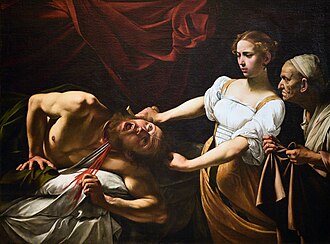 ホロフェルネスの首を斬るユーディット - Caravaggio (1598)
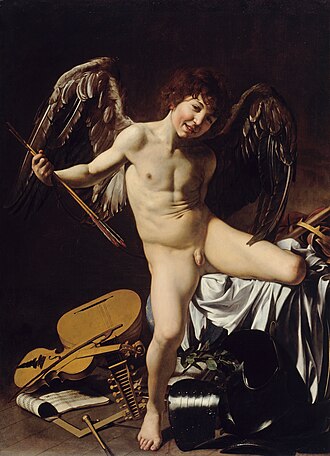 愛の勝利 - Caravaggio (1600s)
%2C%201595%20circa%2C%20534.jpg) 病めるバッカス - Caravaggio (1595)
病めるバッカス - Caravaggio (1595)
 ラス・メニーナス
 ブレダの開城
 夜警
夜警 自画像
自画像 真珠の耳飾りの少女
 牛乳を注ぐ女