マルティン・サパテールの肖像
Francisco Goya · 1790
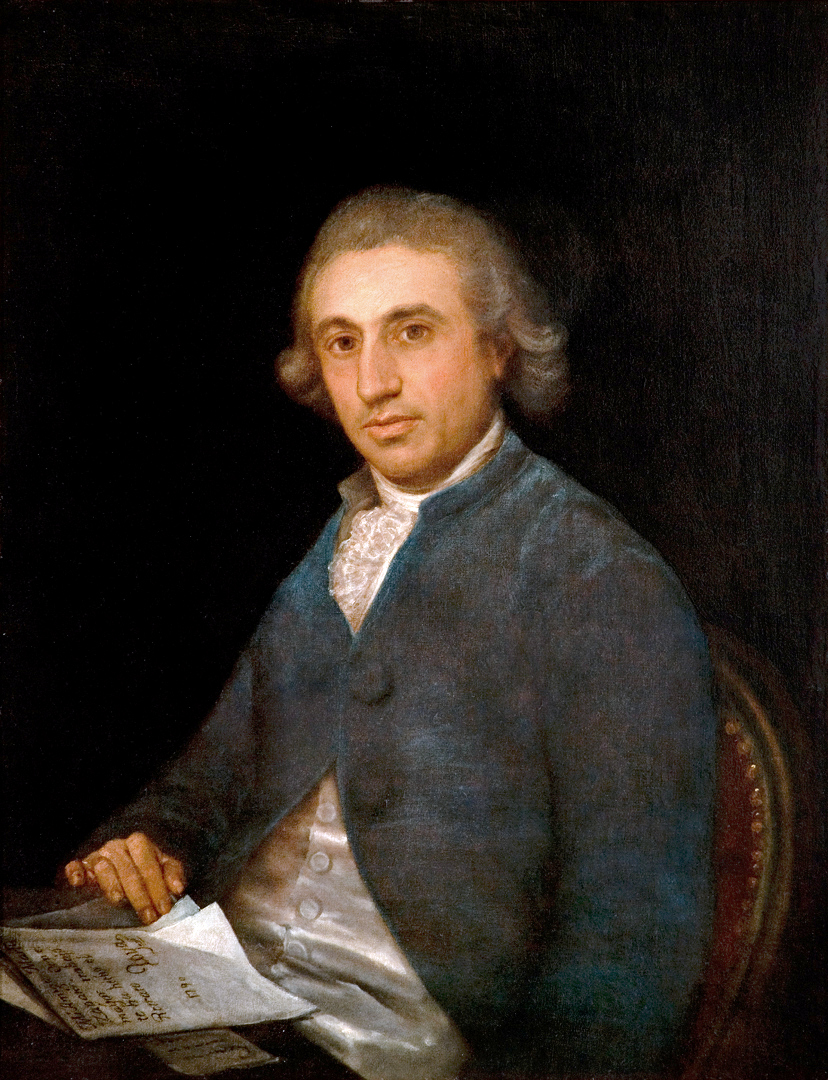
A man in a blue jacket with big buttons sits against a plain background, his face still marked by a recent illness. Goya painted his childhood friend Martin Zapater in 1790, with a simplicity that speaks of trust.
The story behind the painting
Martin Zapater, who lived from 1747 to 1800, was a wealthy Aragonese merchant, a patron of the arts and of movements linked to the Enlightenment. He and Francisco de Goya had known each other since childhood; both attended the school of the Escuelas Pias de San Anton in Zaragoza. For many years the two friends exchanged a large correspondence, which today is a precious source of knowledge about the painter. Goya began this portrait during a stay in Zaragoza in October 1790 and finished it in December of the same year.
What to look for
This is the first known portrait of Zapater by Goya, and it is marked by simplicity and economy of means. Zapater is placed against a neutral background, seated on a chair, with documents bearing writing. He wears a blue jacket with large buttons, a grey-green silk shirt and a shiny cravat. Then look at the face. According to the source, it betrays his recent illness. Nothing distracts from the man himself: there is no grand setting, no symbol of rank, only a friend seen by a friend.
Meaning and intent
The plainness of the picture fits the relationship behind it. Goya was not flattering a powerful client here; he was painting someone he had known since school, someone he wrote to again and again. The economy of the painting, the neutral ground and the honest record of illness in the face, read as a mark of closeness and respect. Goya painted Zapater twice, first in 1790 and again in 1797, so this canvas is the opening of a pair of portraits across seven years of friendship.
Legacy
The painting belonged to Zapater. He never married, and it was inherited by the son of his nephew, Francisco Zapater y Gomez. In the early 20th century it was in the Durand-Ruel collections in Paris, then entered the Widener collection in Philadelphia and later the Thyssen-Bornemisza Museum in Lugano. It was then on deposit at the Cramer gallery in The Hague and in a private collection in London, before reaching the Museo de Arte de Ponce in Puerto Rico, where it is today.
豆知識
- Painted by Goya between October and December 1790 in Zaragoza.
- Zapater and Goya were friends from childhood.
- Their letters are a key source on Goya's life.
- Now in the Museo de Arte de Ponce, Puerto Rico.
画家について
Francisco Goya (1746-1828)
同じ画家の作品: Francisco Goya
 1808年5月3日 - Francisco Goya (1814)
 裸のマハ - Francisco Goya (1800)
 我が子を食らうサトゥルヌス - Francisco Goya (1819)
 カルロス4世の家族 - Francisco Goya (1800)
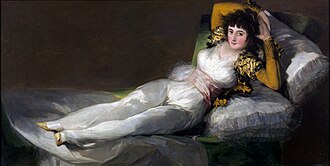 着衣のマハ - Francisco Goya (1800)
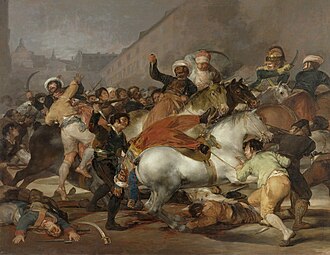 1808年5月2日、エジプト人親衛隊との戦闘 - Francisco Goya (1814)
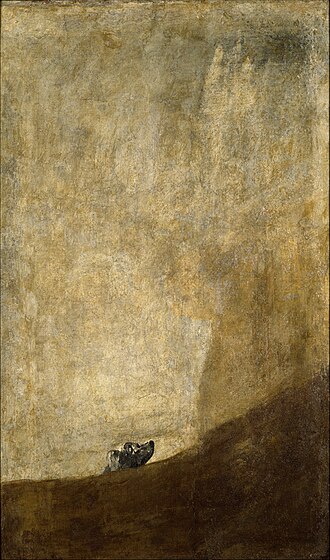 犬 - Francisco Goya (1819)
 魔女の夜宴 - Francisco Goya (1820s)
関連する画家の作品
 雲海の上の旅人 - Caspar David Friedrich (c. 1818)
 楡の木のある僧院 - Caspar David Friedrich (1800s)
 民衆を導く自由の女神 - Eugène Delacroix (1830)
 サルダナパールの死 - Eugène Delacroix (1827)
 戦艦テメレール号 - J. M. W. Turner (1839)
 雨、蒸気、速度 - グレート・ウェスタン鉄道 - J. M. W. Turner (1844)
 青衣の少年 - Thomas Gainsborough (1770)
 アンドリューズ夫妻 - Thomas Gainsborough (1748)