Portrait of Count Stanislas Potocki
ジャック=ルイ・ダヴィッド · 1780
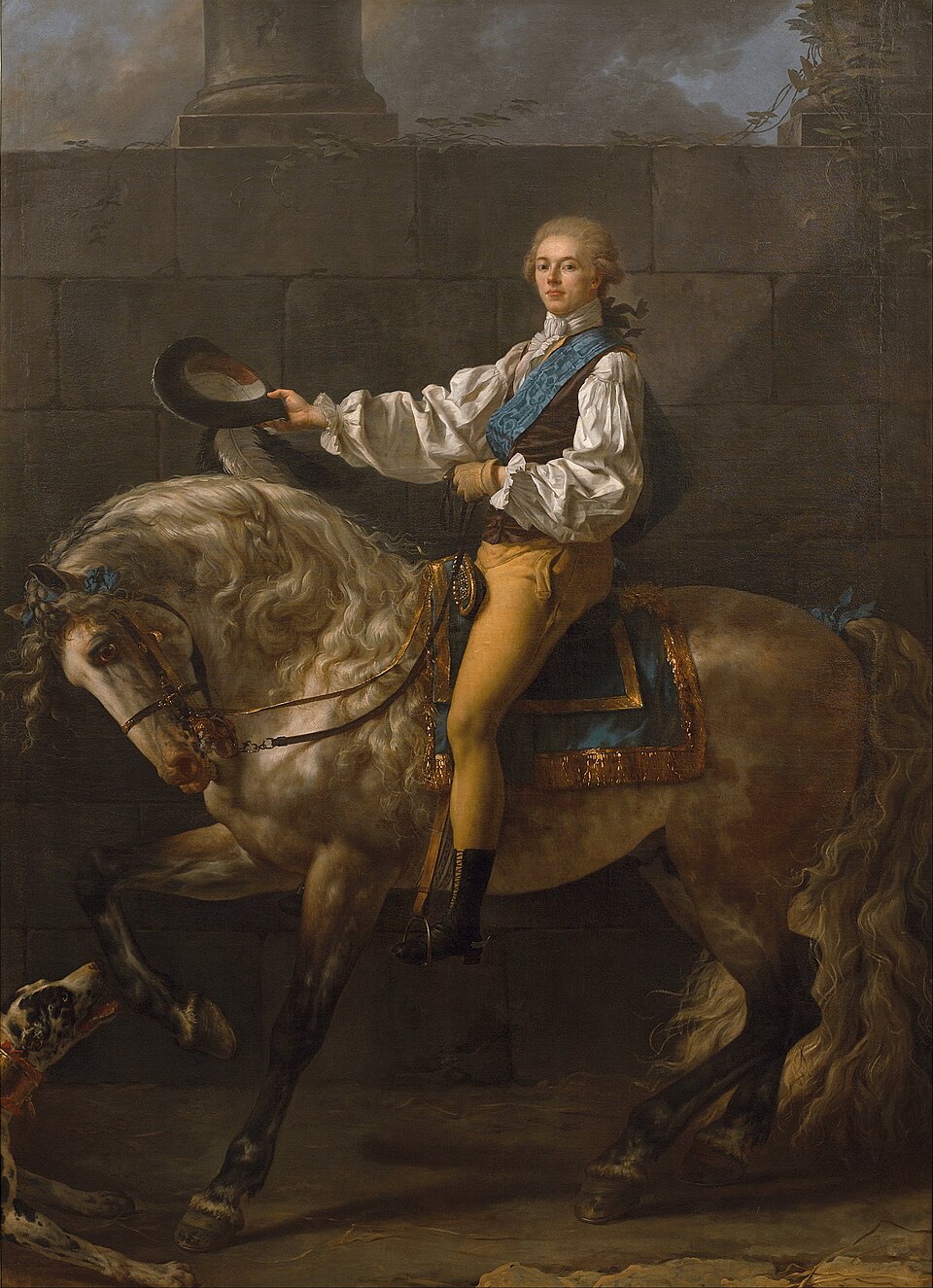
A young Polish nobleman lifts his hat to greet us while his horse bows its head and a small dog barks below. David painted this life-size welcome early in his career, and the canvas went on to survive plunder in the Second World War.
The story behind the painting
Stanisław Kostka Potocki met Jacques-Louis David in Italy during his Grand Tour of 1779 to 1780, but how the portrait was commissioned is still debated. Some historians think Potocki asked for it himself in 1780. David's grandson wrote in 1880 that Ferdinand IV of Naples ordered it after Potocki impressed him by taming a wild horse on a hunt. In the 1960s the Polish historian Andrzej Ryszkiewicz said there was no evidence for that meeting in Naples. A 2019 conservation report from Wilanów gave new weight to the grandson's account: an early drawing shows the ribbon of the Order of Saint Stanislaus, awarded in 1780, and x-rays found red paint under today's blue sash. Wikipedia says the painting was completed in 1781, while Wikidata gives 1780.
What to look for
Potocki rides against a grey wall topped by two classical columns. Straw lies under the hooves, which the historian Antoine Schnapper read as a hint of a stable, while the stately architecture may be imagined. Potocki wears no coat, only yellow trousers and a white shirt, and his rank shows in a single blue sash, the Order of the White Eagle, Poland's highest civilian honour. He tips his hat to the viewer in a cordial greeting as the horse lowers its head. In the lower left corner a dog barks at the horse. Notice the size too: Wikidata gives about 304 by 218 cm.
Meaning and intent
David had spent 1775 to 1780 in Rome, turning from the Rococo toward precise contours, clear forms and the language of classical antiquity. Potocki himself loved antiquity: he collected art and later adapted Winckelmann's history of ancient art into Polish. The portrait joins the two men's tastes. It shows a patriot and future general, a man who would co-found the Warsaw Society of Friends of Science and the University of Warsaw, as a calm rider in command of a powerful animal. The scene feels like a personal greeting rather than a show of battle.
Legacy
The portrait was shown at the Paris Salon of 1781 and reached Warsaw before 1801, when it moved to Wilanów Palace, owned by the Potocki family since 1799. In 1805 the palace became one of the first public art museums in Poland. Nazi German forces plundered the painting in December 1944. In 1952 Soviet officials told Poland it was among works restituted by the USSR, and it was returned in 1956 to the National Museum in Warsaw. In 1990 it went back to Wilanów. It is called one of David's masterpieces, marking the return of the equestrian portrait in late 18th-century European painting.
豆知識
- Shown at the Paris Salon of 1781.
- The sitter is Stanisław Kostka Potocki, Polish nobleman, writer and politician.
- Plundered in December 1944 and returned to Poland in 1956.
- On permanent display at Wilanów Palace since 1990.
画家について
ジャック=ルイ・ダヴィッド (1748-1825)
同じ画家の作品: ジャック=ルイ・ダヴィッド
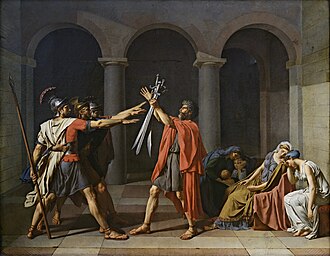 ホラティウス兄弟の誓い - Jacques-Louis David (1784)
.jpg) サビニの女たち - Jacques-Louis David (1799)
サビニの女たち - Jacques-Louis David (1799)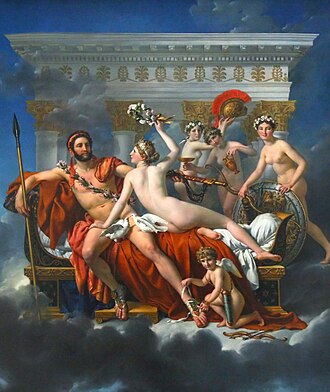 ヴィーナスと三美神に武器を取り上げられるマルス - Jacques-Louis David (1824)
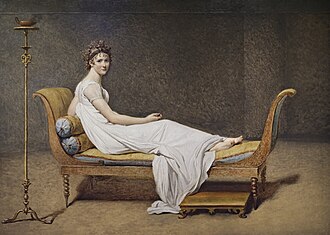 レカミエ夫人の肖像 - Jacques-Louis David (1800)
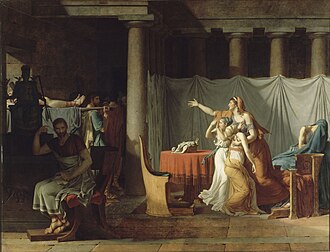 ブルートゥス邸に息子たちの遺骸を運ぶ警士たち - Jacques-Louis David (1789)
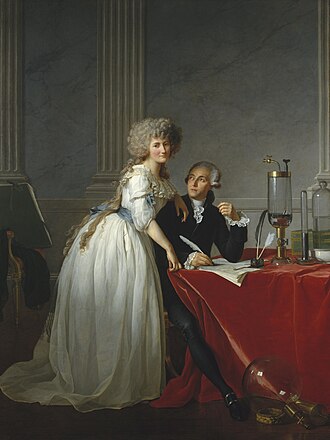 アントワーヌ=ローラン・ド・ラヴォアジエ (1743–1794年)とその妻 (マリー・アンヌ・ピエレット・ポールズ、(1758–1836年)の肖像画 - Jacques-Louis David (1788)
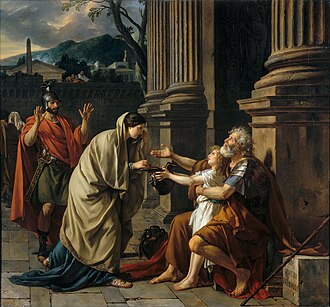 施しを乞うベリサリウス - Jacques-Louis David (1781)
クピードーとプシューケー - Jacques-Louis David (1817)
 泉
泉 玉座のナポレオン
 1808年5月3日
.jpg) 裸のマハ
裸のマハ