Portrait of Antoine, 'Grand Bâtard' of Burgundy
ロヒール・ファン・デル・ウェイデン · 1460
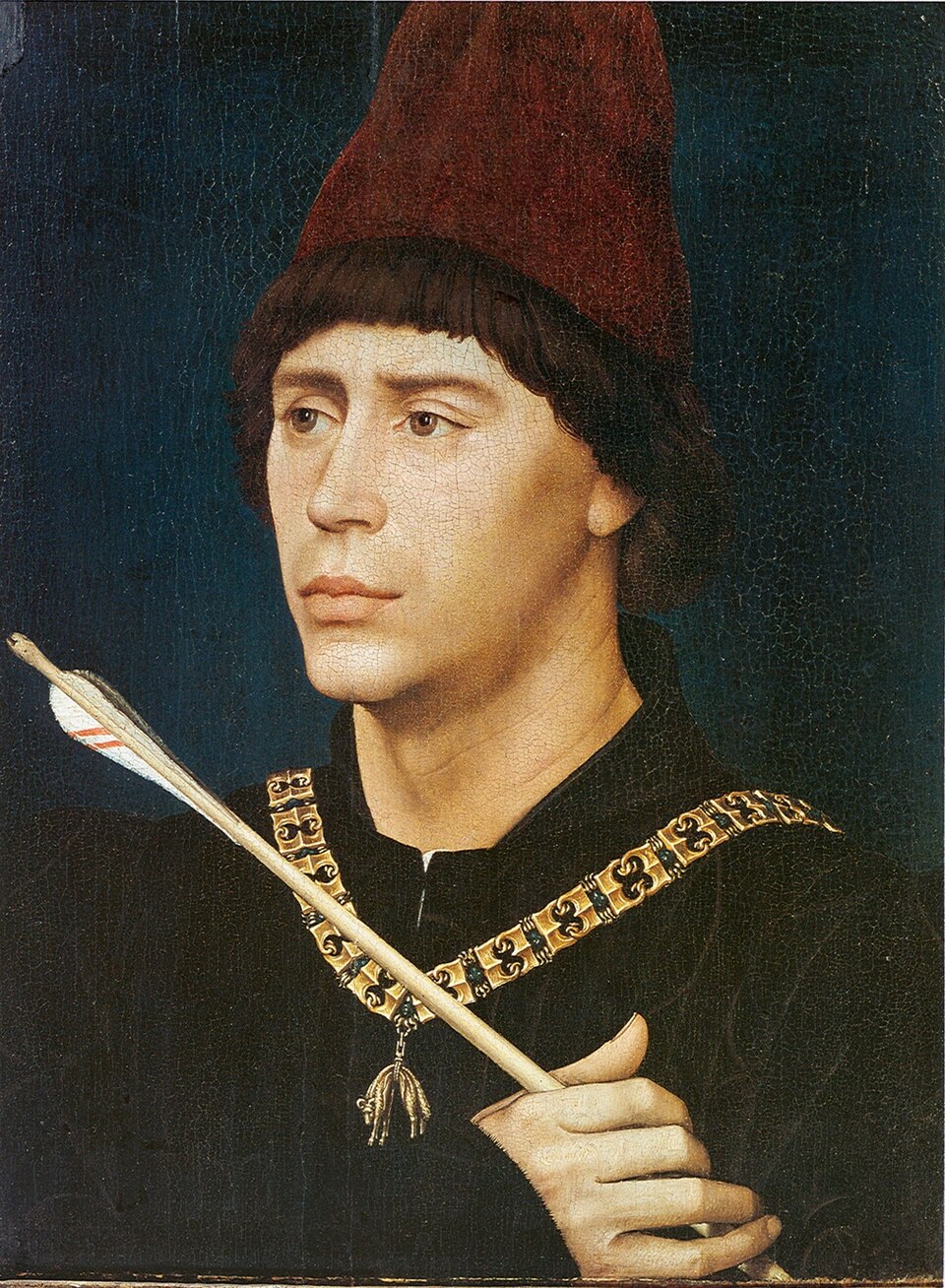
A Burgundian knight in half profile, the Golden Fleece at his neck and an arrow in his fingers, looking past us into the middle distance. Nobody knows what the arrow means, and some even doubt who he is.
The story behind the painting
The panel portrays Anthony of Burgundy, called the Grand Bâtard, the illegitimate son of Duke Philip the Good and one of his mistresses, Jeanne de Presle. Rogier van der Weyden painted it in oil on panel around 1460. It is one of three high profile portraits the dukes of Burgundy commissioned from him at about that time; the other two show Philip the Good and Charles the Bold. The small panel, about 38.4 by 28 cm, is held in the Royal Museums of Fine Arts of Belgium.
What to look for
As in most of van der Weyden's male portraits, the sitter is shown in half profile, staring aloofly into the middle distance. Around his neck hangs the livery collar of the Order of the Golden Fleece, founded by Philip the Good on 10 January 1430. Anthony was admitted in 1456, when only 29 others held it. In his hand he holds an arrow, whose exact significance is unknown. The fleece itself is thought to refer either to the Greek hero Jason or to the Hebrew warrior and judge Gideon.
Meaning and intent
In his later commissions van der Weyden usually flattered his sitters, softening or idealising their features and lending them beauty or intelligence they might not have had. Set this face beside the unromantic portrait of Anthony attributed to Hans Memling, painted eight to ten years later, and the liberties show. Even allowing for age, van der Weyden seems to have enlarged the eyes, sharpened the contours of the face and given a much stronger jaw. The portrait is as much an image of knightly rank as of a man.
Legacy
Those differences have made some critics tentatively propose another sitter: John of Coimbra, Prince of Antioch, also a knight of the Golden Fleece, sent into exile in Burgundy after his father, Infante Peter, Duke of Coimbra, was killed at the Battle of Alfarrobeira when an arrow pierced his heart. That would explain the arrow. The traditional identification remains Anthony of Burgundy, which is why the painting carries his name, but the question stays open.
豆知識
- Painted by Rogier van der Weyden around 1460.
- The sitter wears the collar of the Order of the Golden Fleece.
- The meaning of the arrow is unknown.
- Some critics suggest the sitter is John of Coimbra instead.
画家について
ロヒール・ファン・デル・ウェイデン (1390s-1464)
同じ画家の作品: ロヒール・ファン・デル・ウェイデン
 十字架降架 - Rogier van der Weyden (1440s)
 女性の肖像 - Rogier van der Weyden (1460)
 最後の審判 - Rogier van der Weyden (1443)
 聖母を描く聖ルカ - Rogier van der Weyden (1490)
 コルンバ祭壇画 - Rogier van der Weyden (1450s)
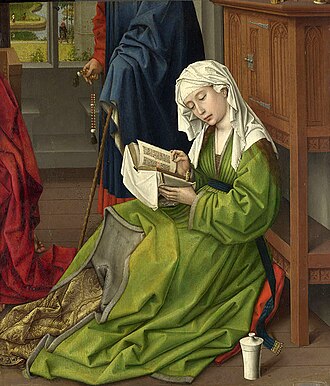 読書するマグダラのマリア - Rogier van der Weyden (1435)
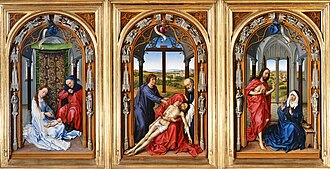 ミラフロレスの祭壇画 - Rogier van der Weyden (1443)
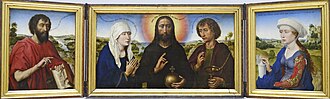 ブラック家の祭壇画 - Rogier van der Weyden (1452)
関連する画家の作品
 アルノルフィーニ夫妻像 - Jan van Eyck (1434)
 ヘントの祭壇画 - Jan van Eyck (1432)
 受胎告知 - Hans Memling (1480s)
 キリストの受難の場面 - Hans Memling (1470)
 快楽の園 - Hieronymus Bosch
 愚者の船 - Hieronymus Bosch (1500s)
 雪中の狩人 - Pieter Bruegel the Elder (1565)
 ネーデルラントの諺 - Pieter Bruegel the Elder (1551)