La Plage à marée basse
Édouard Manet · 1871
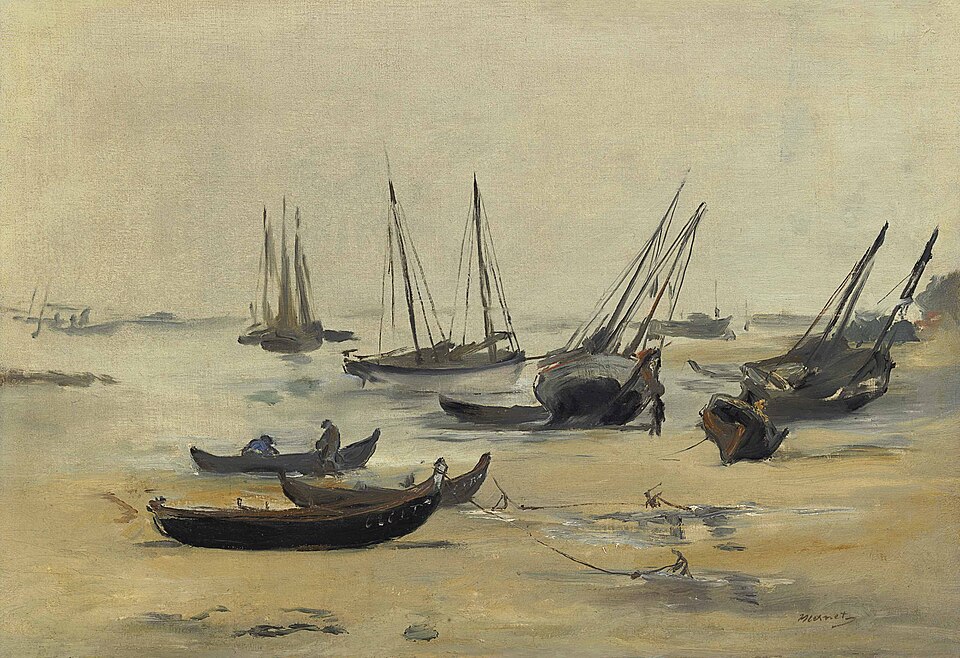
After the war and before going home to a Paris in turmoil, Manet stood on the beach at Arcachon in March 1871 and painted boats resting on the sand at low tide. It is among his earliest pictures made in the open air.
The story behind the painting
Manet had served in the National Guard during the Franco-Prussian War and briefly at the front. At the start of the war he had sent his wife Suzanne, his mother and his godson Léon Leenhoff to Oloron-Sainte-Marie in the Pyrenees. In February 1871 he joined them, but because the situation was uncertain at the time of the Paris Commune he did not go straight back. Instead the family travelled via Bordeaux to Arcachon, rented a house near the beach and stayed a month. There, in March 1871, he painted this view. The German Wikipedia gives its size as 26.3 by 51.4 cm, while Wikidata lists 37 by 51 cm.
What to look for
From the shore we look out over the bay of the Bassin d'Arcachon, sheltered from sea storms by Cap Ferret. The brushwork is loose and sketch-like. The light blue sea is calm, the horizon blurs, and the pale grey sky is hazy. In the lower third, sand bared by the tide spreads in ochre, with long wet patches in graded greys that hold reflections. Left of centre lie three local pinasses, flat-bottomed boats suited to coastal waters; the front two are tied by lines to sticks in the sand. At the third, at the water's edge, two fishermen are at work, perhaps unloading. Sailing boats rise in the middle distance, and on the right a few boats lie tilted on the sand. It is signed Manet at lower right.
Meaning and intent
In his month at Arcachon Manet made six oil paintings: an interior with Suzanne and Léon and a window onto the sea, and five sea views, all looking out toward boats in the bay. Following the spring weather, they range from gloomy to brightening skies. The art historian John Leighton stressed that these Arcachon seascapes are among Manet's earliest oils painted in the open air, found his quick response to the changing mood and atmosphere remarkable, and suggested they were Manet's reaction to the more immediate open-air techniques of Monet and his contemporaries. After the noise of war, the picture is quiet: wet sand, still boats, men at work.
Legacy
Manet sold the painting to Thomas W. Evans, a dentist from Philadelphia in his circle of friends, who also knew Stéphane Mallarmé and Méry Laurent; Laurent may have encouraged him to buy Manets. After Evans died in 1897 it remained in his estate for about ten years. In 1938 it was bought by the collector Buell Hammett, a co-founder of the Santa Barbara Museum of Art. In 1949 it passed to Marianne Graham, who lent it to that museum until 1951. Paul Rosenberg acquired it at auction in 1955 and sold it in 1956 to Peggy and David Rockefeller. Since their collection was sold in 2018, it has belonged to an unnamed private owner.
豆知識
- Painted at Arcachon in March 1871.
- Among Manet's earliest open-air oil paintings.
- One of six oils Manet made during a month at Arcachon.
- Long owned by Peggy and David Rockefeller; now private.
画家について
Édouard Manet (1832-1883)
同じ画家の作品: Édouard Manet
 草上の昼食 - Édouard Manet (1863)
 オランピア - Édouard Manet (1863)
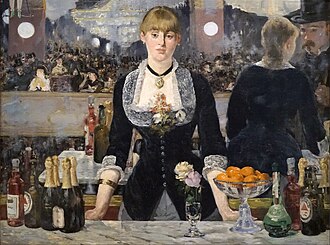 フォリー・ベルジェールのバー - Édouard Manet (1882)
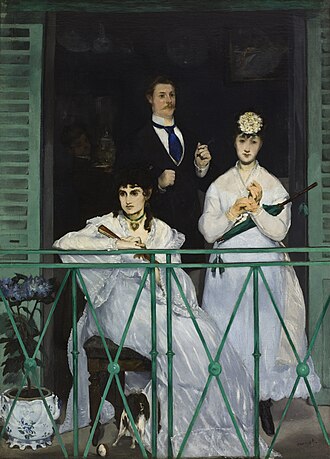 バルコニー - Édouard Manet (1868)
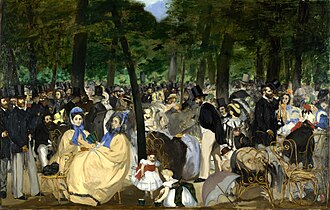 テュイルリー公園の音楽会 - Édouard Manet (1862)
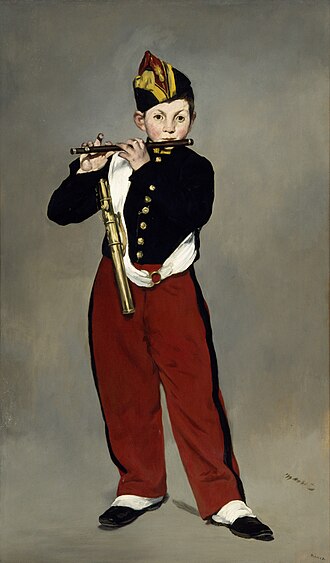 笛を吹く少年 - Édouard Manet (1866)
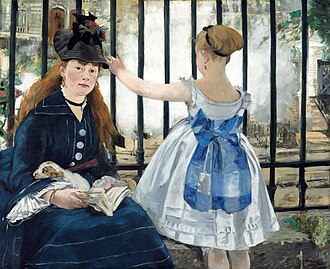 鉄道 - Édouard Manet (1873)
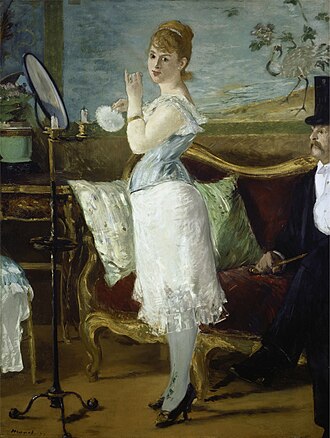 ナナ - Édouard Manet (1877)
関連する画家の作品
 印象・日の出 - Claude Monet (1872)
 睡蓮 - Claude Monet (1906)
 ムーラン・ド・ラ・ギャレットの舞踏会 - Pierre-Auguste Renoir (1876)
 舟遊びの昼食 - Pierre-Auguste Renoir (1881)
 ゆりかご - Berthe Morisot (1872)
 Summer's Day - Berthe Morisot (1879)
 アブサントを飲む人 - Edgar Degas (1875)
 The Bellelli Family - Edgar Degas (1858)
 The Canal du Loing at Moret - Alfred Sisley (1892)
 The Watering Pond at Marly with Hoarfrost - Alfred Sisley (1876)
 パリの通り、雨 - Gustave Caillebotte (1877)
 床削り - Gustave Caillebotte (1875)