Hunter with his Dogs
Francisco Goya · 1775
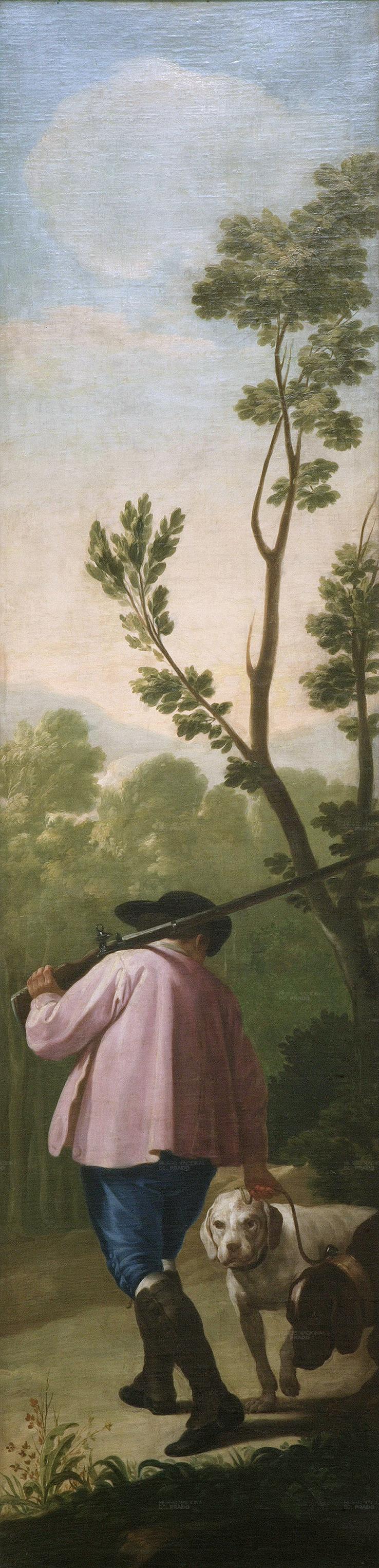
Under the trees a hunter turns around and gathers the leash of his two dogs, beside a winding trunk that climbs the whole narrow canvas. It is one of the tapestry designs Goya painted in 1775 for a prince who loved to hunt.
The story behind the painting
Goya painted this canvas in 1775 for his first series of tapestry cartoons, the full-size models that the Royal Tapestry Factory turned into woven hangings. All the pictures of this series were intended for the dining room of the Prince of Asturias, later Charles IV, and his wife Maria Luisa of Parma, at the palace of El Escorial. It was delivered to the factory with the rest of the series on 24 May 1775. The series also included Hunter Loading his Rifle, Hunting with a Decoy and The Wild Boar Hunt, a whole room devoted to the hunt.
What to look for
A hunter with a gun turns back and picks up the leash of his two dogs in a scene set in the undergrowth. Man and dog are well woven into the nature around them. A sinuous tree makes the tall composition work, unlike the pyramid shapes of other pictures in the series such as Dogs and Hunting Tools. Notice the fine, natural details. The landscape far away is unreal and barely visible, treated as a simple backdrop. The canvas measures 268 by 67.5 cm, a narrow format suggesting it was placed above a window, a balcony or in a corner.
Meaning and intent
The woodland scene speaks of hunting, a favourite pastime of Prince Charles, which made it a fitting subject for his dining room. The source sees here once more the influence of Francisco Bayeu, especially in the delicate, naturalistic details. The colours and the light recall Italian Baroque painting, which Goya had studied during his journey to Italy in 1771. So this modest design gathers what the young painter had learned so far: the lessons of his elders at court, his memory of Italy, and his own close eye for animals and trees.
Legacy
It was considered lost until 1869, when Gregorio Cruzada Villaamil found the canvas in the basement of the Royal Palace in Madrid. It was handed to the Prado in 1870 by orders of 19 January and 9 February, and first appeared in the museum's catalogue in 1876. It is shown in room 90 with catalogue number 805. Seen today, far from the tapestry it was made for, the canvas lets us look directly at Goya's own brushwork from the very start of his career at court, before the cartoons of his own invention that would follow.
豆知識
- Painted in 1775 for Goya's first tapestry cartoon series.
- Meant for the prince's dining room at El Escorial.
- A sinuous tree shapes the tall composition.
- Rediscovered in 1869, now in the Prado.
画家について
Francisco Goya (1746-1828)
同じ画家の作品: Francisco Goya
 1808年5月3日 - Francisco Goya (1814)
.jpg) 裸のマハ - Francisco Goya (1800)
裸のマハ - Francisco Goya (1800).jpg) 我が子を食らうサトゥルヌス - Francisco Goya (1819)
我が子を食らうサトゥルヌス - Francisco Goya (1819) カルロス4世の家族 - Francisco Goya (1800)
 着衣のマハ - Francisco Goya (1800)
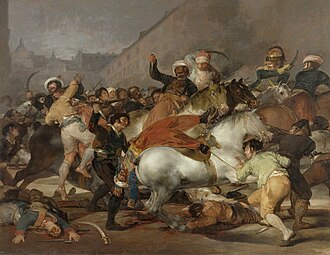 1808年5月2日、エジプト人親衛隊との戦闘 - Francisco Goya (1814)
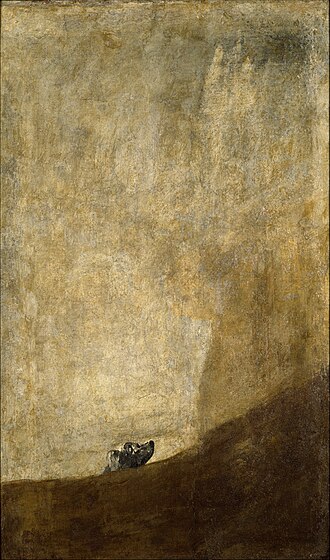 犬 - Francisco Goya (1819)
 魔女の夜宴 - Francisco Goya (1820s)
関連する画家の作品
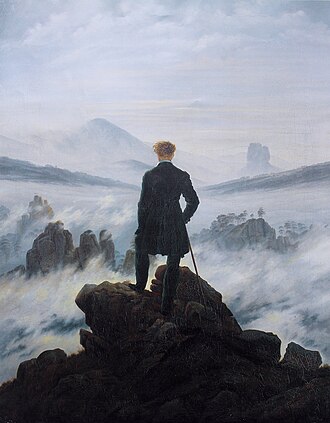 雲海の上の旅人 - Caspar David Friedrich (c. 1818)
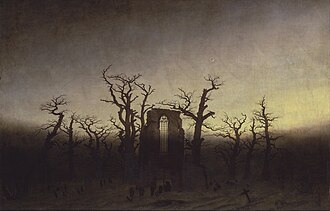 楡の木のある僧院 - Caspar David Friedrich (1800s)
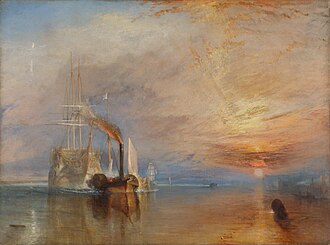 戦艦テメレール号 - J. M. W. Turner (1839)
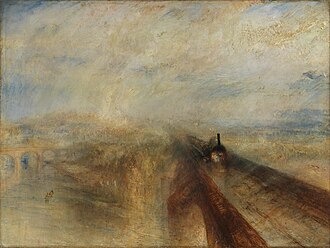 雨、蒸気、速度 - グレート・ウェスタン鉄道 - J. M. W. Turner (1844)
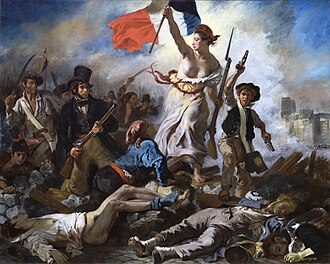 民衆を導く自由の女神 - Eugène Delacroix (1830)
 サルダナパールの死 - Eugène Delacroix (1827)