Hunter loading his rifle
Francisco Goya · 1775
%20Francisco%20Goya.jpg)
A hunter stands in the woods loading his gun, a dog at his feet, the trees stretched tall to fit a canvas almost six times taller than it is wide. Young Goya painted it in 1775 as a design for a royal tapestry.
The story behind the painting
In 1775 Goya painted this picture as part of his first series of tapestry cartoons, full-size designs that weavers at the Royal Tapestry Factory would copy into wool. The whole series was meant for the dining room of the Prince of Asturias, the future Charles IV, and his wife Maria Luisa of Parma, at the palace of El Escorial. The canvas was delivered with the rest of the series on 24 May 1775. The set included Hunting with a Decoy, The Quail Shoot, Hunter with his Dogs and Dead Game, among others, all built around the hunt.
What to look for
The format is the first thing to notice: 292 by 50 cm, long and narrow, because the tapestry was to fit into a corner of the room. A hunter loads his gun while a dog waits at his feet, and far behind him you can make out the heads of other hunters. Goya fits the figure into the plants around him, showing a real feeling for nature, as in all the works of this first series. The trees are drawn out long and thin so that they follow the tall, vertical shape of the canvas.
Meaning and intent
The hunt was a favourite pleasure of the royal family, so the subject suited a dining room at El Escorial. The picture is strongly marked by the style of Anton Raphael Mengs and Francisco Bayeu, the older painters who guided Goya at the court in these early years. Its look and the way the figure is placed would return in later cartoons by Goya, such as The Kite and The Wedding. Here the young painter still works within a borrowed manner, but already sets a single person calmly and naturally inside the landscape.
Legacy
This canvas became the most famous picture of the series and the favourite of the prince and princess. It was considered lost until 1869, when Gregorio Cruzada Villaamil found the canvas in the basement of the Royal Palace in Madrid. It was handed to the Prado in 1870 by orders of 19 January and 9 February, and first appeared in the museum's catalogue in 1876. It hangs there in room 90, catalogue number 5539. Wikidata gives its size as 292 by 50 cm, and the painting remains an early witness of the career Goya began as a designer of tapestries for the Spanish court.
豆知識
- Part of Goya's first series of tapestry cartoons, 1775.
- Delivered on 24 May 1775 for the prince's dining room at El Escorial.
- Its narrow shape fitted a corner of the room.
- Rediscovered in 1869, now in the Prado.
画家について
Francisco Goya (1746-1828)
同じ画家の作品: Francisco Goya
 1808年5月3日 - Francisco Goya (1814)
.jpg) 裸のマハ - Francisco Goya (1800)
裸のマハ - Francisco Goya (1800).jpg) 我が子を食らうサトゥルヌス - Francisco Goya (1819)
我が子を食らうサトゥルヌス - Francisco Goya (1819) カルロス4世の家族 - Francisco Goya (1800)
 着衣のマハ - Francisco Goya (1800)
 1808年5月2日、エジプト人親衛隊との戦闘 - Francisco Goya (1814)
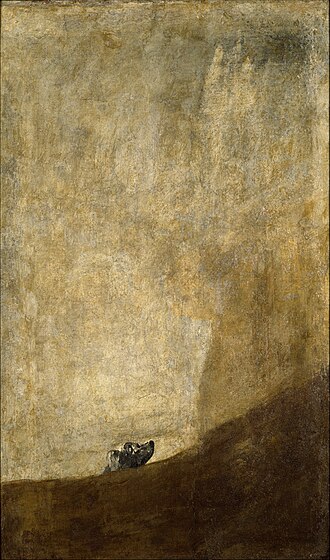 犬 - Francisco Goya (1819)
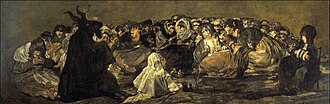 魔女の夜宴 - Francisco Goya (1820s)
関連する画家の作品
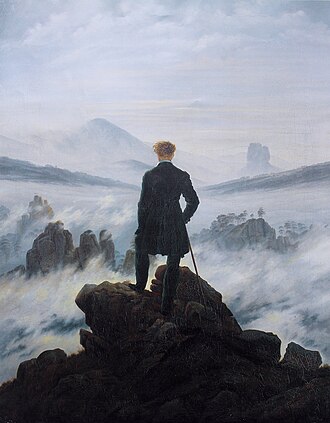 雲海の上の旅人 - Caspar David Friedrich (c. 1818)
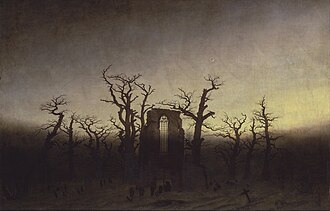 楡の木のある僧院 - Caspar David Friedrich (1800s)
 戦艦テメレール号 - J. M. W. Turner (1839)
 雨、蒸気、速度 - グレート・ウェスタン鉄道 - J. M. W. Turner (1844)
 民衆を導く自由の女神 - Eugène Delacroix (1830)
 サルダナパールの死 - Eugène Delacroix (1827)