Dogs and hunting gear
Francisco Goya · 1775
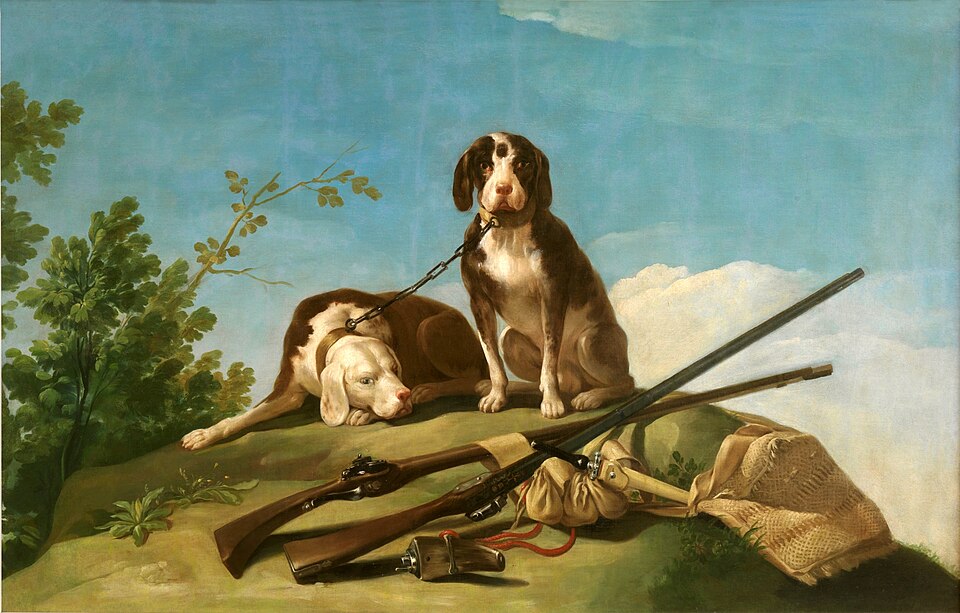
Two hunting dogs wait on a little mound beside guns and a powder flask, seen from below against a blue sky. It was one of young Goya's very first designs for a royal tapestry, and for almost a century it was thought lost.
The story behind the painting
Goya painted this canvas in 1775 as part of his first series of tapestry cartoons, full-size models from which weavers would make tapestries. The whole series was meant for the dining room of the Prince of Asturias, the future Charles IV, and his wife Maria Luisa of Parma, at the palace of El Escorial. The painting was delivered to the Royal Tapestry Factory with the rest of the series on 24 May 1775. Hunting, the favourite pleasure of the king and his son, was chosen as the theme because they hunted at that very place. The series also included The Hunting Party, The Fisherman, Hunter Loading His Gun and The Boar Hunt.
What to look for
The picture shows dogs on a leash and hunting gear: Wikidata lists hunting dogs, a chain, a leash, a powder flask, a muzzle-loading gun and a shotgun under a cloudy sky. Notice the elongated format, about 112 by 174 cm. It is wide because the tapestry was to hang above a door in the royal dining room at El Escorial. For the same reason the view is from below, as the weaving would be seen high up. The dogs sit on a mound that forms a pyramid in the manner of Anton Raphael Mengs, and the colours of the sky and shrubs melt into blues and greens, as in its companion, Hunting with a Decoy.
Meaning and intent
This is a work of apprenticeship. The influence of Francisco Bayeu and Anton Raphael Mengs is clearly visible. Bayeu, Goya's brother-in-law and contemporary, was directing him at the time, and Goya remained so restrained that works by the two painters from this period can be confused. Rather than a personal statement, the canvas was a careful answer to a court commission: a quiet still life of the hunt, made to please a prince who loved the chase, and shaped entirely by the place where the tapestry would hang. It shows Goya at the very start of his work for the royal tapestry factory.
Legacy
After delivery the canvas disappeared from view. It was considered lost until 1869, when Gregorio Cruzada Villaamil found it in the basement of the Royal Palace in Madrid. It then reappeared in the collection of Raimundo de Madrazo, who gave it to the Museo del Prado in 1894. There it is shown in room 90 under number 753, hung as a pair with Hunting with a Decoy. Seen together, the two cartoons recall the dining room at El Escorial for which a young Goya, at the start of his career at court, first worked.
豆知識
- Painted in 1775 for Goya's first series of tapestry cartoons.
- Made for a dining room door at El Escorial, hence the wide format and low viewpoint.
- Thought lost until found in 1869 in the Royal Palace basement in Madrid.
- In the Prado since 1894, paired with Hunting with a Decoy.
画家について
Francisco Goya (1746-1828)
プラド美術館 · 空 · 静物画 · 雲 · 動物芸術 · 散弾銃 · 鎖 · 猟犬
同じ画家の作品: Francisco Goya
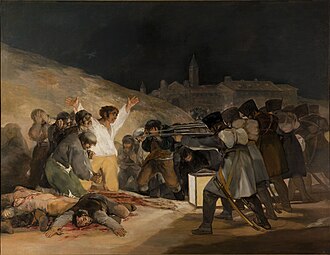 1808年5月3日 - Francisco Goya (1814)
.jpg) 裸のマハ - Francisco Goya (1800)
裸のマハ - Francisco Goya (1800).jpg) 我が子を食らうサトゥルヌス - Francisco Goya (1819)
我が子を食らうサトゥルヌス - Francisco Goya (1819)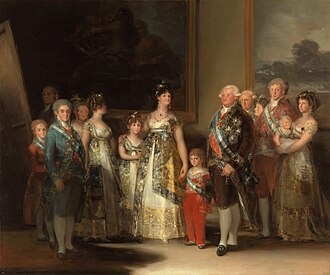 カルロス4世の家族 - Francisco Goya (1800)
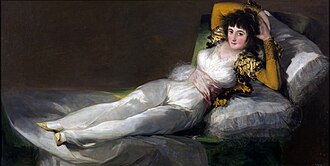 着衣のマハ - Francisco Goya (1800)
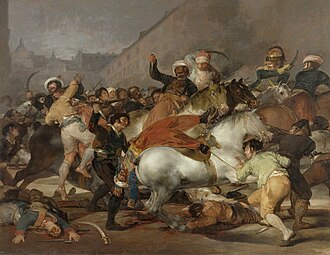 1808年5月2日、エジプト人親衛隊との戦闘 - Francisco Goya (1814)
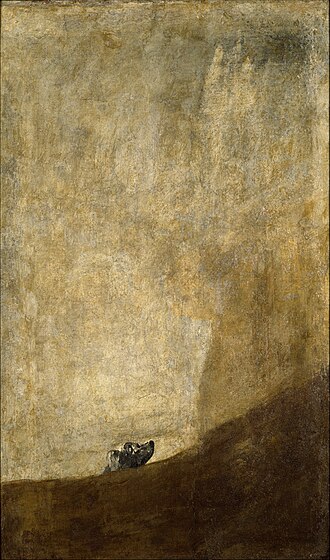 犬 - Francisco Goya (1819)
 魔女の夜宴 - Francisco Goya (1820s)
関連する画家の作品
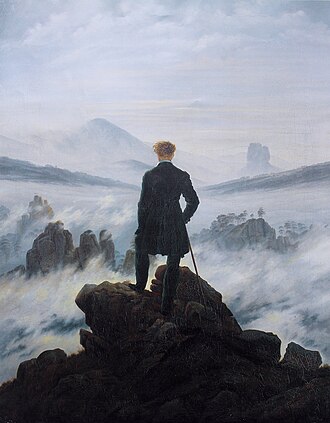 雲海の上の旅人 - Caspar David Friedrich (c. 1818)
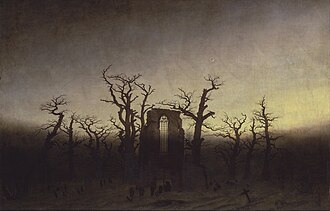 楡の木のある僧院 - Caspar David Friedrich (1800s)
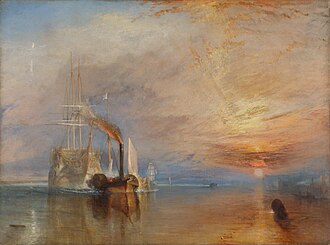 戦艦テメレール号 - J. M. W. Turner (1839)
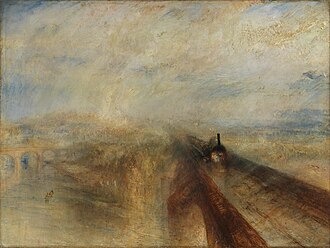 雨、蒸気、速度 - グレート・ウェスタン鉄道 - J. M. W. Turner (1844)
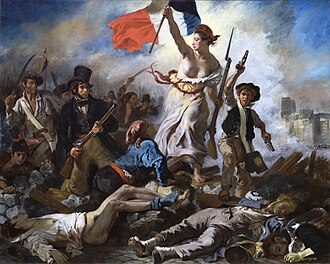 民衆を導く自由の女神 - Eugène Delacroix (1830)
 サルダナパールの死 - Eugène Delacroix (1827)