Cromwell before the Coffin of Charles I
ウジェーヌ・ドラクロワ · 1831
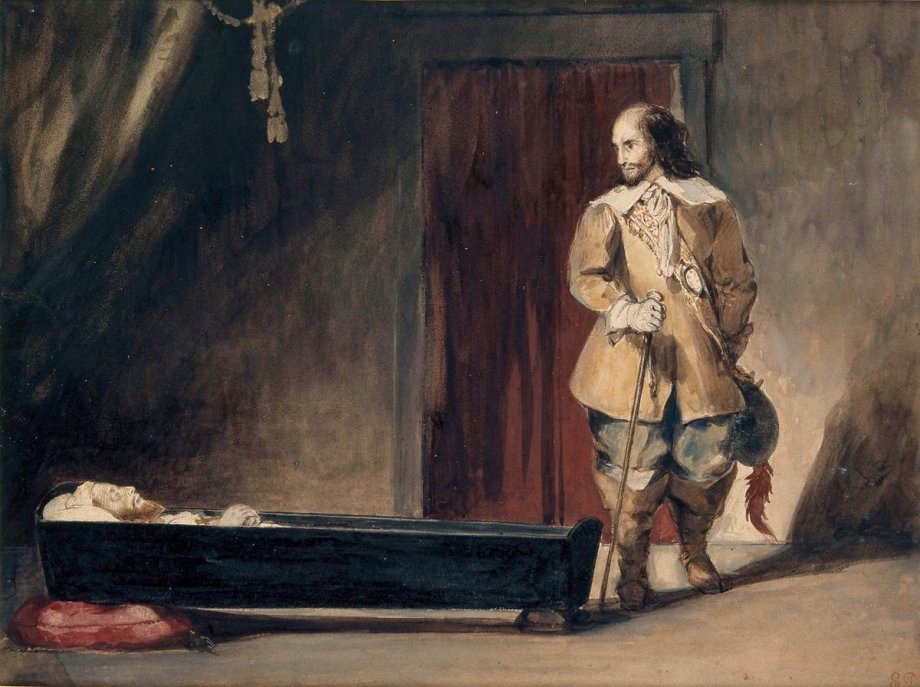
A small watercolour answering a huge canvas: Delacroix's Cromwell stumbles on the dead king's coffin almost by accident, troubled, at the edge of the scene.
The story behind the painting
Delacroix painted this watercolour around 1831 as a reaction against Paul Delaroche's Cromwell and Charles I, shown at the Paris Salon of 1831, the first after the July Revolution. Delacroix's own Liberty Leading the People hung at the same Salon. Both works draw on a fictional account by Chateaubriand in which Oliver Cromwell opens the coffin of the executed Charles I. In a letter to his friend the painter Paul Huet, Delacroix said he chose watercolour to express radical opposition to Delaroche's approach.
What to look for
The sheet is small, about 25.5 by 33.5 cm, and partially varnished. Cromwell is not in the centre: he stands at the edge of the scene, troubled and changing, as if he has found the coffin by accident. Above the king's body hangs a theatrical curtain, a detail that recalls the watercolours of Delacroix's friend Richard Parkes Bonington. Delacroix kept the historical realism of his rival's subject but gave it the intimacy of a sheet of paper, as if the viewer had walked in on a private moment of doubt.
Meaning and intent
Delaroche's picture was less about the event than an oblique comment on the French Revolution and the execution of Louis XVI, with Cromwell standing in for Napoleon, and it sought a middle way between Ingres's neoclassicism and Delacroix's romanticism. Delacroix imitated its historical realism but shrank it to a small watercolour and added his own romanticism, which tried to bring the past back to life by stirring emotion. Delacroix was not alone in mocking Delaroche: in 1852 Punch published a parody titled Louis Napoléon Looking at the Corpse of Liberty.
Legacy
Delaroche ignored the criticism and painted Cromwell again in 1836, a work so savaged that he never exhibited at the Salon again. Delacroix's watercolour had its own adventure: in December 1942 it was acquired from Raphaël Gérard for the Museum Folkwang in Essen, and in 1948 it returned to France in the first consignment of looted art to leave Düsseldorf. It was then assigned to the Louvre, where it is kept in the Department of Prints and Drawings.
豆知識
- Watercolour, about 1831.
- A reply to Delaroche's Cromwell and Charles I at the 1831 Salon.
- Taken to Germany in 1942, returned to France in 1948.
- Kept in the Louvre's Department of Prints and Drawings.
画家について
ウジェーヌ・ドラクロワ (1798-1863)
男性 · 遺体 · カーテン · 扉 · Department of Prints and Drawings of the Louvre
同じ画家の作品: ウジェーヌ・ドラクロワ
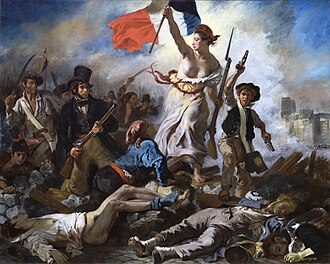 民衆を導く自由の女神 - Eugène Delacroix (1830)
 サルダナパールの死 - Eugène Delacroix (1827)
 キオス島の虐殺 - Eugène Delacroix (1824)
 ダンテの小舟 - Eugène Delacroix (1822)
 アルジェの女たち - Eugène Delacroix (1834)
 ミソロンギの廃墟に立つギリシア - Eugène Delacroix (1826)
 母虎と戯れる子虎 - Eugène Delacroix (1830)
.jpg) マルクス・アウレリウス帝の最後の言葉 - Eugène Delacroix (1844)
マルクス・アウレリウス帝の最後の言葉 - Eugène Delacroix (1844)
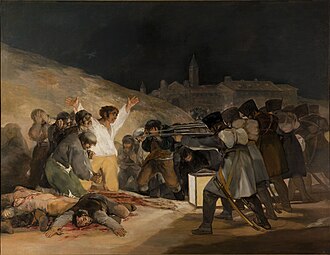 1808年5月3日
.jpg) 裸のマハ
裸のマハ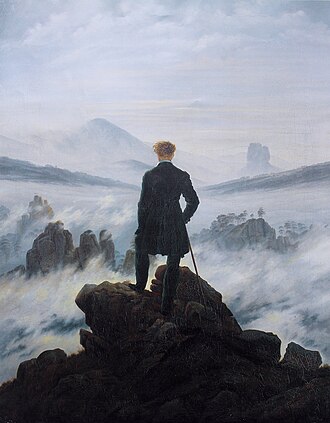 雲海の上の旅人
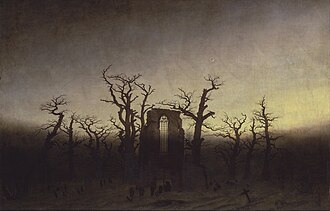 楡の木のある僧院
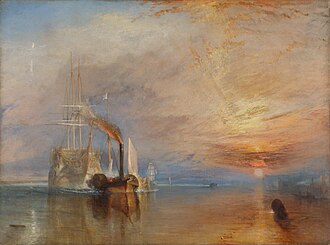 戦艦テメレール号
 雨、蒸気、速度 - グレート・ウェスタン鉄道