Christ on the Mount of Olives
Caravaggio · 1605
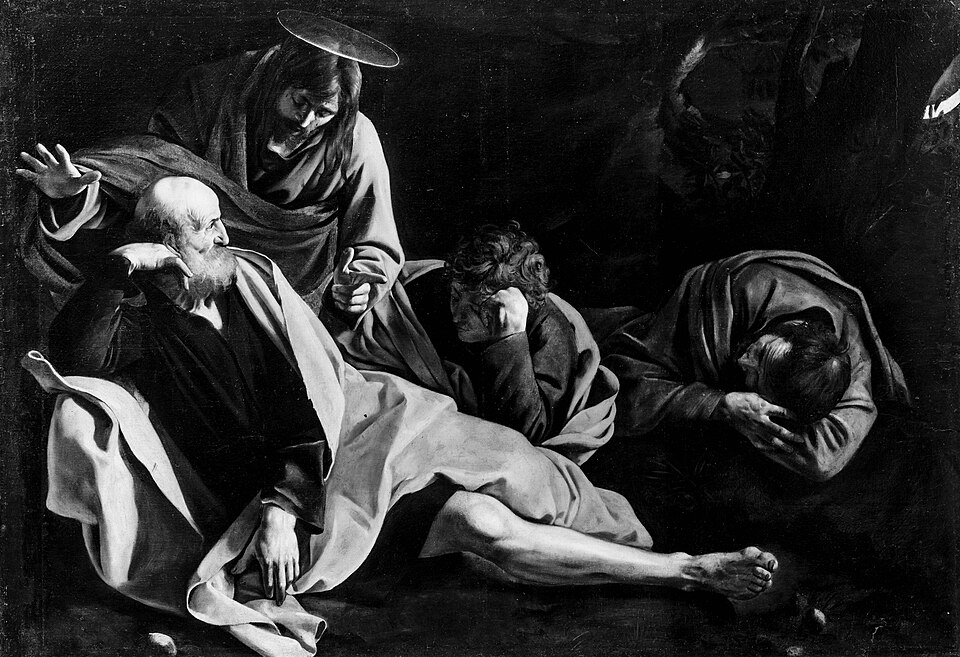
On the night of his arrest, Christ finds his friends asleep and wakes Peter with a rebuke. Caravaggio painted this quiet, human scene for a Roman cardinal. The canvas no longer exists: it was destroyed in Berlin in 1945.
The story behind the painting
Caravaggio painted Christ on the Mount of Olives around 1604 to 1606. It belonged to a group of works on orthodox Christian subjects made for Cardinal Benedetto Giustiniani, which also included The Crowning with Thorns now in Vienna, The Incredulity of Saint Thomas, and paintings of Saint Jerome, Saint Augustine and Mary Magdalene that are now lost. At the same time Caravaggio was busy with Amor Victorious for the cardinal's brother, the banker Vincenzo Giustiniani. Wikidata gives the year as 1605 and a size of about 154 by 222 cm.
What to look for
The scene comes from the Gospel of Matthew. Jesus and his disciples go up to the Mount of Olives outside Jerusalem on the night he is arrested. He goes apart to pray and returns to find them sleeping. He wakes Peter, the reclining figure, with the words that the spirit is willing but the flesh is weak. Saint John sits in the centre and Saint James is the other figure. Christ's pointing finger seems to show the approach of Judas and the soldiers who are about to arrive.
Meaning and intent
What makes the moment so human is its smallness. There are no angels and no cup of suffering, only a tired man and three friends who could not stay awake for one hour. The model for Peter appears identical with the model of Caravaggio's two Saint Jerome paintings from his Roman period, Saint Jerome in Meditation and Saint Jerome, both around 1605 to 1606. The same weathered face that served a scholar saint here becomes a disciple caught sleeping, just before the betrayal begins.
Legacy
The painting's authenticity has been disputed. Yet it is well documented in the collection of Marchese Vincenzo Giustiniani and his brother the cardinal, and its dimensions are virtually identical to those of a Caravaggio of the same subject listed in the Giustiniani inventory. It later hung in the Kaiser Friedrich Museum in Berlin, part of the collection Wikidata places in the Gemäldegalerie Berlin. In 1945 it was destroyed, so today the picture survives only in reproductions, a lost night scene from one of the great painters of light.
豆知識
- Painted around 1604-1606 for Cardinal Benedetto Giustiniani.
- Shows Christ waking the sleeping Peter, with John and James.
- Listed in the Giustiniani inventory, though its authenticity has been disputed.
- Destroyed in Berlin in 1945.
画家について
Caravaggio (1571-1610)
宗教美術 · 男性 · イエス・キリスト · バロック · 絵画館
同じ画家の作品: Caravaggio
 エマオの晩餐 - Caravaggio (1601)
 聖マタイの召命 - Caravaggio (1609)
 洗礼者聖ヨハネの斬首 - Caravaggio (1608)
 エマオの晩餐 - Caravaggio (1601)
 メドゥーサの首 - Caravaggio (1597)
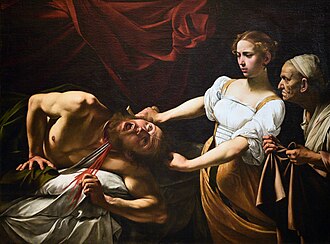 ホロフェルネスの首を斬るユーディット - Caravaggio (1598)
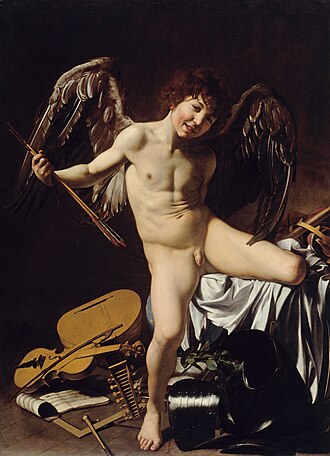 愛の勝利 - Caravaggio (1600s)
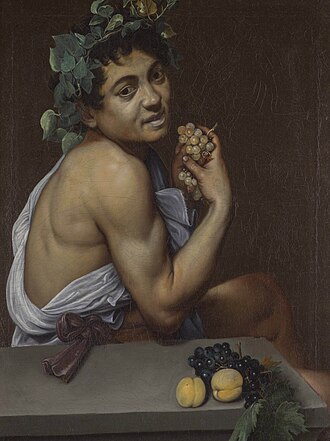 病めるバッカス - Caravaggio (1595)
関連する画家の作品
 ラス・メニーナス - Diego Velázquez (1656)
 ブレダの開城 - Diego Velázquez (1635)
 Saint Francis in Meditation - Francisco de Zurbarán (1639)
 The Immaculate Conception - Francisco de Zurbarán (1661)
 チャールズ1世の三面肖像画 - Anthony van Dyck (1635)
 馬上のチャールズ1世とサン・アントワーヌの領主の肖像 - Anthony van Dyck (1636)
 キリスト昇架 - Peter Paul Rubens (1609)
 レウキッポスの娘たちの略奪 - Peter Paul Rubens (1618)
 夜警 - Rembrandt van Rijn (1642)
 自画像 - Rembrandt van Rijn (1659)
 陽気な酒飲み - Frans Hals (1620s)
 微笑む騎士 - Frans Hals (1624)