第一執政官ナポレオン・ボナパルト
ドミニク・アングル · 1803
%20Napol%C3%A9on%20Bonaparte%20en%201e%20consul%20-%20Jean-Auguste-Dominique%20Ingres.jpg)
Napoleon in the red uniform of a consul, hand tucked into his jacket, about to sign a decree to rebuild a ruined suburb. Ingres was 23 and never had him sit for it.
The story behind the painting
On 1 August 1803 Bonaparte stopped for two days in Liège during his triumphal march through the nine annexed départements. Huge crowds gathered, some kneeling in his path. In the Amercœur quarter, devastated by Austrian bombardment in 1794, he was struck by the inhabitants' misery and decreed funds for its reconstruction. To show his satisfaction he promised the city a portrait of himself by Ingres. Ingres was one of five artists commissioned to paint full-length portraits of Napoleon for Liège, Antwerp, Dunkerque, Brussels and Ghent, towns newly ceded to France in 1801.
What to look for
Napoleon, aged 34, stands with his right hand about to sign an act titled Faubourg d'Amercœur rebâti, Amercœur suburb rebuilt. He is not the long-haired revolutionary, nor in the blue uniform of Gros's Bonaparte at the Pont d'Arcole, but short-haired in the red uniform of a consul of the republic. Instead of a martial hand on the sword, he takes a civilian pose with his hand inside his jacket, a gesture used in rulers' portraits to suggest calm, stable leadership. Behind a drawn curtain stands St. Lambert's Cathedral, shown complete.
Meaning and intent
Ingres could not get Bonaparte to sit and based the pose on a 1802 portrait by Antoine-Jean Gros. The decree in the picture was meant to show the newly annexed city the benefits of belonging to France and to take symbolic possession of it. The cathedral is a deliberate fiction: it was actually being demolished during the Liège Revolution. Showing it whole spoke of reconciliation between the French Republic and the Catholic Church, after years of poor relations, and of the protection the Republic granted the Church in the concordat of 1801.
Legacy
Bonaparte said the portrait would be sent a year later, and it now belongs to the Curtius Museum in Liège. Wikipedia dates it 1804, while Wikidata gives 1803, the year of the visit and the commission. Ingres had made his Salon debut only the year before, so this political commission came at the very start of his career. The portrait remains a lesson in how a painted image could carry the promises of power: a rebuilt suburb, a restored cathedral, a ruler at peace.
豆知識
- Commissioned after Bonaparte's visit to Liège in August 1803.
- Ingres was 23 and based the pose on a 1802 portrait by Gros.
- Shows St. Lambert's Cathedral whole while it was being demolished.
- In the Curtius Museum, Liège.
画家について
ドミニク・アングル (1780-1867)
肖像 · 直立姿勢 · 西欧の服飾 · 剣 · ドレーパリー · ナポレオン・ボナパルト
同じ画家の作品: ドミニク・アングル
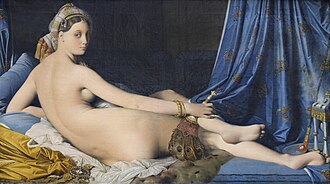 グランド・オダリスク - Jean-Auguste-Dominique Ingres (1814)
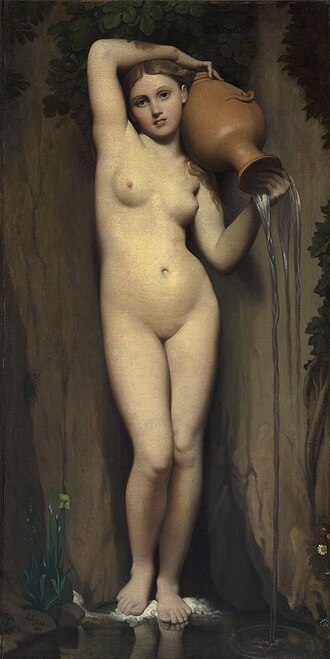 泉 - Jean-Auguste-Dominique Ingres (1856)
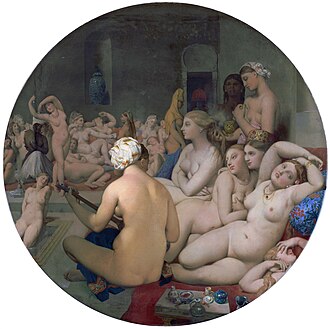 トルコ風呂 - Jean-Auguste-Dominique Ingres (1862)
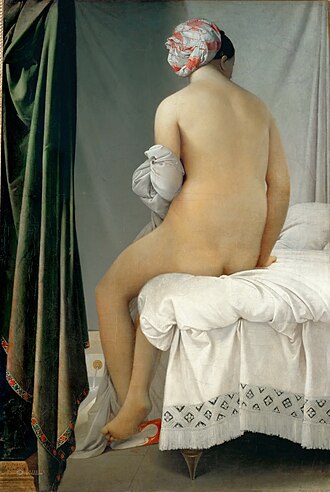 浴女 - Jean-Auguste-Dominique Ingres (1808)
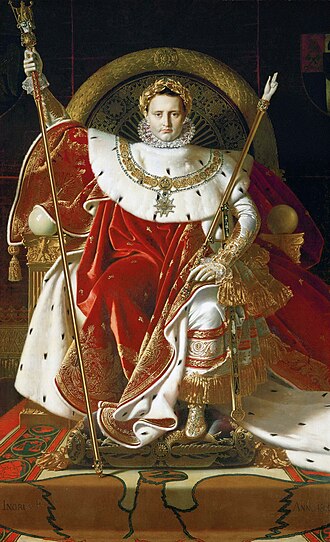 玉座のナポレオン - Jean-Auguste-Dominique Ingres (1806)
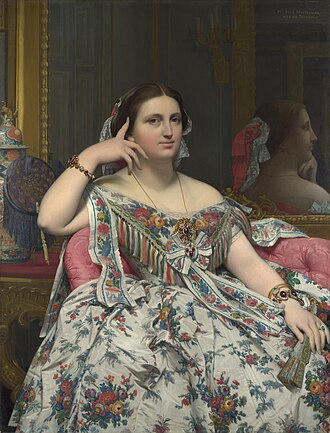 イネス・モワテシエ夫人の肖像 - Jean-Auguste-Dominique Ingres (1856)
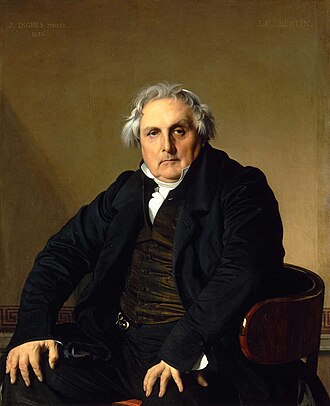 ルイ=フランソワ・ベルタン氏の肖像 - Jean-Auguste-Dominique Ingres (1832)
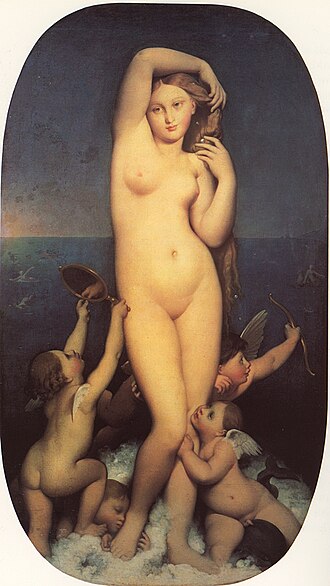 海から上がるヴィーナス - Jean-Auguste-Dominique Ingres (1808)
関連する画家の作品
 ソクラテスの死 - Jacques-Louis David (1787)
 ホラティウス兄弟の誓い - Jacques-Louis David (1784)
 1808年5月3日 - Francisco Goya (1814)
.jpg) 裸のマハ - Francisco Goya (1800)
裸のマハ - Francisco Goya (1800)