ニコラ・プッサン
1594-1665
Nicolas Poussin ran away from Normandy to become a painter and spent most of his life in Rome, working slowly and alone. His clear, ordered pictures made him the leading painter of classical French Baroque, and a model for David, Ingres and Cézanne.
Origins
Poussin was born in June 1594 near Les Andelys in Normandy. His friend and early biographer Giovanni Pietro Bellori says he received an education that included some Latin, which served him well. Another friend, André Félibien, recalled him endlessly filling sketchbooks with figures from his own imagination. His sketches caught the eye of the painter Quentin Varin, who spent time in Les Andelys, though no biographer says he trained formally in Varin's studio. His parents apparently opposed a painting career, and around 1612, at about eighteen, he ran away to Paris.
Life and turning points
In Paris he spent three months with the portraitist Ferdinand Elle and perhaps a month with Georges Lallemand, but disliked studio teamwork and preferred to work slowly and alone. Court records show debts he could not pay. Two attempts to reach Rome stopped at Florence and Lyon. In 1622 the Jesuits commissioned six large paintings, since lost, and the poet Giambattista Marino took him into his household. He reached Rome in spring 1624, aged thirty. Early years there were hard: Marino left and died, his patrons went to Spain, and he fell ill with syphilis. The family of the chef Jacques Dughet nursed him, and in 1630 he married Anne-Marie Dughet. In December 1640 he returned to Paris as First Painter to the King, but overwork and court intrigue sent him back to Rome after little more than a year. He died on 19 November 1665.
Style and technique
Poussin's work is marked by clarity, logic and order, and favours line over colour. In Rome he studied Raphael above all, whose influence on him was powerful, and he befriended artists with classicizing tastes such as Claude Lorrain and Domenichino. The Death of Germanicus of 1627, with its learned use of Tacitus and an ancient sarcophagus, its stoic restraint and pictorial clarity, established his reputation. His altarpiece of the Martyrdom of Saint Erasmus for St Peter's is his most openly Baroque work. Afterward he turned to private collectors and modestly sized religious, mythological and historical pictures, and in his later years landscape grew ever more prominent.
Stories and anecdotes
Poussin detested Caravaggio, saying he had been born to destroy painting. His early Marino drawings, fifteen sheets illustrating Ovid and Roman battles, are now at Windsor Castle and are among his earliest identifiable works. The Martyrdom of Saint Erasmus, for unknown reasons, met official displeasure and brought no more papal commissions; together with a lost competition, this convinced him to abandon large public projects for collectors who let him work slowly and choose his subjects. In Paris, overwhelmed by altarpieces, tapestry cartoons, book frontispieces and plans for the Louvre's Grand Galerie, he also faced criticism from partisans of other painters, including his old friend Simon Vouet. His brother-in-law Gaspard Dughet later took the name Poussin.
Legacy
Poussin became the model of the classical painter in France. Until the 20th century he remained a major inspiration for classically minded artists such as Jacques-Louis David, Jean-Auguste-Dominique Ingres and Paul Cézanne. Among the important works of his later years are Orion Blinded Searching for the Sun, Landscape with Hercules and Cacus and The Seasons. His choice to work slowly, for a few understanding patrons, gave his pictures their calm and thoughtful order, which still invites the viewer to look closely and reflect.
豆知識
- He painted two series of the Seven Sacraments, the first for Cassiano dal Pozzo.
- In 1632 he bought a life interest in a small house near Trinità dei Monti for himself and his wife.
- He studied painting the nude at Domenichino's academy in Rome.
- Cardinal Richelieu commissioned a series of Bacchanals from him.
ニコラ・プッサンの作品
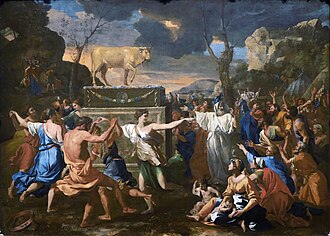 黄金の子牛の礼拝 - Nicolas Poussin (1634)
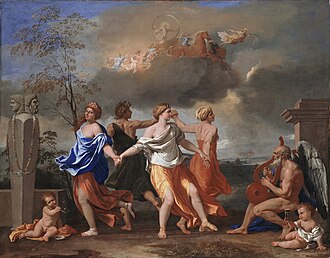 人生の踊り - Nicolas Poussin (1630s)
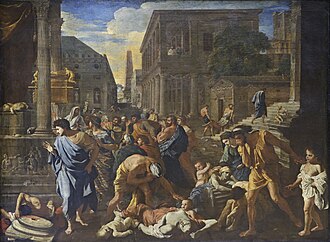 アシドドのペスト - Nicolas Poussin (1630)
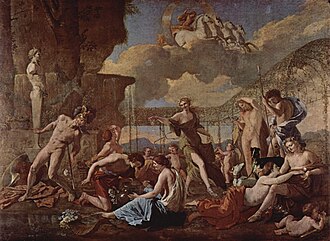 フローラの王国 - Nicolas Poussin (1631)
.jpg) ソロモンの審判 - Nicolas Poussin (1649)
ソロモンの審判 - Nicolas Poussin (1649)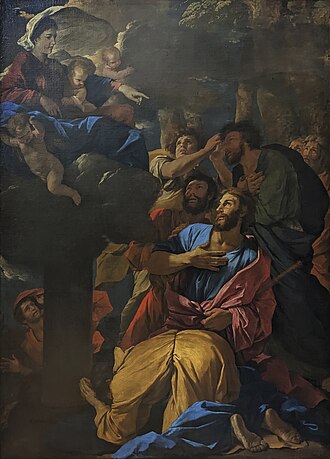 聖ヤコブによる聖母マリアの幻視 - Nicolas Poussin (1620s)
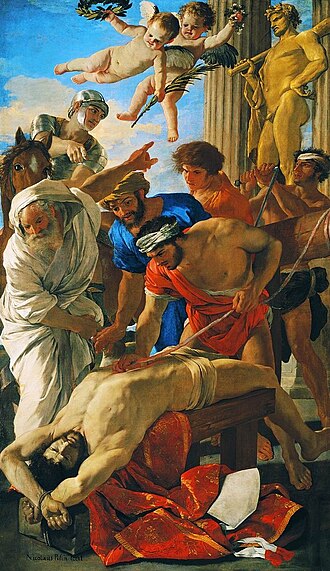 聖エラスムスの殉教 - Nicolas Poussin (1628)
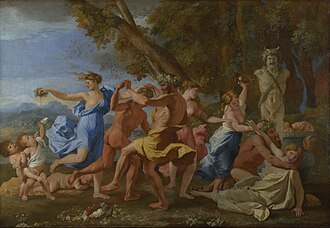 境界標の前のバッカナーレ - Nicolas Poussin (1630s)
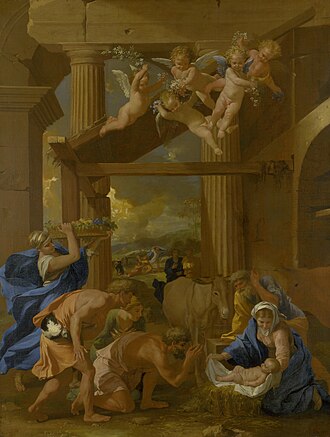 羊飼いの礼拝 - Nicolas Poussin (1633)
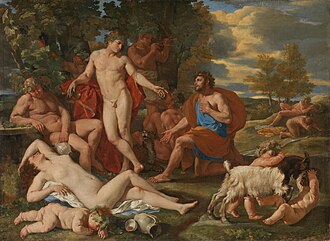 ミダース王とバッカス - Nicolas Poussin (1630)
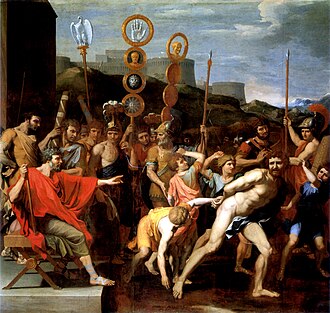 生徒たちにファレリ人の教師を引き渡すカミルス - Nicolas Poussin (1637)
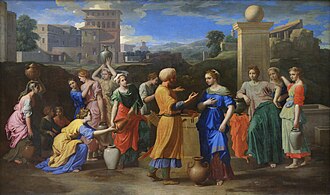 エリエゼルとリベカ - Nicolas Poussin (1648)
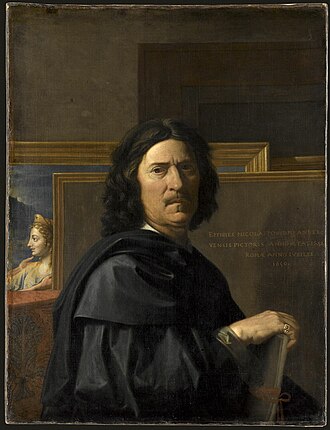 自画像 - Nicolas Poussin (1650)
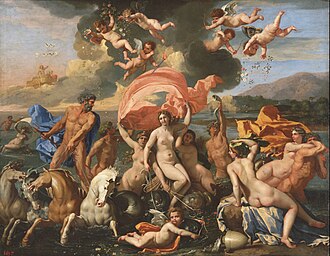 ヴィーナスの誕生 - Nicolas Poussin (1635)
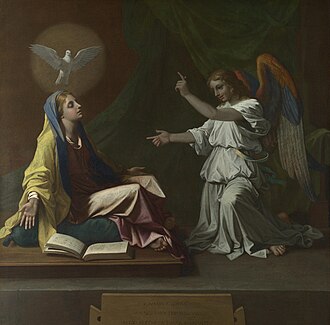 受胎告知 - Nicolas Poussin (1650s)
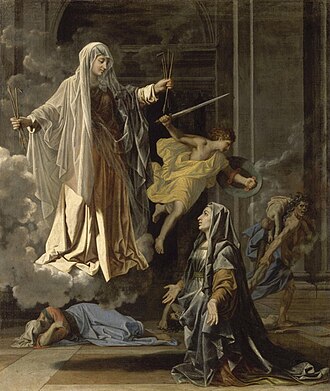 Saint Frances Announcing the End of the Plague in Rome - Nicolas Poussin (1657)
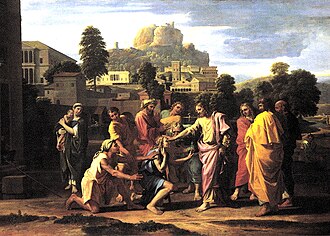 The Blind of Jericho - Nicolas Poussin (1650)