人生の踊り
ニコラ・プッサン · 1630s
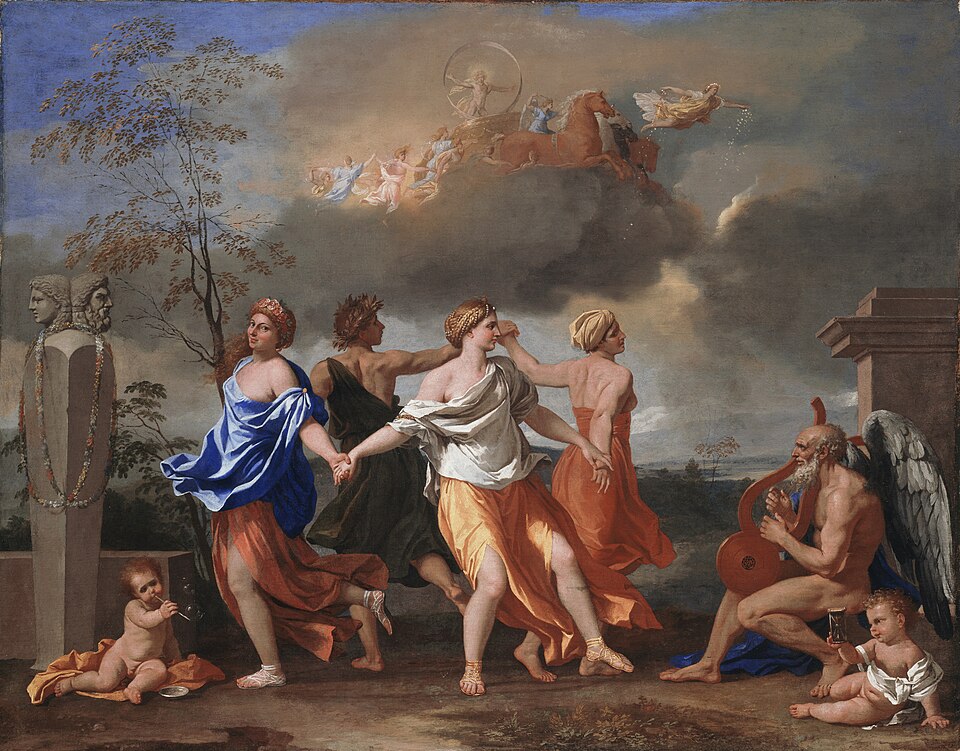
Four figures hold hands and dance in a ring while winged old Time plays the lyre. Poussin painted it for a future pope, and centuries later it lent its name to one of the great English novel cycles.
The story behind the painting
Poussin painted this picture between about 1634 and 1636 as a commission for Giulio Rospigliosi, who later became Pope Clement IX. According to the biographer Gian Pietro Bellori, Rospigliosi himself dictated its detailed iconography. The title we use today first appears only in a Wallace Collection catalogue of 1913. Before that the painting carried titles about the Four Seasons, and at the 1845 sale it was called La Danse des Saisons, ou l'Image de la vie humaine. Wikidata simply dates it to the 1630s.
What to look for
Four dancers hold each other by the hand and move in a circle, facing outward, while Time, winged and naked, plays a lyre on the right. The scene is set in early morning: in the sky behind, Aurora, goddess of dawn, goes before the chariot of the sun god Apollo, who is accompanied by the Hours and holds a ring standing for the Zodiac. At the left stands a herma with a double face, young and old. Look closely and you may sense changes: Poussin painted out a second, larger tree on the right, between one dancer and Time.
Meaning and intent
Bellori read the dancers as Poverty, Labour, Riches and Pleasure, a wheel of human life in which pleasure leads back to poverty. André Félibien, Poussin's friend and biographer, agreed, except that he named Pleasure where Bellori had Luxury. Anthony Blunt argued that the figure at the back is male, and the museum now describes him as Bacchus. Malcolm Bull disagrees with these readings as the original intention, tracing the image instead to the Greek poet Nonnus and his four seasons. The scholar Ingamells felt Poussin was not unduly concerned with naming each figure precisely.
Legacy
The painting stayed with the Rospigliosi family until 1806, when it passed to the collection of Joseph Fesch and went to France for a time. In the great Fesch sale in Rome in 1845 it was bought by the 4th Marquess of Hertford, and it passed to his son, Sir Richard Wallace. It was shown at the Art Treasures Exhibition in Manchester in 1857. Anthony Powell named his novel series after it, and his narrator opens the first book by recalling the Seasons treading in rhythm to Time's lyre. A large L-shaped tear through the central group has been repaired.
豆知識
- Commissioned by Giulio Rospigliosi, later Pope Clement IX, around 1634-1636.
- Four dancers circle while Time plays the lyre.
- Gave its name to Anthony Powell's novel cycle.
- Now in the Wallace Collection, London.
画家について
ニコラ・プッサン (1594-1665)
同じ画家の作品: ニコラ・プッサン
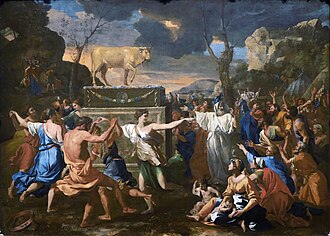 黄金の子牛の礼拝 - Nicolas Poussin (1634)
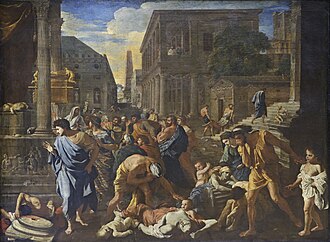 アシドドのペスト - Nicolas Poussin (1630)
.jpg) ソロモンの審判 - Nicolas Poussin (1649)
ソロモンの審判 - Nicolas Poussin (1649)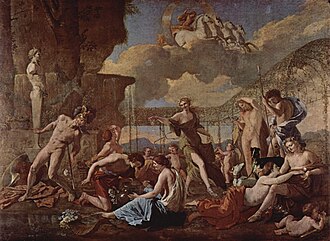 フローラの王国 - Nicolas Poussin (1631)
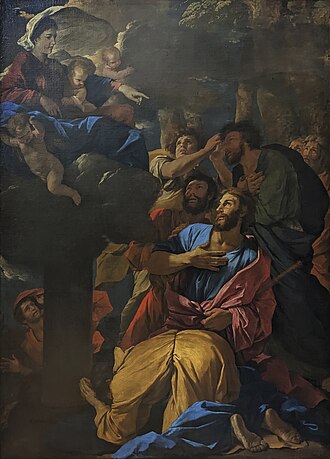 聖ヤコブによる聖母マリアの幻視 - Nicolas Poussin (1620s)
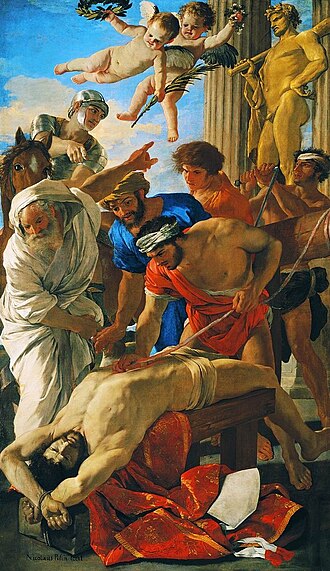 聖エラスムスの殉教 - Nicolas Poussin (1628)
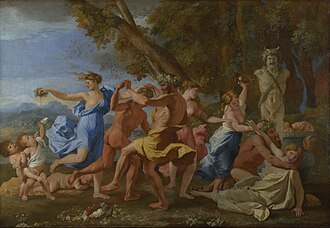 境界標の前のバッカナーレ - Nicolas Poussin (1630s)
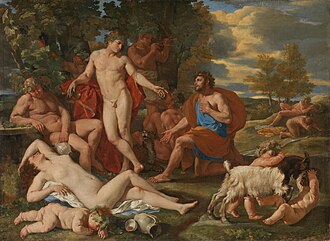 ミダース王とバッカス - Nicolas Poussin (1630)