The Light of the World
François Boucher · 1750
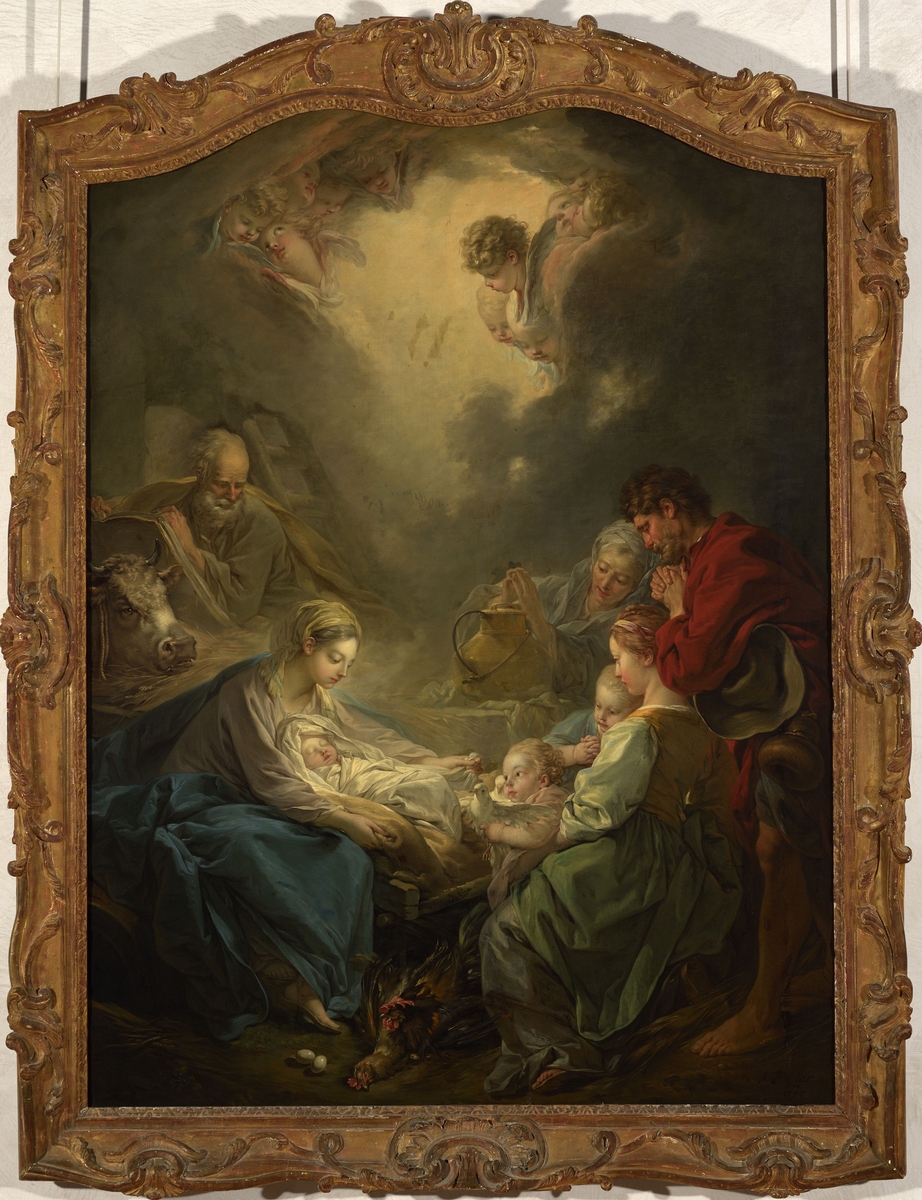
A newborn child glows so brightly that he lights every face around him. This was Boucher's first major religious painting, made for Madame de Pompadour, and its success carried him to the title of First Painter to the King.
The story behind the painting
François Boucher painted this canvas in 1750 on a commission from Madame de Pompadour, the chief mistress of King Louis XV. It was his first major step into religious subject matter, and he approached it with notable freedom, helped in part by his patron's lack of religious conservatism. First titled The Adoration of the Shepherds, it was shown at the Paris Salon of 1750. Its success won Boucher a commission to paint a room in the Louvre and the position of First Painter to the King. It was then placed on the altar of an ante-chamber in her Château de Bellevue.
What to look for
At the centre the Virgin Mary, in blue and white, gently cradles the infant Jesus, and he is the main source of light in the picture. His glow falls on Joseph, shown as an older man holding scripture, and on a crowd of onlookers of every age, from small children to the elderly. A man in red carries a hat and a water gourd, perhaps a pilgrim. A boy holds a dove. An ox, a hen and eggs sit in the rustic setting, while cherubs peer down from soft clouds. The shepherds and donkey of a usual Nativity are missing.
Meaning and intent
The painting does not fit a single Bible story. Its central idea comes from the Gospels of Luke and John: in Luke 2, Simeon recognises the infant as a light for all nations, and John 1:9 calls Christ the true light that gives light to everyone. The figures of every age carry this message, that Christ's birth brought light to all people, whatever their wealth or status. The ox is the symbol of Saint Luke and of sacrifice. The meaning of the hen and eggs is uncertain: they may stand for light and resurrection, or simply add to the country mood.
Legacy
In 1761 Étienne Fessard made an engraving of the painting and gave it the title The Light of the World, the name it still carries. The canvas left Bellevue between 1762 and 1764 and passed through several collections. In 1951 it was assigned to the Louvre, and four years later it moved to the Musée des beaux-arts de Lyon, where it remains. In his obituary for Boucher, Antoine Bret suggested the influence of the Italian painter Carlo Maratta, seen in the idealised humble figures and the artificial, clear light built with chiaroscuro.
Lo sapevi?
- Painted in 1750 for Madame de Pompadour.
- Boucher's first major religious painting.
- Shown at the Paris Salon of 1750 as The Adoration of the Shepherds.
- Now in the Musée des beaux-arts de Lyon.
L'artista
François Boucher (1703-1770)
religious art · Christ Child · Department of Paintings of the Louvre · angel · Museum of Fine Arts of Lyon · Nativity of Jesus
Altre opere di François Boucher
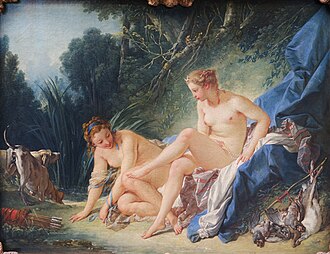 Diana leaving her Bath - François Boucher (1742)
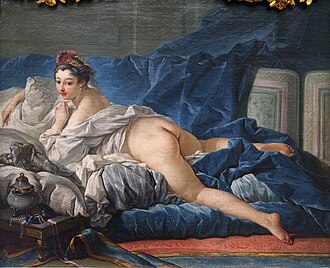 Brown Odalisque - François Boucher (1740s)
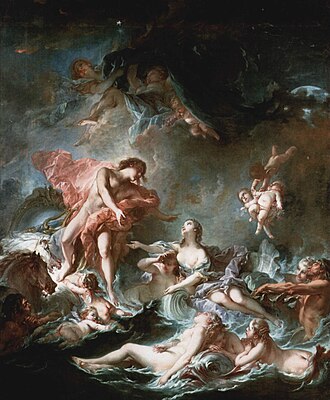 The setting of the sun - François Boucher (1752)
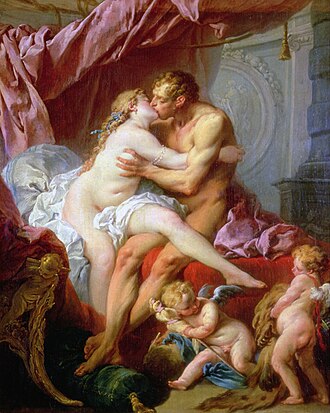 Hercules and Omphale - François Boucher (1730s)
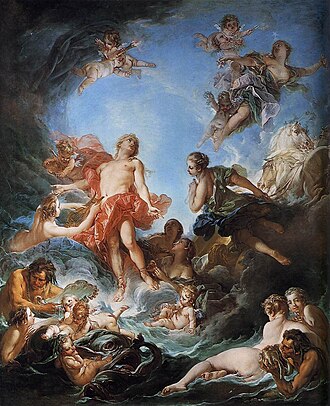 The Rising of the Sun - François Boucher (1753)
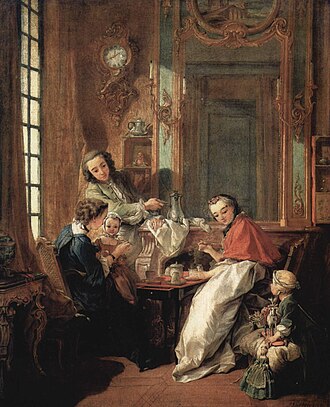 Morning Coffee - François Boucher (1739)
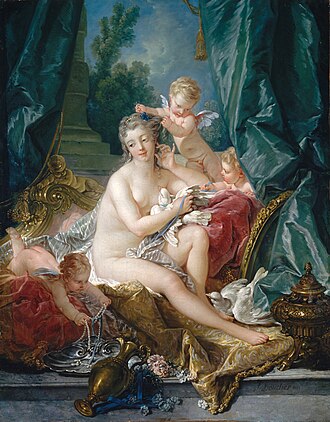 The Toilette of Venus - François Boucher (1751)
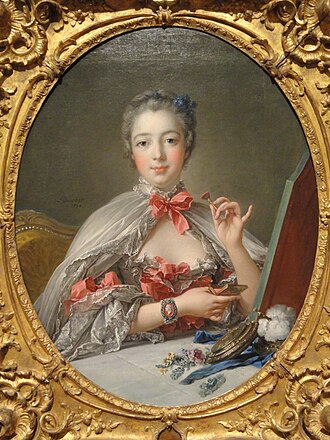 Jeanne-Antoinette Poisson, Marquise de Pompadour - François Boucher (1750)
Dipinti di artisti collegati
 The Embarkation for Cythera - Jean-Antoine Watteau (1717)
 Pierrot - Jean-Antoine Watteau (1718)
 The Swing - Jean-Honoré Fragonard (1760s)
 A Young Girl Reading - Jean-Honoré Fragonard (1770)
 The Third of May 1808 - Francisco Goya (1814)
 La maja nuda - Francisco Goya (1800)