The Gleaners
Jean-François Millet · 1857
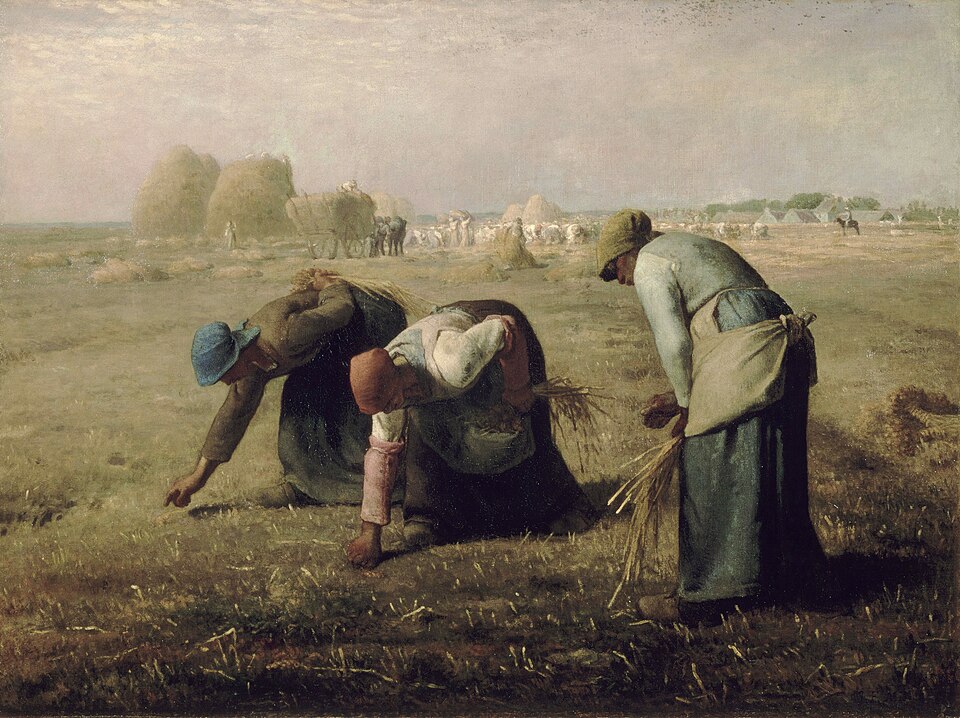
This painting, a masterpiece of French Realism, depicts a poignant moment in the lives of three peasant women gleaning a field of stray stalks of wheat after the harvest, their faces and bodies etched with exhaustion and hardship.
The story behind the painting
Jean-François Millet's The Gleaners, completed in 1857, was a painting that stirred controversy upon its unveiling at the Salon of that year. The work was part of a series of paintings Millet created focusing on the lives of peasants and the struggles of rural poverty. Having recently come out of the French Revolution of 1848, the painting was perceived as a reminder of the growing movement of socialism and the disparity between the working class and the upper class. Millet's own life experiences, having grown up in a farming community in Normandy and later moving to Barbizon, influenced his depiction of rural life. The painting was sold for 3,000 francs, below his asking price, to an Englishman named Binder.
What to look for
In The Gleaners, observe the three peasant women bent in a field, their bodies weary as they collect the leftover wheat. The woman on the left, wearing a blue headscarf, reaches down to pick up a stray stalk, while the woman in the center, her head covered by a white cloth, gathers wheat into her apron. The third woman, on the right, stands upright, holding a bundle of wheat. In the background, a group of laborers and haystacks are visible under a vast, cloudy sky. Millet's use of light and shadow emphasizes the contrast between the abundance of the harvest and the scarcity faced by the gleaners.
Meaning and intent
Millet's The Gleaners was a statement on rural poverty and the plight of the working class. The painting highlighted the contrast between the abundance of the harvest and the meager existence of the gleaners. By depicting the women in a sympathetic light, Millet brought attention to their struggles and the often-overlooked lives of rural peasants. The implicit irony in the painting, juxtaposing grinding poverty with the rich harvest in the distance, was unsettling to the upper classes, who saw it as a reminder of the growing class strife.
Legacy
The Gleaners has become one of Millet's most famous works, influencing many younger artists, including Pissarro, Renoir, Seurat, and van Gogh. The painting's imagery of bending peasant women gleaning was paraphrased frequently in works by these artists. Today, The Gleaners resides in the Musée d'Orsay in Paris, a testament to its enduring significance in the history of art. The painting's impact extends beyond the art world, inspiring works such as Agnès Varda's 2000 film, The Gleaners and I.
Lo sapevi?
- The Gleaners was completed in 1857 and is considered one of Millet's best-known works.
- The painting measures 84 by 112 centimeters and is an oil on canvas work.
- Millet was part of the Barbizon school, a group of French painters who focused on landscapes and rural life.
- The Gleaners is now held in the Musée d'Orsay in Paris, where it remains a popular attraction.
Wikipedia · Wikipedia - Jean-François Millet · Wikidata
woman · genre art · Musée d'Orsay
Altre opere di Jean-François Millet
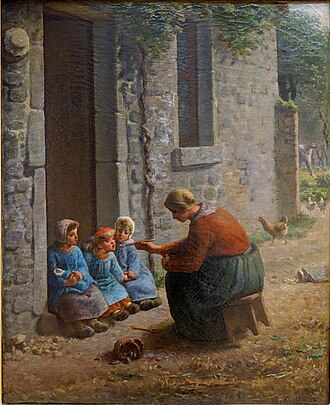 The Beaked - Jean-François Millet (1860)
Dipinti di artisti collegati
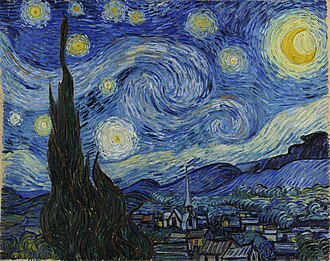 The Starry Night - Vincent van Gogh (1889)
.jpg) Café Terrace at Night - Vincent van Gogh (1888)
Café Terrace at Night - Vincent van Gogh (1888)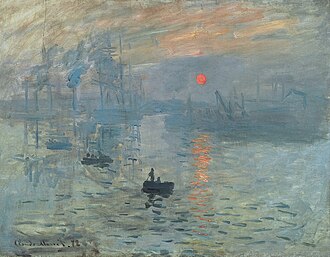 Impression, Sunrise - Claude Monet (1872)
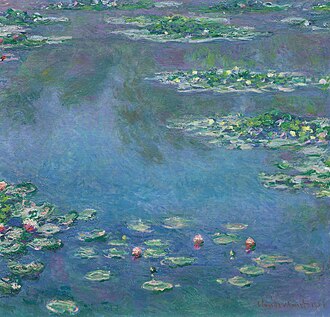 Water Lilies - Claude Monet (1906)
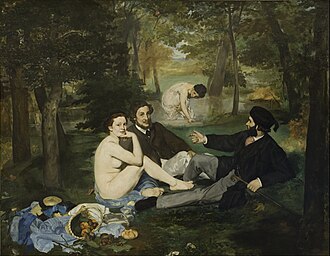 Luncheon on the Grass - Édouard Manet (1863)
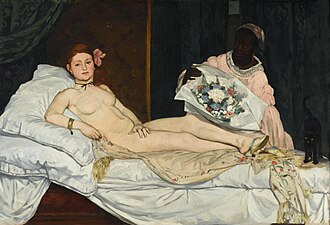 Olympia - Édouard Manet (1863)