Peasant Women with Brushwood
Jean-François Millet · 1852
%20-%20Peasant-Girls%20with%20Brushwood%20-%20WGA15690.jpg)
Two women walk home at dusk along a forest road, bent double under huge bundles of brushwood. Millet painted them small, about 37 by 30 cm, yet the weight on their backs feels enormous.
The story behind the painting
Jean-François Millet painted Peasant Women with Brushwood around 1852, as one of the many pictures in which he showed the hard rural life of French peasants. He signed it at the lower right, JF Millet. The small oil on canvas did not stay in France for long: it was soon acquired by the Russian Count Nikolai Alexandrovich Kushelev-Bezborodko. Wikidata gives the date simply as 1852, while the Wikipedia article is more cautious and says around 1852. Either way, the painting belongs to the years when Millet was turning everyday peasant labour into his main subject.
What to look for
Look first at the two women, returning home in the twilight. They wear homespun clothes and clogs and walk along a forest road, each carrying a huge bundle of brushwood on her back. Their heads are sunk low and their backs bent, which shows both the heavy load and their strength. Then notice how dark the colours are: the figures almost melt into the surrounding nature. The art historian A. G. Kostenevich wrote that Millet reproduced the tension of the women from clog to head, while the dark mass of the forest seems to pile up above them.
Meaning and intent
The painting is about burden, but not about despair. Kostenevich pointed out that the tension is never pushed so far that it would offend the eye or stop us from contemplating the picture. Instead he heard in it a measured, almost solemn rhythm in the steps of the peasant women. That rhythm is what lifts the scene from a simple record of hard work to something close to dignity. By letting the women blend into the dusk and the forest, Millet presents their labour as part of the land itself, repeated every evening, heavy and patient.
Legacy
After Count Kushelev-Bezborodko died, his whole collection, this painting included, was bequeathed to the Museum of the Russian Academy of Arts and became part of the Kushelev gallery. In 1922 it was transferred to the State Hermitage in Saint Petersburg, where it remains. A related drawing by Millet in pencil and gouache, about 34 by 28 cm and dated 1858, shows the two women fully worked out. It once belonged to Hendrik Willem Mesdag, passed through several owners after a sale in New York in 1920, joined the collection of the banker Robert Lehman in 1962, and later went to the Metropolitan Museum of Art.
Lo sapevi?
- Painted around 1852 and signed JF Millet at the lower right.
- Two peasant women carry brushwood home at twilight.
- In the Hermitage since 1922, after the Kushelev gallery.
- A related drawing of 1858 is at the Metropolitan Museum of Art.
Altre opere di Jean-François Millet
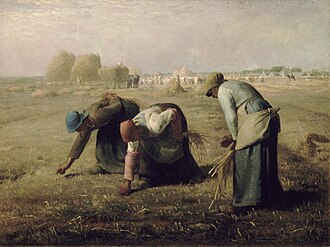 The Gleaners - Jean-François Millet (1857)
.jpg) The Angelus - Jean-François Millet (1858)
The Angelus - Jean-François Millet (1858)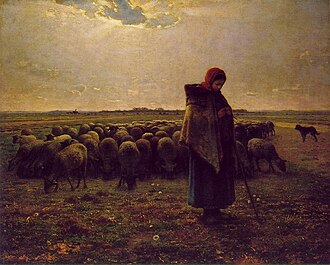 Shepherdess with her Flock - Jean-François Millet (1863)
.jpg) The Winnower - Jean-François Millet (1848)
The Winnower - Jean-François Millet (1848)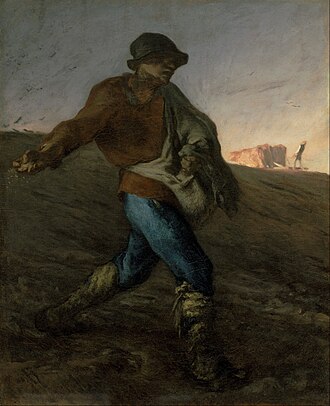 The Sower - Jean-François Millet (1850)
.jpg) Man with a Hoe - Jean-François Millet (1860s)
Man with a Hoe - Jean-François Millet (1860s)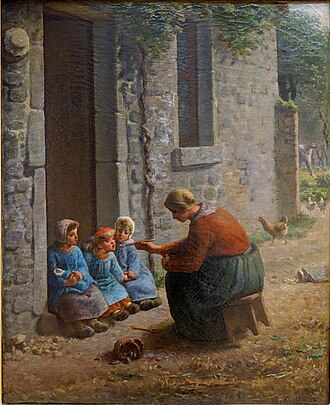 The Beaked - Jean-François Millet (1860)
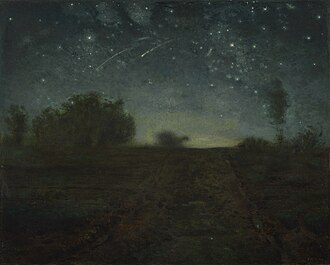 Starry Night - Jean-François Millet (1850s)
Dipinti di artisti collegati
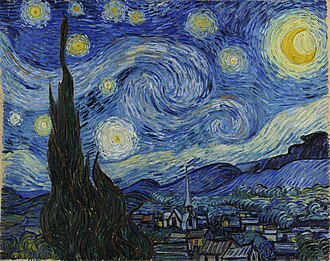 The Starry Night - Vincent van Gogh (1889)
.jpg) Café Terrace at Night - Vincent van Gogh (1888)
Café Terrace at Night - Vincent van Gogh (1888)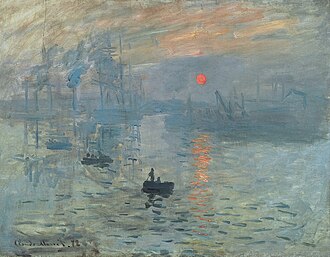 Impression, Sunrise - Claude Monet (1872)
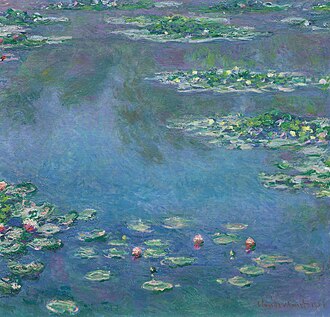 Water Lilies - Claude Monet (1906)