the Drinker
Francisco Goya · 1777
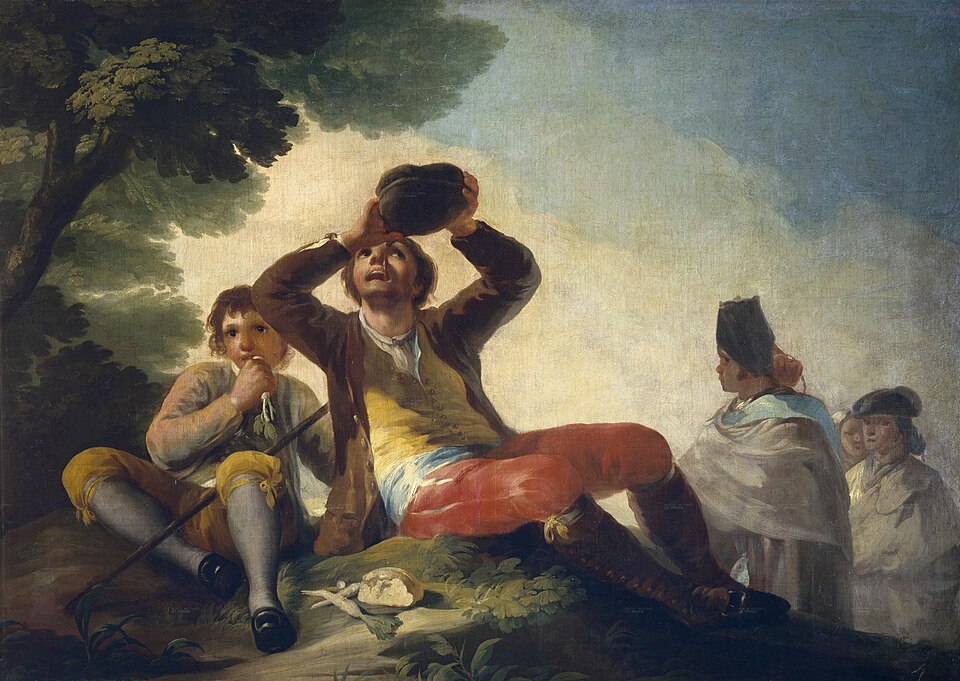
A man drinks in the Catalan way while his companion eats chives, and the drinker props his elbow on his friend's forehead. Goya painted this small joke as a design for a royal tapestry, and it then vanished into a palace basement for almost a century.
The story behind the painting
El bebedor, The Drinker, was painted by Francisco de Goya in 1777 as part of his second series of tapestry cartoons, full-size designs for the weavers. The whole series was meant for the dining room of the Prince of Asturias, the future Charles IV, and his wife Maria Luisa of Parma, in the palace of El Pardo. The canvas was delivered to the Royal Tapestry Factory of Santa Barbara on 12 August 1777, together with La riña en la Venta Nueva and La maja y los embozados. Its companions in the series included The Parasol, The Kite and Card Players.
What to look for
The picture was conceived as an overdoor, which shows in its format and in its low viewpoint, as if seen from below. A man drinks a la regalade, following the Catalan custom, while his companion eats chives. The drinker takes the chance to lean his elbow on his friend's forehead. Light contrasts with the shadow thrown by a tree but does not fill the whole space. The source calls the work naturalistic and expressive, with all the qualities expected of Goya's cartoons.
Meaning and intent
The source describes it as probably one of the most popular scenes of the series. The drinker's elbow on his companion's head has been read as an allusion to the Lazarillo de Tormes, the traditional tale widely drawn on by Spanish literature. So beyond the cheerful image of a meal in the open air, Goya brings a familiar piece of Spanish storytelling into a royal dining room, made for everyday life to be woven into the palace walls.
Legacy
The canvas was considered lost until 1869, when Gregorio Cruzada Villaamil found it in the basement of the Royal Palace of Madrid. By orders of 19 January and 9 February 1870 it was handed to the Museo del Prado, where it hangs in room 85. It first appeared in the Prado's catalogue in 1876. Wikidata records its size as 107 by 151 cm. A design made only as a model for weavers now hangs as a painting in its own right, and its humour still reaches viewers more than two centuries later.
Lo sapevi?
- Painted by Goya in 1777 as a tapestry cartoon for the palace of El Pardo.
- Delivered to the Royal Tapestry Factory on 12 August 1777.
- Considered lost until found in the Royal Palace basement in 1869.
- In the Museo del Prado since 1870.
L'artista
Francisco Goya (1746-1828)
Altre opere di Francisco Goya
 The Third of May 1808 - Francisco Goya (1814)
.jpg) La maja nuda - Francisco Goya (1800)
La maja nuda - Francisco Goya (1800).jpg) Saturn Devouring His Son - Francisco Goya (1819)
Saturn Devouring His Son - Francisco Goya (1819) La famiglia di Carlo IV - Francisco Goya (1800)
 The Clothed Maja - Francisco Goya (1800)
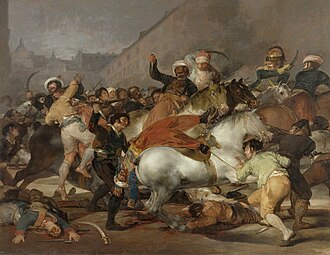 Il 2 maggio 1808 a Madrid - Francisco Goya (1814)
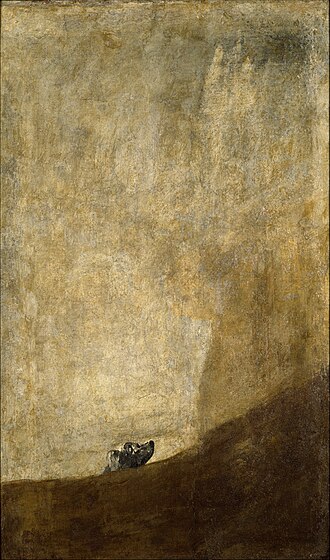 Cane semiaffondato - Francisco Goya (1819)
 Il sabba delle streghe - Francisco Goya (1820s)
Dipinti di artisti collegati
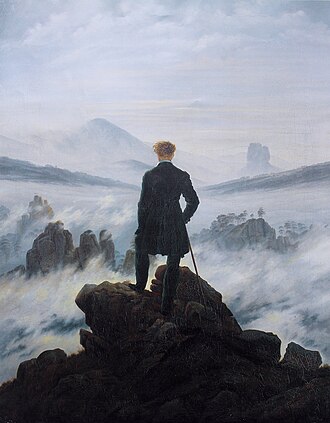 Wanderer above the Sea of Fog - Caspar David Friedrich (c. 1818)
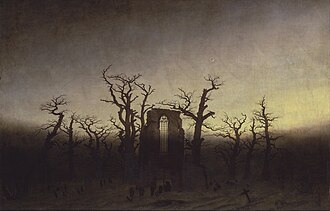 The Abbey in the Oakwood - Caspar David Friedrich (1800s)
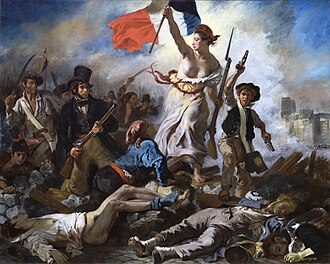 Liberty Leading the People - Eugène Delacroix (1830)
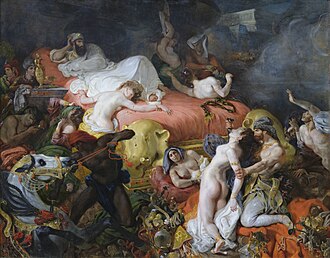 Death of Sardanapalus - Eugène Delacroix (1827)
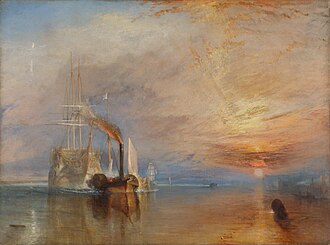 The Fighting Temeraire - J. M. W. Turner (1839)
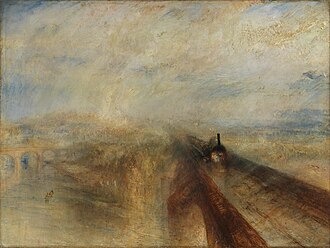 Rain, Steam and Speed - The Great Western Railway - J. M. W. Turner (1844)
.jpg) The Blue Boy - Thomas Gainsborough (1770)
The Blue Boy - Thomas Gainsborough (1770).jpg) Mr and Mrs Andrews - Thomas Gainsborough (1748)
Mr and Mrs Andrews - Thomas Gainsborough (1748)