The Artist's Garden at Vétheuil
Claude Monet · 1881
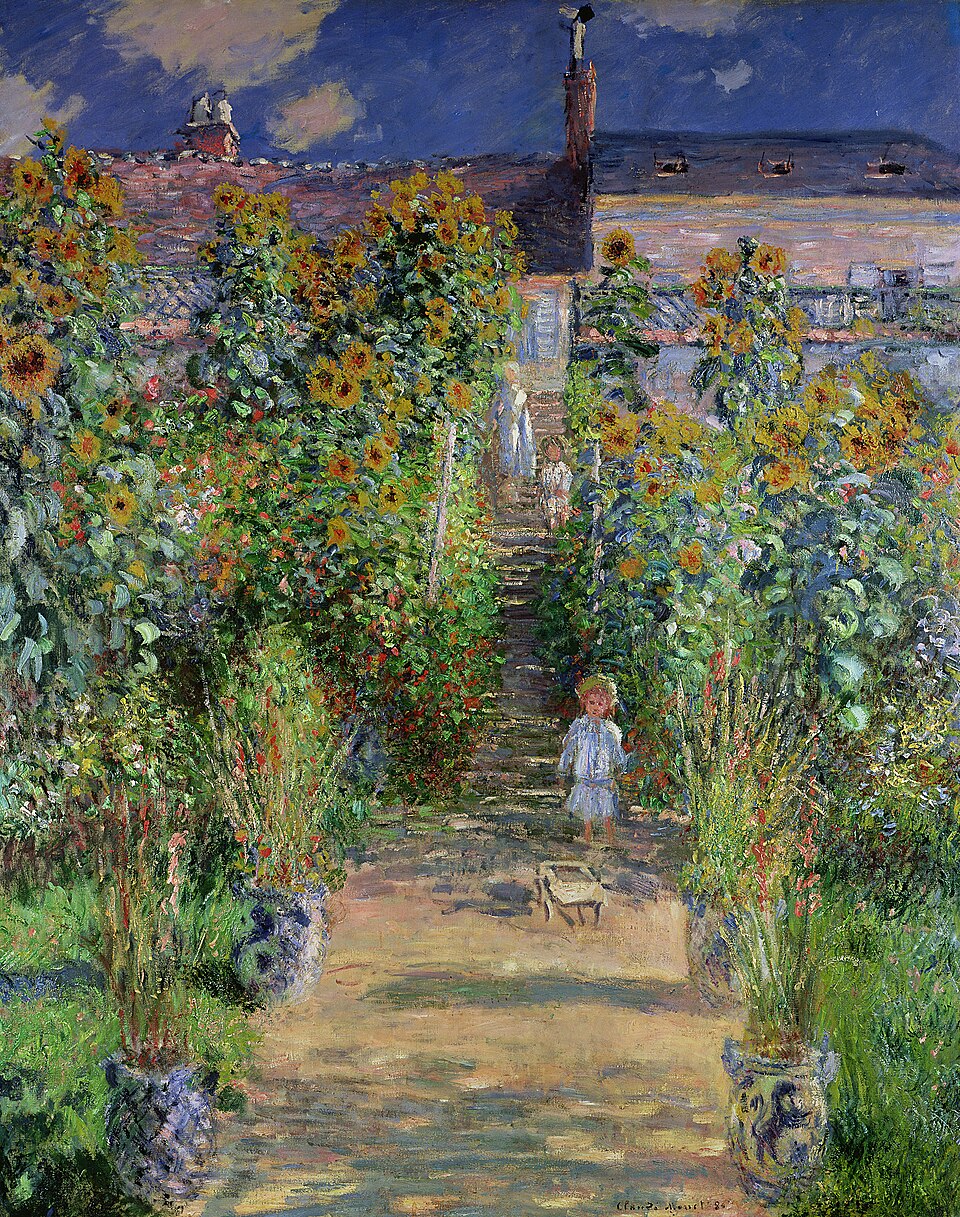
Sunflowers sway above the heads of two small boys, so thick that you almost miss them. Monet painted his sons in the garden at Vétheuil in 1881, in the last months before the family had to move on.
The story behind the painting
By 1881 Monet had lived for nearly three years in a large house at Vétheuil, together with the Hoschedé family. His wife Camille had died a year after their arrival. Alice Hoschedé had been his companion for several years and would marry him after the death of her husband Ernest. The household included Monet's sons Jean and Michel and the six Hoschedé children. Sales were improving, but debts remained, rent was late and the lease was about to end. Monet was thinking of settling in Poissy, which he did that autumn, and Alice chose to follow him while Ernest had gone back to Paris.
What to look for
Monet planted the garden with sunflowers and set out large blue pots that he had brought back from his stay in Holland in 1871. The figures, his two sons and perhaps their nurse, are not visible at first. They are immersed in the garden, camouflaged by a haze of sunflowers swaying around their heads. The free way Monet finished the picture helps hide the boys, and so does the limited palette of blue, white and yellow. This is a large canvas for him, about 151.5 by 121 cm, so the flowers tower almost at our own height.
Meaning and intent
The colours and the loose touch give the feeling that the whole Monet family lived inside a cocoon their father had made. The children could explore, and Monet could keep developing his growing passion for gardening. Knowing the background, the picture becomes more poignant: behind the peaceful rhythm of country life lay grief for Camille, unpaid rent and an imminent move. What Monet chose to show was not the worry but the shelter, a summer of flowers that hides the children as if to protect them.
Legacy
Monet painted three other versions in the same spot in 1881: The Steps at Vétheuil in a private collection, Garden at Vétheuil in the Norton Simon Museum in Pasadena, and another Artist's Garden at Vétheuil in a private collection. This one is number W 685 in the 1996 Wildenstein catalogue raisonné. Monet kept it for almost thirty years before selling it in 1910 to Bernheim. It then went through private collections and was bequeathed to the National Gallery of Art in Washington in 1970. It has been shown in about twenty exhibitions in the United States, Europe and Japan.
Lo sapevi?
- Painted in 1881 in Monet's garden at Vétheuil.
- Shows Monet's two sons and perhaps their nurse.
- One of four versions painted in the same spot.
- Bequeathed to the National Gallery of Art, Washington, in 1970.
L'artista
Claude Monet (1840-1926)
Galería Nacional de Arte · tree
Altre opere di Claude Monet
 Impression, Sunrise - Claude Monet (1872)
 Water Lilies - Claude Monet (1906)
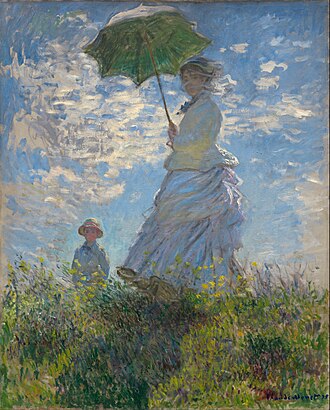 Woman with a Parasol - Claude Monet (1875)
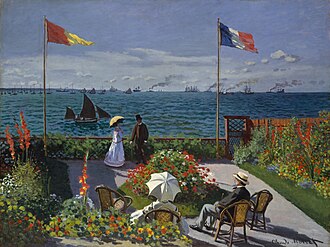 Garden at Sainte-Adresse - Claude Monet (1867)
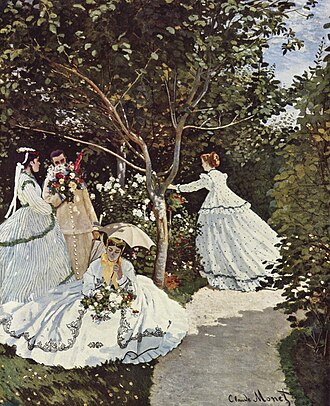 Donne in giardino - Claude Monet (1866)
 The Magpie - Claude Monet (1868)
 Woman in the Garden - Claude Monet (1867)
 Luncheon on the Grass - Claude Monet (1866)
Dipinti di artisti collegati
 The Fighting Temeraire - J. M. W. Turner (1839)
 Rain, Steam and Speed - The Great Western Railway - J. M. W. Turner (1844)
 L'Origine du monde - Gustave Courbet (1866)
 A Burial at Ornans - Gustave Courbet (2020)
 Luncheon on the Grass - Édouard Manet (1863)
 Olympia - Édouard Manet (1863)
 Dance at Le Moulin de la Galette - Pierre-Auguste Renoir (1876)
 Luncheon of the Boating Party - Pierre-Auguste Renoir (1881)
 The Cradle - Berthe Morisot (1872)
 Summer's Day - Berthe Morisot (1879)
 L'Absinthe - Edgar Degas (1875)
 The Bellelli Family - Edgar Degas (1858)